

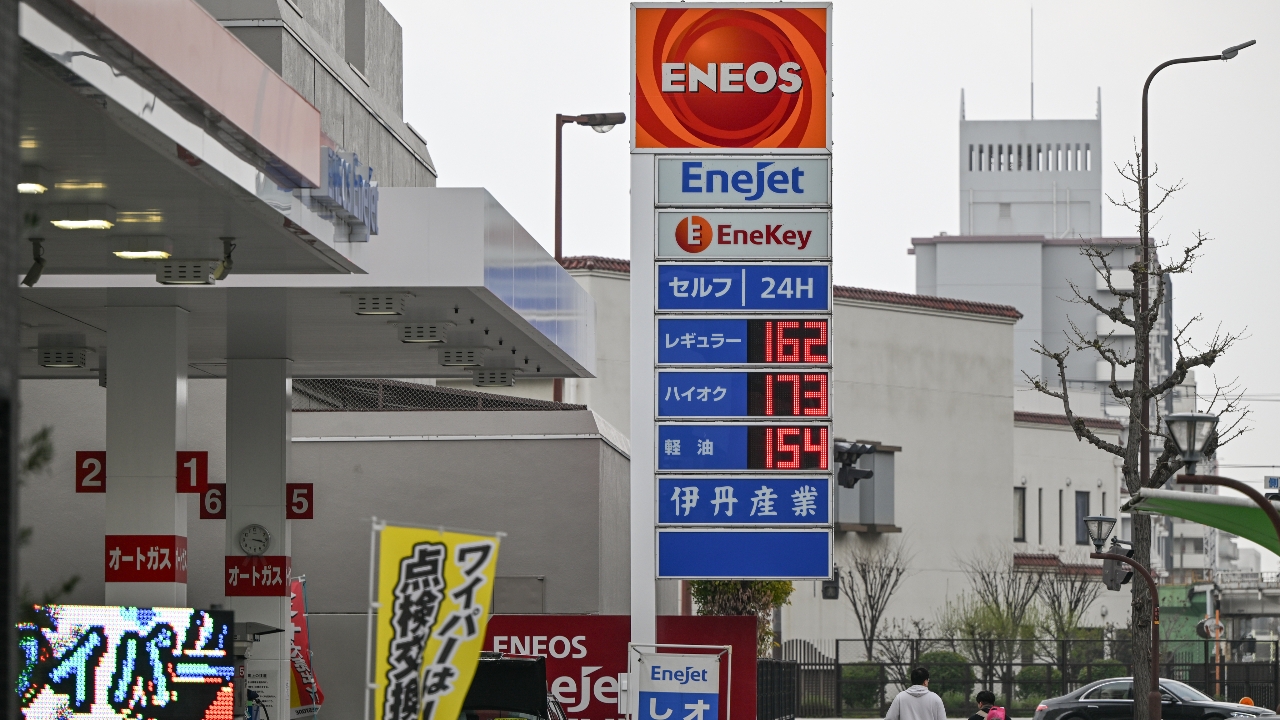
The Japanese government has announced a plan to release additional strategic oil reserves equivalent to 20 days of consumption, starting as early as early May, aiming to maintain energy stability amid uncertainties in the Middle East situation despite a ceasefire agreement between the United States and Iran.
Prime Minister Sanae Takaichi stated at a ministerial meeting monitoring the Middle East situation that the Japanese government plans to release crude oil from its strategic reserves equivalent to 20 days of usage, expecting to begin as early as early May.
This decision comes amid uncertainty over when Iran will reopen the Strait of Hormuz, a major global energy shipping route. Although the United States and Iran reached a temporary two-week ceasefire agreement last Tuesday, the situation remains fragile as Israel continues its attacks on Hezbollah in Lebanon.
This new measure builds on an existing release of reserves equivalent to 50 days of use that began in mid-March, covering oil from government reserves, the private sector, and cooperation with Gulf oil-producing countries. Prime Minister Takaichi emphasized, "The government will take every measure to ensure Japan’s stable crude oil supply," and stated that current reserves are sufficient to last until next year.
Additionally, the Japanese leader has instructed relevant ministers to urgently address shortages in specific sectors affected by the transport crisis, including accelerating the procurement of paint thinner, which has begun to run short in the construction and automotive repair industries, and stabilizing the supply of fuel necessary for green tea production.
Currently, Japan imports up to 90% of its crude oil from the Middle East, with nearly all shipments passing through the Strait of Hormuz, which Iran ordered closed in retaliation for attacks by the United States and Israel in late February.
Although President Donald Trump threatened to destroy infrastructure if Iran did not reopen the shipping route, leading to a temporary ceasefire, ongoing conflict in Lebanon means Japan must prepare for potential prolonged disruptions to its energy supply.