

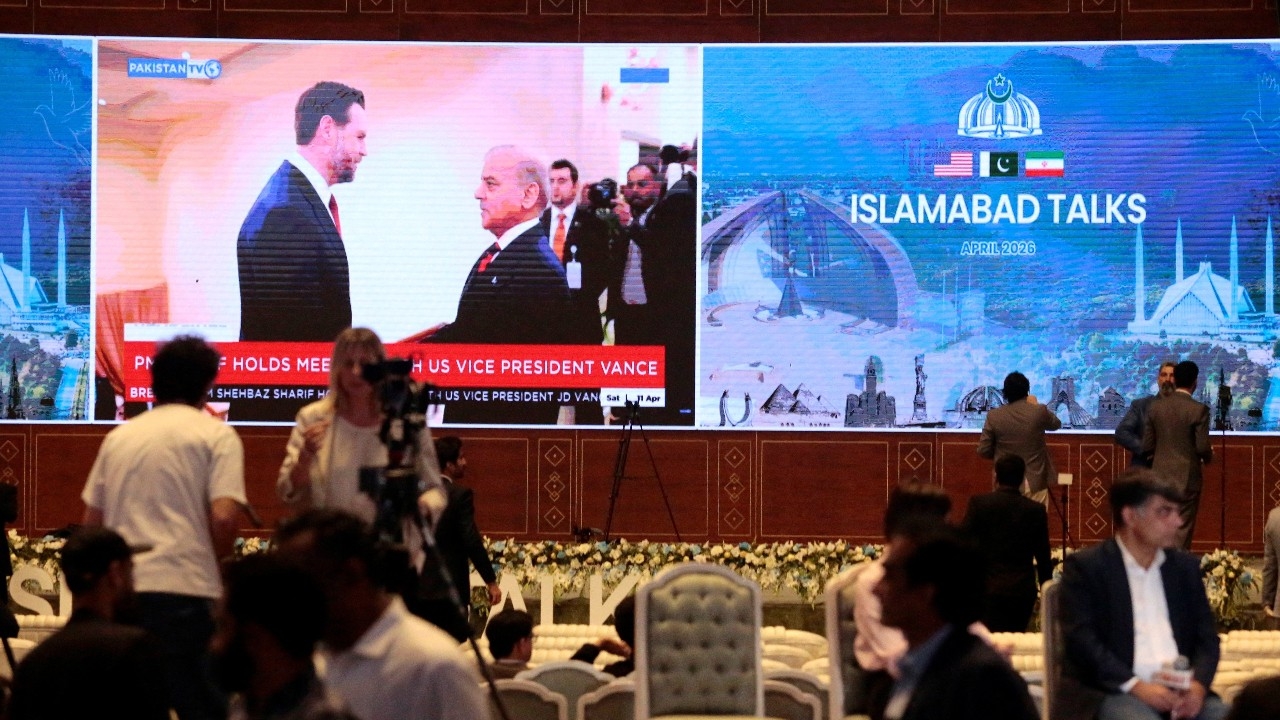
Historic face-to-face peace talks between the US and Iran, lasting over 21 hours in Islamabad, Pakistan, ended without any agreement. The US insisted that Iran must completely end its nuclear program, while Iran said the atmosphere was filled with suspicion after enduring a 40-day war. There are concerns that the two-week ceasefire agreement might expire.
The historic face-to-face negotiations between the United States and Iran in Islamabad, Pakistan, concluded in the early hours of Sunday (12 Apr) local time, with both sides unable to reach a joint agreement. As a result, the fate of the temporary two-week ceasefire remains uncertain.
US Vice President J.D. Vance, who led the negotiating delegation, revealed after the more than 21-hour meeting that the talks ended without an agreement because Iran refused to accept US conditions to permanently halt the development of nuclear weapons and related technologies.
"President Donald Trump's demand is simple: we need a clear commitment that Iran will not pursue nuclear weapons," Vance said, adding this was the "final and best offer" the US presented to Iran before he immediately departed Pakistan.
Iranian Foreign Ministry spokesperson Esmail Baqaei stated that although there was some agreement on certain points, two to three key issues remained completely divergent. He emphasized that the talks came after Iran had endured a "war imposed" on it for 40 days, making it difficult to expect an agreement from a single meeting.
Sources indicated that Iran set several "deadlines," including demands for compensation for damages from US and Israeli attacks on 28 February and the unfreezing of Iranian assets.
Meanwhile, President Donald Trump commented that the outcome of the talks did not affect him, as he considered the US had already achieved a military victory.
Amid the negotiations, President Trump ordered US destroyers to advance into the Strait of Hormuz to begin a mine-clearing mission, stating, "Whether or not an agreement is reached, we will keep the shipping lanes safe." This strait is a strategic point that has significantly impacted global energy prices recently.
At the same time, the situation in Lebanon remains critical, with Israel confirming that no ceasefire exists there and continuing attacks against Hezbollah.
Ceasefire talks between Israel and Lebanon are scheduled to take place in Washington, D.C., USA, on 14 April. The Israeli and Lebanese ambassadors to the US will attend these negotiations.
However, the two sides issued conflicting statements about the scope of the talks. The Lebanese presidential office said they had a phone conversation on Friday and agreed to discuss a ceasefire declaration and set a date for bilateral talks under US mediation. Meanwhile, the Israeli embassy in Washington stated the talks would mark the start of official peace negotiations, with Israel refusing to discuss a ceasefire with Hezbollah. The conflict has resulted in over 5,000 deaths—approximately 3,000 in Iran and over 2,000 in Lebanon.
The future of peace in the Middle East remains precarious as President Trump's two-week ceasefire is about to expire, with no clear signs that the conflict will end through diplomacy soon. The failure of these talks reflects the challenges of finding diplomatic solutions amid deep-seated conflicts and may affect stability in the Middle East and the global economy going forward.
.sourceAssociated Press/Al Jazeera/BBC