

The U.S. White House disclosed various proposals that Iran refused during negotiations over the past weekend, mostly related to its nuclear program, on which Iran has consistently maintained a hardline stance.
On 12 Apr 2026 GMT+7, the U.S. White House revealed details about the "red line" proposals that Iran rejected during the lengthy talks held in Pakistan last weekend, which ended without either side reaching an agreement to end the Middle East conflict.
Several conditions had previously been rejected by Iran, and the Tehran government has remained rigid despite the war having lasted six weeks.
White House officials stated that the non-negotiable terms set by President Donald Trump for Iran included the following:
- Completely ending all uranium enrichment activities
- Dismantling the main uranium enrichment facility, which was heavily damaged by U.S. airstrikes in June last year
- Recovering over 400 kilograms of highly enriched uranium believed to be buried underground
- Accepting a "framework for cooperation on peace, security, and de-escalation," which includes regional allies
- Ceasing financial support to proxy terrorist groups such as Hamas, Hezbollah, and the Houthi movement
- Fully reopening the Strait of Hormuz with no fees charged for maritime passage
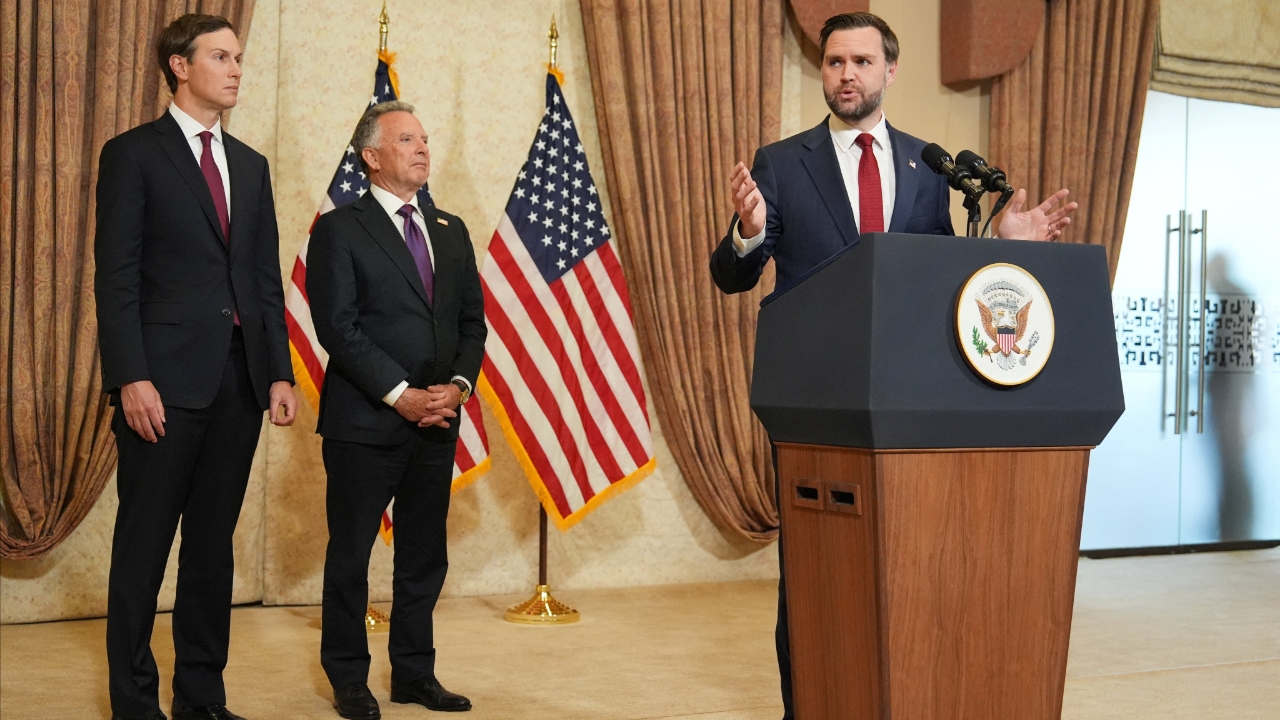
After the talks concluded, Vice President J.D. Vance said he had put forth the best and final offer on the negotiation table, signaling that Iran still had time to accept the U.S. terms.
Although the talks included tense moments, the overall atmosphere was not entirely hostile. Trump and others involved noted that both sides developed mutual respect after spending several hours together in a closed-door meeting.
However, given Iran's prior resistance to many U.S. demands, it remains uncertain whether Tehran will soon yield to Trump's conditions. Iran believes it holds a significant advantage over the U.S. as the Strait remains closed, a position Tehran has made clear.
Conversely, Trump and Vance hold a different view, believing that after weeks of conflict, Iran is significantly weakened and should be wise enough to accept their demands, despite previous hesitations.
Notably, Trump's announcement that the U.S. Navy has begun a naval blockade of the Strait of Hormuz just hours earlier serves as an additional pressure tactic to reinforce this stance.
Follow international news:https://www.thairath.co.th/news/foreign
Source:CNN