

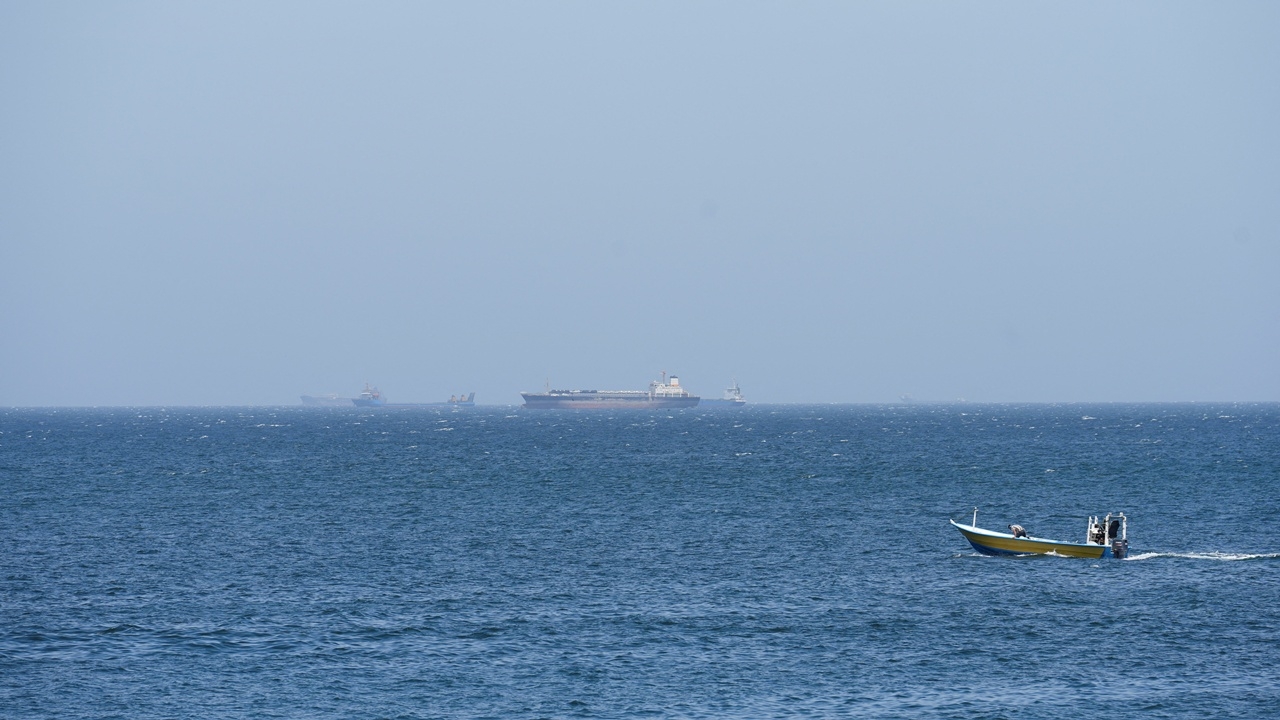
NATO allies have rejected U.S. President Donald Trump's plan to blockade the Strait of Hormuz, stating they will only intervene after the fighting has ended.
On 13 Apr 2026 GMT+7, NATO allies announced they would not participate in President Donald Trump's plan to blockade the Strait of Hormuz, proposing intervention only once hostilities have ceased. This move is expected to frustrate Trump and further increase tensions within the alliance.
Trump said the U.S. military would cooperate with other countries to block all maritime traffic in the area after weekend talks failed to reach an agreement to end the six-week-long conflict with Iran.
Later, the U.S. military detailed that the blockade, set to begin at 14:00 GMT (21:00 Thai time) on Monday, would apply only to vessels entering or leaving Iranian ports.
Since the conflict began on 28 February, Iran has nearly completely blocked the strait for all ships except its own, attempting to take permanent control of the Strait of Hormuz and possibly charging tolls for vessels passing through.
Before the blockade started on Monday, Trump posted on Truth Social, "The blockade will begin soon, and other countries will participate in this blockade."
However, NATO allies including the UK and France said they would not be drawn into the conflict by joining the blockade, stating they are pursuing initiatives to reopen shipping routes that typically carry one-fifth of the world's crude oil.
The allies' refusal to join added another source of conflict with Trump, who had threatened to withdraw from the military alliance and was considering pulling some U.S. troops out of Europe after several countries denied U.S. military aircraft access to their airspace to attack Iran.
"We will not support this blockade," UK Prime Minister Keir Starmer told the BBC. "My decision is very clear: no matter the pressure—of which there has been immense—we will not be drawn into this war."
Meanwhile, NATO Secretary General Jens Stoltenberg informed European governments that Trump seeks concrete commitments soon to help secure the Strait of Hormuz. Many European countries expressed willingness to assist but only after a sustainable ceasefire and an agreement with Iran ensuring their vessels will not be attacked.
French President Emmanuel Macron posted on X on Monday that France will host a meeting with the UK and other countries to establish a multilateral mission to restore navigation in the Strait of Hormuz.
"This mission aims specifically for protection and is clearly separate from the conflicting parties, with forces to be deployed as soon as the situation allows," Macron said.
Follow international news:https://www.thairath.co.th/news/foreign
Source:cna