

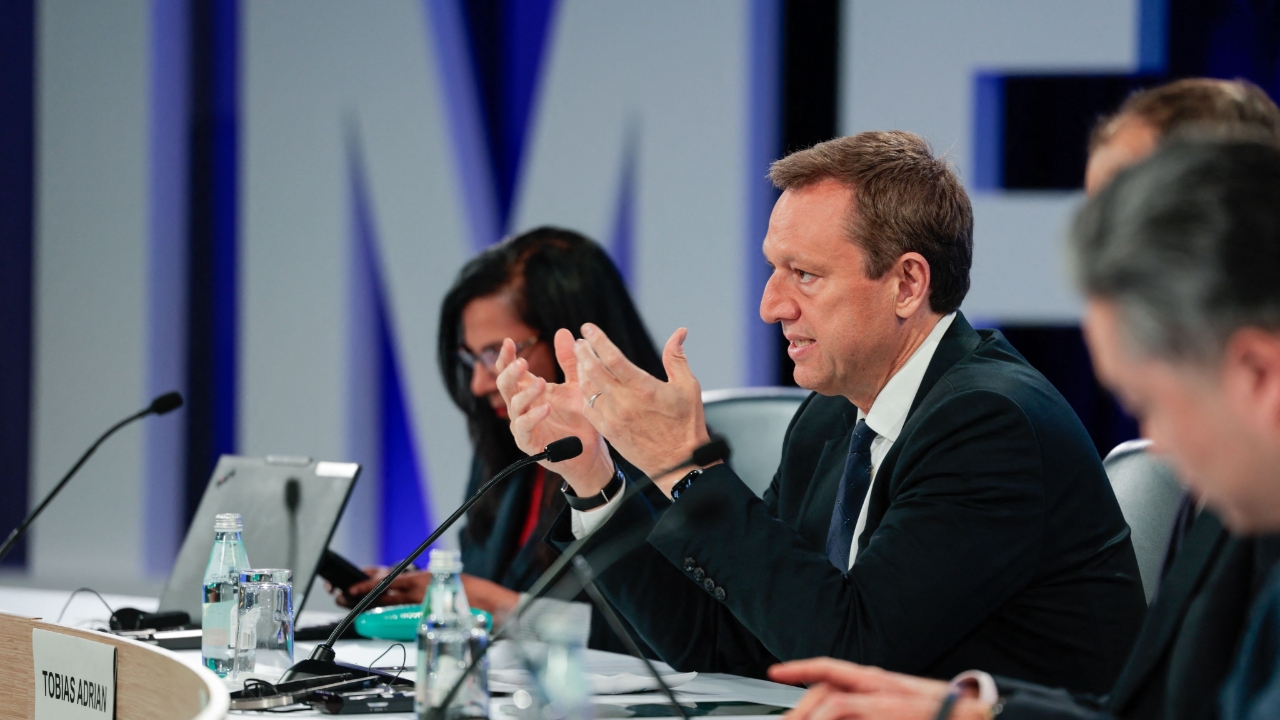
The IMF warns the global economy is at risk of recession if the war between the US-Israel alliance and Iran drags on and energy prices soar, potentially causing economic growth in 2026 to fall below 2%, approaching a crisis level.
On 14 April 2026, the International Monetary Fund (IMF) released its World Economic Outlook report, stating the global economy risks entering a recession if the war between the US and Israel against Iran continues and energy prices remain high. In the worst-case scenario, if oil, gas, and food prices keep rising this year and next, global economic growth in 2026 could drop below 2%, nearing recession. Such a situation has occurred only four times since 1980, most recently during the COVID-19 pandemic.
The IMF report noted that energy prices have surged significantly over the past six weeks after the outbreak of war and the closure of the Strait of Hormuz, a crucial shipping route. Meanwhile, peace talks between the US and Iran ended without resolution.
Pierre-Olivier Gourinchas, IMF Chief Economist, said that if the conflict persists, inflation will spike, unemployment will rise, and some countries will face food security challenges. He also warned that even if the war ends immediately, oil supply disruptions could be as severe as the 1970s oil crisis, despite today's reduced reliance on fossil fuels.
Under a severe assumption, oil prices could average $110 per barrel this year and increase to $125 per barrel in 2027, pushing global inflation up to 6% next year and potentially forcing many central banks to raise interest rates. However, if the situation improves within weeks and energy production returns to normal by mid-year, the global economy is still expected to grow by 3.1% in 2026, slightly below the previous forecast of 3.3%.
The IMF noted that each country's ability to cope depends on several factors, including damage to energy infrastructure, reliance on the Strait of Hormuz, and alternative energy export options.
Source: BBC