

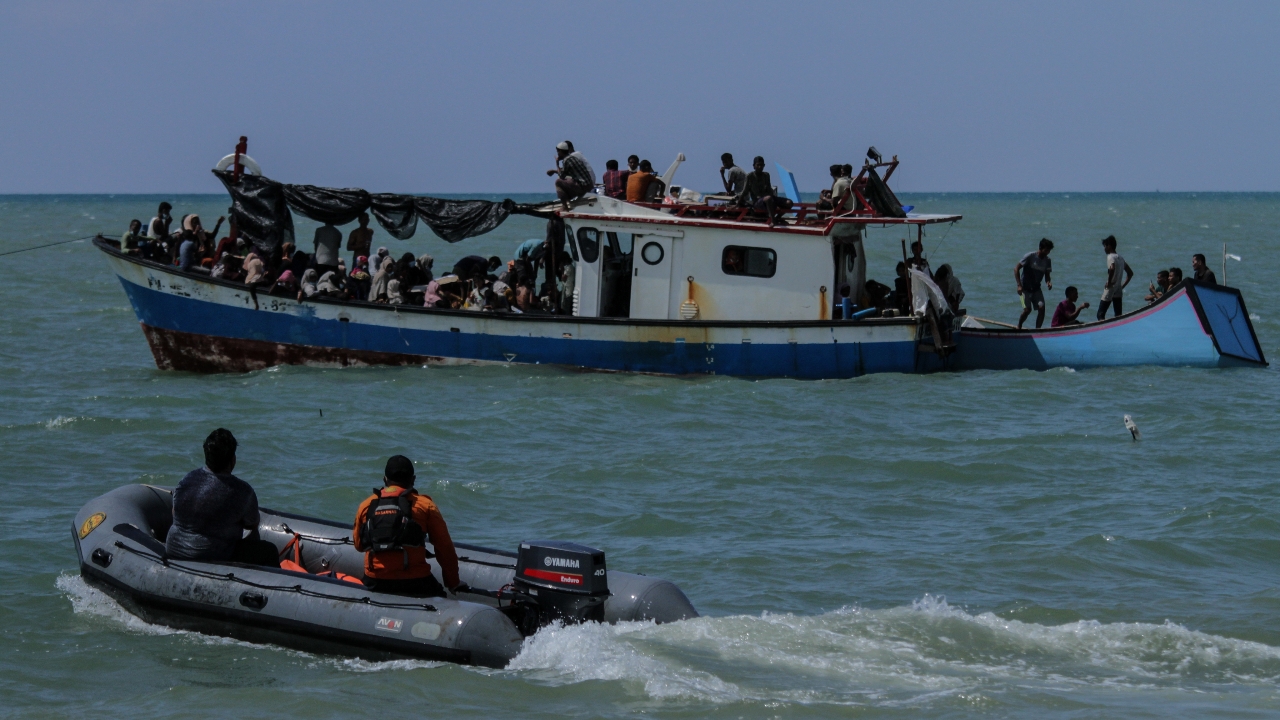
The UN revealed that a migrant boat carrying over 250 Rohingya and Bangladeshi people, including women and children, sank in the Andaman Sea while heading to Malaysia. So far, only nine survivors have been rescued amid increasing risks to vulnerable groups due to ongoing conflict in Myanmar.
The International Organization for Migration (IOM) and the United Nations High Commissioner for Refugees (UNHCR) released a report on the boat sinking in the Andaman Sea, which caused about 250 people to go missing. All were Rohingya and Bangladeshi migrants attempting to travel from Bangladesh to Malaysia.
The report states that the modified fishing boat sank due to bad weather, strong winds, high waves, and overloading. The Bangladeshi Coast Guard managed to rescue only nine survivors on 9 April after they were left stranded alone in the sea.
Rafiqul Islam, 40, one of the survivors, said he drifted in the sea for 36 hours before being rescued and suffered burns from oil leaking from the boat. He decided to board the vessel hoping to find work in Malaysia to escape the harsh conditions of the refugee camp.
The situation of the Rohingya, a Muslim minority in Myanmar, remains critical. Since the violent crackdown in 2017, hundreds of thousands have fled to Bangladesh. Denied citizenship in Myanmar and facing declining humanitarian aid in camps, many risk their lives on small boats lacking proper sanitation and clean drinking water.
In a joint statement, UNHCR said, "This incident reflects the severe consequences of prolonged neglect and the lack of sustainable solutions for the Rohingya." With ongoing violence in Rakhine State, hopes for safe return home remain faint.
Earlier in 2025, Malaysia rejected two migrant boats carrying over 300 passengers, providing only food and water before pushing them back out of its waters due to security and economic concerns.
The United Nations agencies have called on the international community to increase funding to assist refugees and host communities in Bangladesh, emphasizing that this tragedy is a painful reminder of the urgent need to address the root causes in Myanmar so the Rohingya can return home with dignity and safety in the future.
. . .BBC