

China's economy grew more than expected in the first quarter despite the Middle East war affecting global energy supplies. Meanwhile, exports are starting to slow, and analysts warn of risks of weakness in the next quarter.
China's economy has shown stronger-than-expected resilience early this year, with first-quarter gross domestic product (GDP) rising 5% year-on-year, surpassing economists' forecast of about 4.8%.
This figure reflects China's economic recovery despite pressures from the conflict in the Middle East, especially the war involving Iran that began on 28 February, which has severely disrupted global energy supplies.
Additionally, this is the first GDP figure released after China lowered its annual economic growth target to 4.5%–5%, the lowest level since 1991.
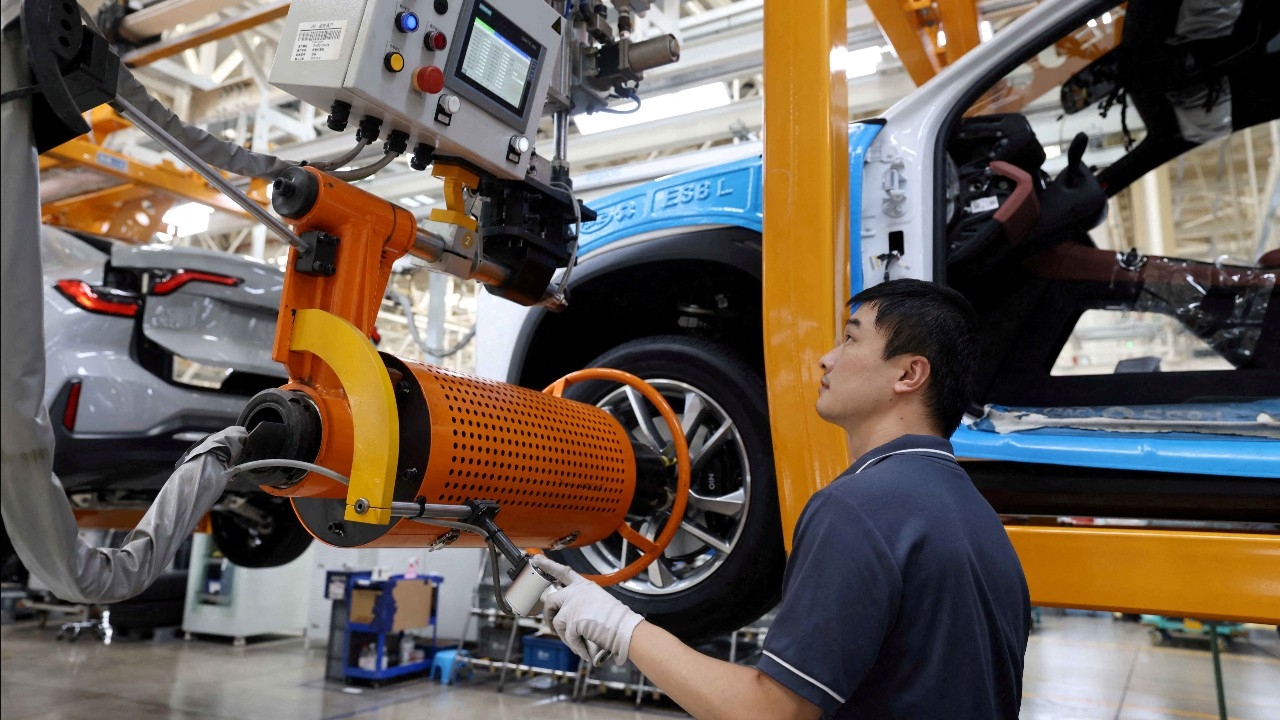
The main economic driver this quarter was manufacturing, while China continues to face pressure from a slowdown in real estate investment.
Kyle Chan, an analyst at the Brookings Institution, noted that exports of automobiles and industrial goods were key highlights in the latest economic data.
However, he warned that the full impact of the Iran war has yet to be seen, and GDP in the next quarter may weaken due to trade disruptions and rising energy costs.
Recent data from the General Administration of Customs showed that China's export growth slowed to 2.5% year-on-year in March, the lowest in six months.
Previously, exports in January and February grew over 20%, supported by strong demand for electronics and industrial goods.
Meanwhile, China's imports in March surged nearly 28%, reducing the trade surplus to just over 50 billion US dollars, the lowest level in more than a year.
Zhou Yixiao, an economist at the Australian National University, said the rise in imports reflects higher global commodity costs caused by the Iran war.
In particular, tensions in the Strait of Hormuz, a key oil shipping route, have pushed up prices for crude oil and related raw materials such as plastics.
Despite better-than-expected growth, China faces multiple challenges including weak domestic consumption, a declining population, and a prolonged real estate crisis. External factors like trade tensions and US import tariffs under Donald Trump remain significant pressures.
Currently, most Chinese goods face a 10% import tariff from the US. US Treasury Secretary Scott Bessent indicated that previous tariff rates might be reinstated before a US Supreme Court ruling expected by July.
It is also anticipated that Donald Trump and Chinese President Xi Jinping may meet in China in May, which could influence the economic and trade relationship between the two countries.
: SourceBBC
Click to read more aboutInternational news