

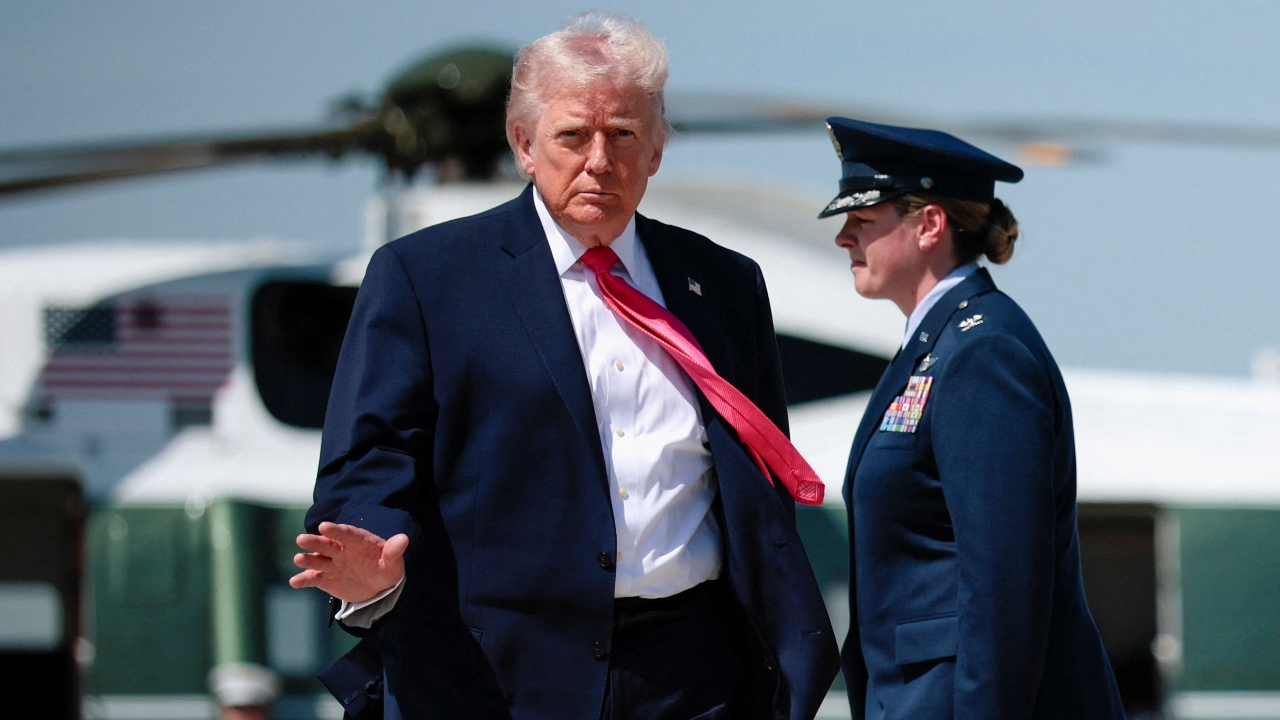
The U.S. President stated that talks with Iran have made significant progress after Iran agreed to deliver its enriched uranium stockpile to the United States. He also stressed the need to end the nuclear program and to swiftly consider outstanding proposals that remain unresolved.
Donald Trump revealed that Iran has agreed to hand over its stockpile of enriched uranium to the United States, which he referred to as "nuclear powder," noting that the material could be used to develop nuclear weapons. Trump emphasized that any agreement must permanently prevent Iran from possessing nuclear arms.
Previously, the United States threatened to resume air strikes and maintain maritime blockades if Iran did not accept a peace agreement to end the conflict that began on 28 February. On 16 April, Trump said both sides were very close to reaching a peace deal to end the escalating war in the Middle East.
U.S. Secretary of Defense Pete Hegseth warned that if Iran makes the wrong decision, it will face both blockades and attacks on its energy infrastructure.
Meanwhile, Trump announced that Israel and Lebanon have agreed to a 10-day ceasefire, and leaders of both countries are expected to visit the White House within a few days.
At the same time, the Hezbollah group stated it would respect the agreement if Israel ceased its attacks.
Reports indicate that diplomatic efforts continue, with Pakistan playing a mediating role in negotiations between Washington and Tehran.
Pakistan's Chief of Army Staff, Asim Munir, met with Iran's Speaker of Parliament, Mohammad Bagher Ghalibaf, after the first round of talks failed to reach an agreement.
Iran's ambassador to the United Nations expressed cautious optimism about the negotiations.
However, proposals from both sides still differ: the U.S. demands that Iran suspend uranium enrichment for up to 20 years, while Iran offers only five years and insists its nuclear program is for civilian purposes.
Recently, tensions have spread to the Strait of Hormuz, a critical global oil shipping route. The U.S. Central Command claims it can nearly halt Iran's maritime trade and has intercepted at least 13 vessels.
Meanwhile, Iran warned that if the U.S. intensifies control over shipping lanes, it will respond by blocking exports and imports in the Persian Gulf, the Gulf of Oman, and the Red Sea, and may attack U.S. ships.
Click to read related news aboutinternational news