

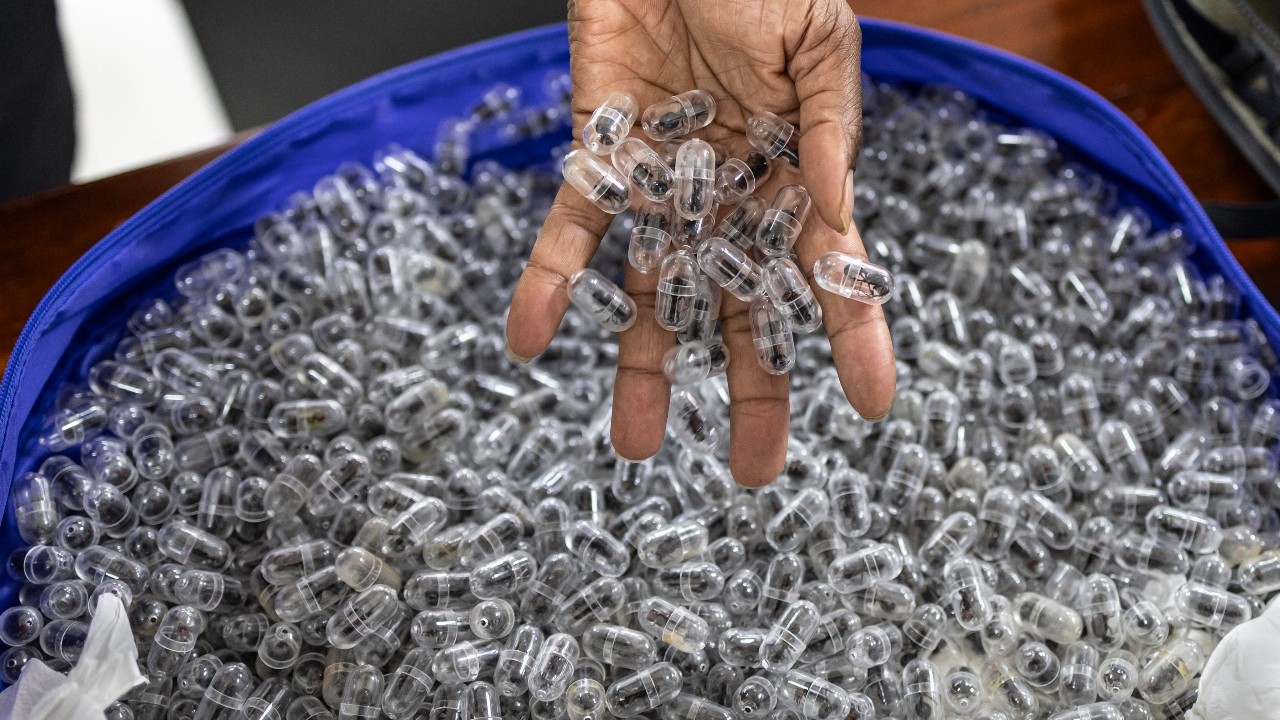
A court in Nairobi, Kenya, sentenced a Chinese man to one year in prison and fined him over 200,000 baht after he attempted to smuggle more than 2,200 "queen ants" destined for China. The case revealed this as a lucrative business in East Africa, with prices soaring up to 7,000 baht per ant in collector markets.
The Kenyan court sentenced Zhang Kechuan, a Chinese national, to one year imprisonment and fined him 1 million Kenyan shillings (approximately 248,000 baht) for illegal wildlife trafficking after he was caught with a large number of queen ants.
Zhang was arrested by customs officials at Nairobi International Airport on 10 March while preparing to travel to China. Upon inspecting his luggage, authorities found small test tubes containing 2,238 live ants, of which 1,948 were "giant African harvester ants" (Messor cephalotes), a species highly desired by collectors.
Irene Kichobi, the judge presiding over the case, stated in her verdict that the defendant lacked honesty and remorse, stressing the need for severe punishment to deter repeat offenses. She noted the current widespread illegal trade in garden ants causes significant negative impacts on natural ecosystems.
Investigations revealed Zhang purchased the ants from Charles Mwangi, a Kenyan national, at 10,000 Kenyan shillings per 100 ants. Mwangi has been charged and is currently out on bail. The ants have become highly popular among exotic animal collectors in China, the United States, and Europe, with some queen ants valued at up to 220 US dollars, about 7,050 baht each.
This is not the first case of its kind; last year, Kenyan courts sentenced two Belgians, a Vietnamese, and a Kenyan for similar offenses after they attempted to smuggle nearly 5,000 ants in test tubes out of the country.
After serving his one-year sentence, Zhang will be immediately deported to his home country. However, his lawyer has announced plans to file an appeal within the 14-day legal deadline.