

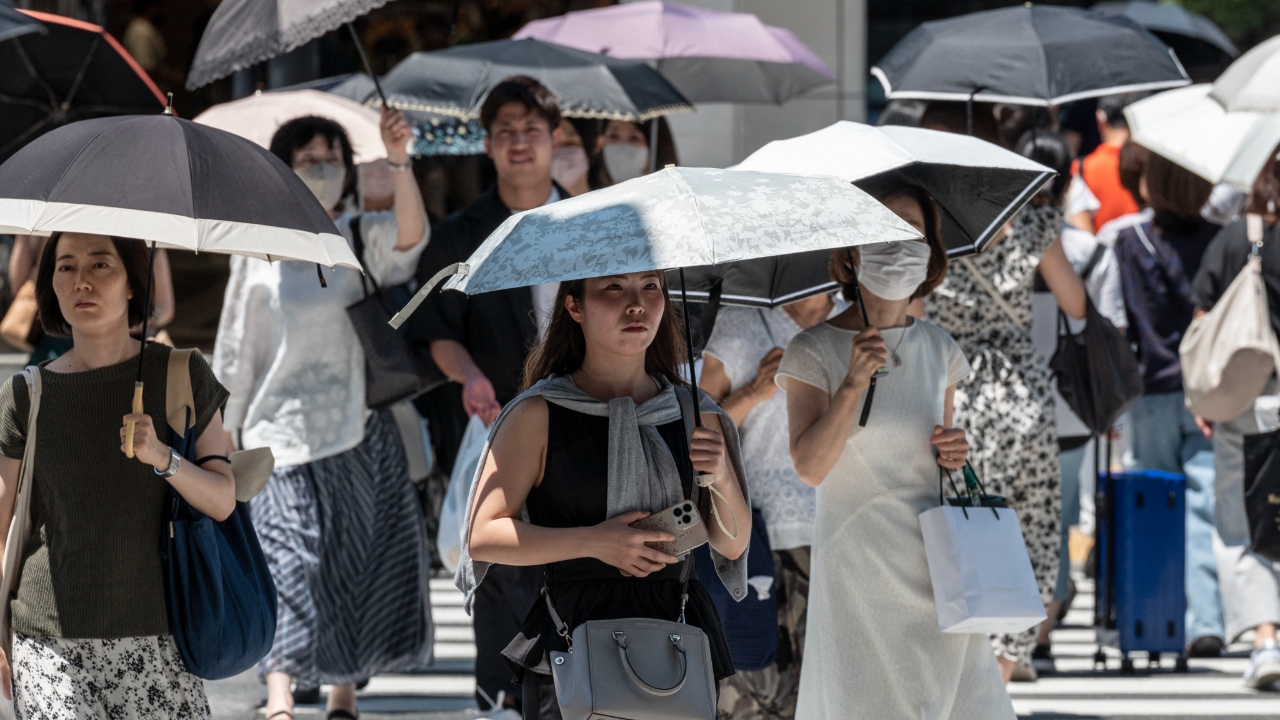
Japan has introduced a new term to describe days when temperatures reach 40 degrees Celsius or higher, following the country's hottest summer on record last year.
On 17 April 2026, Japan Today reported that the Japan Meteorological Agency (JMA) revealed the new term "Kokushobi" to denote days with temperatures of 40 degrees Celsius or 104 degrees Fahrenheit and above. Japanese and international media interpret the term as "extreme heat day," "torturous heat day," or "severe heat day."
The report stated that this term was the most popular choice in a nationwide online poll conducted from February to March, which involved about 478,000 respondents who selected from a total of 13 options.
Previously, Japan had terms for various heat levels, such as days exceeding 25, 30, and 35 degrees Celsius, but there was never a specific term for days hotter than 40 degrees Celsius.
The report explained that the word "Koku" means cruel, severe, or torturous, reflecting the increasingly intense heat conditions people have faced in recent years. The new term was introduced after 2025, when Japan experienced its hottest summer since records began in 1898, with the nationwide average temperature 2.36 degrees Celsius above normal.
Between June and August last year, Japan had nine days with temperatures exceeding 40 degrees Celsius and set a new record high of 41.8 degrees Celsius in Isesaki city. Meanwhile, several major cities also faced intense heat; Tokyo recorded 25 days over 35 degrees Celsius compared to its usual 4.5 days, and Kyoto experienced 52 such days versus an average of 18.5 days.
The Japan Meteorological Agency forecasts a high chance of above-average temperatures again from June to August this year. Experts point out that heatwaves and extreme weather events are becoming more frequent and severe worldwide due to climate change impacts.
Source: Japan Today