

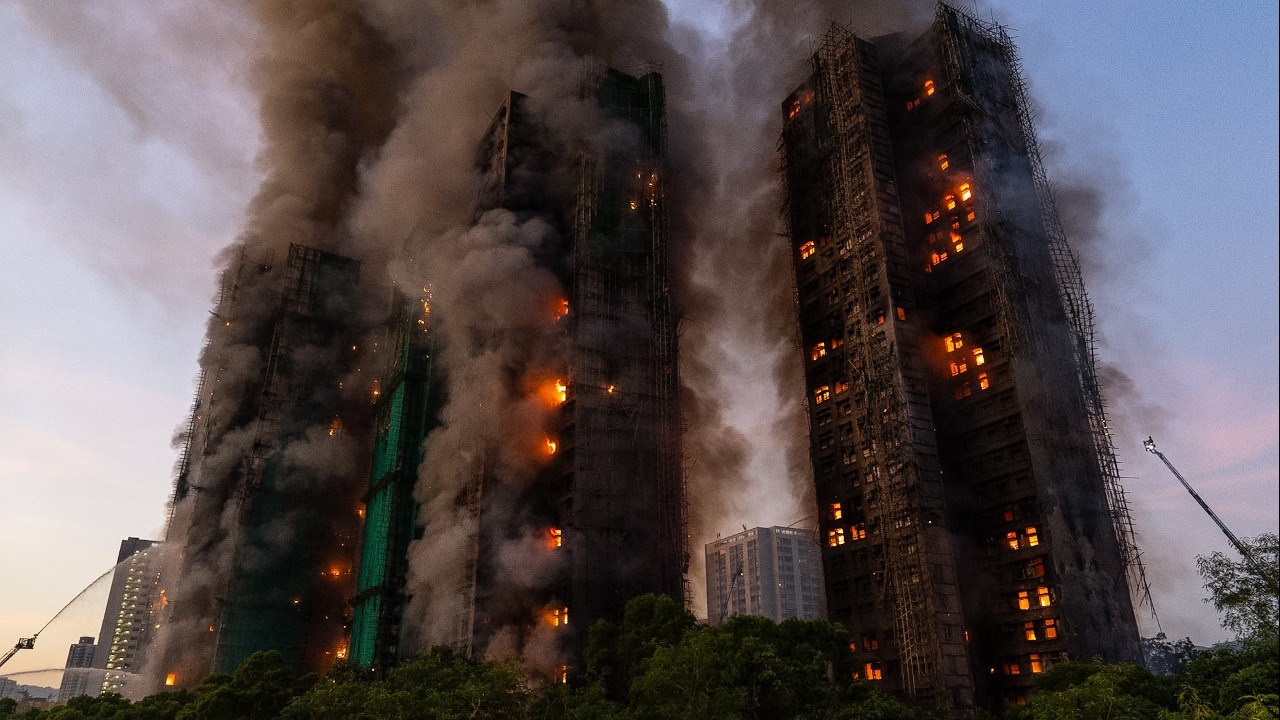
The atmosphere as survivors return to their "homes" at Wang Fuk Court, a residential building in Tai Po, Hong Kong's site of the most severe fire in over 60 years, is filled with sorrow. Authorities have allowed tenants and owners to enter for the first time in nearly five months to inspect damage and recover important belongings.
Officials advised residents to prepare themselves emotionally. Firefighters warned that over 920 units were damaged, with some completely destroyed. Government-released images show ceilings and walls of some apartments collapsed or charred black, with interiors filled with debris.
The damaged area of the residential building in Tai Po has been designated a "danger zone," while structural reinforcements are underway in compromised sections. Residents returning to their units must wear face masks, helmets, and gloves.
Mr. Kuang Mak, 78, a survivor who has lived in the apartment for over 40 years, expressed his distress before re-entering. Although somewhat prepared by photos sent from social workers, seeing his home reduced to steel frames and broken tiles was hard to accept—especially the loss of sentimental items like his wedding photos from 50 years ago and letters from his son, all believed destroyed by the fire.
Among over 4,600 victims, about one-third are elderly, facing great difficulty since the building's 31-floor elevators remain nonfunctional. Some seniors had to physically train to climb stairs to check their units. Authorities also limit visits to 3 hours and allow no more than 4 people per unit (or one person in heavily damaged units) for safety.
Meanwhile, people await the investigation results into the fire that claimed 168 lives. Preliminary findings from an independent committee indicate nearly all safety systems and firefighting equipment failed due to "human error" on the day of the fire.
Harry Leung, a survivor and one of the last residents to leave the building on the fire day, said he has mixed feelings about returning. Though he wants to see his longtime apartment, he expressed disappointment with the mere 3-hour time limit allowed, feeling it was insufficient.
Hong Kong officials have offered to buy back apartments at pre-fire market prices despite damage, stating that rebuilding on the same site is "impossible." An official commented, "I believe many do not want to accept the government's offer but have no choice. They are forced to accept it." He added, "If I had a choice, I wouldn’t want to leave Wang Fuk Court."
The Hong Kong government is likely to demolish all seven severely damaged buildings and has proposed buying back ownership rights from unit owners. However, some citizens note that inspections found only half of the 1,700 units were heavily damaged, suggesting the rest might still be repairable.
The psychological wounds remain deep not only for those who lost homes but also for residents of the eighth building that escaped the fire. They experience severe mental stress, saying that seeing neighboring buildings blackened reminds them of neighbors and classmates who died in the blaze, causing many families to hesitate to return to the area.
The process allowing survivors to re-enter and retrieve belongings will continue until early May under tight security, following reports of arrests of suspects caught stealing from the abandoned buildings in recent weeks.
. ASSOCIATED PRESS/ AFP