

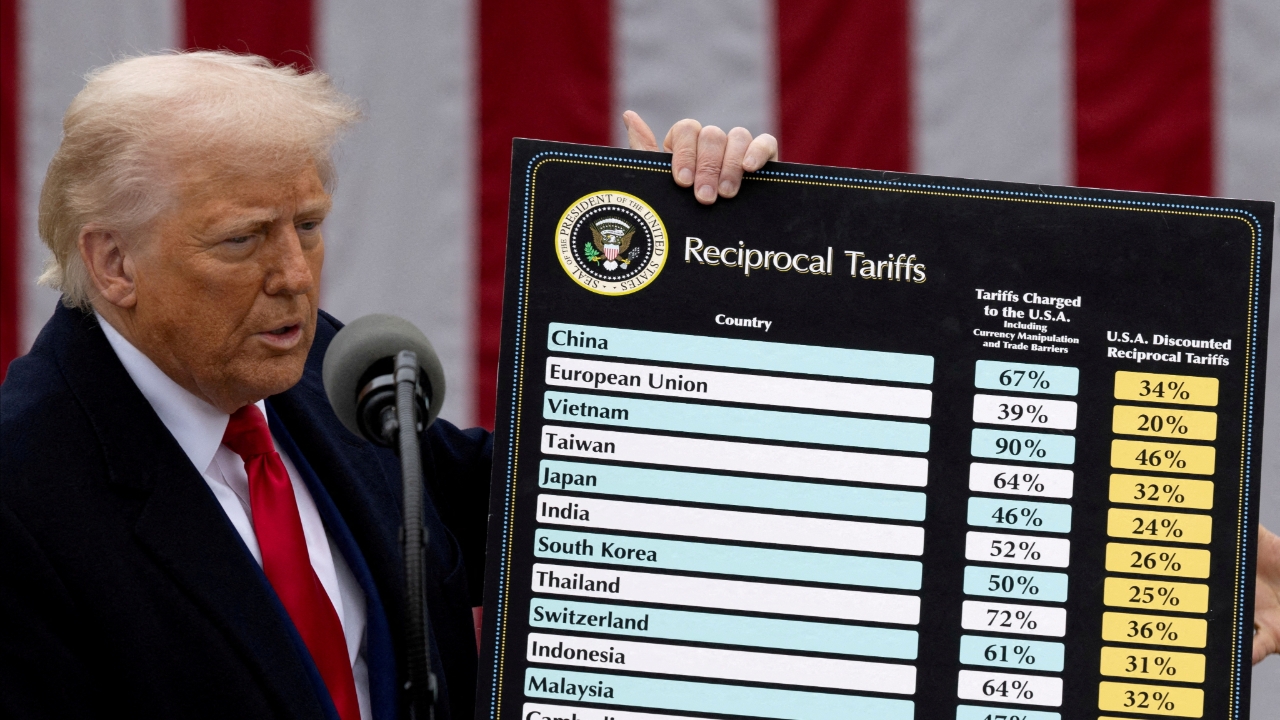
The U.S. government has started the process of refunding companies impacted by Donald Trump's tariff measures, but it appears that consumers will not benefit from these refunds.
On 20 Apr 2026 GMT+7, the U.S. government began refunding billions of dollars in customs duties collected under Donald Trump's tariffs on imports from trade partners worldwide, following the U.S. Supreme Court's decision in February to overturn those tariffs.
This process has been described as the largest refund program in history, allowing companies to file claims online to reclaim tariffs collected under what is called the “Liberation Day tariffs” imposed by President Donald Trump, including interest.
In March, the U.S. International Trade Commission ordered customs officials to refund more than $160 billion (approximately 5.1 trillion baht) previously collected, enabling about 330,000 importers the opportunity to receive refunds.
However, it is expected that retail consumers, who were indirectly affected through higher prices due to these tariffs, will not receive compensation.
The refunds relate to tariffs imposed under the International Emergency Economic Powers Act (IEEPA) by President Donald Trump. In March, Judge Richard Eaton stated that “all registered importers charged tariffs under the IEEPA are entitled to benefit from the Supreme Court’s ruling.”
Data from early April indicated that over 56,000 importers have completed necessary steps to prepare for online refund claims once the system opens, with total claims valued at $127 billion.
The refund system, named the Consolidated Administration and Processing of Entries (Cape), was launched last Monday.
A spokesperson for the U.S. Customs and Border Protection (CBP) said the Cape system was created to “efficiently manage refunds,” processing payments to importers in lump sums rather than requiring businesses to submit claims for individual products.
CBP added that eligible claimants can receive refunds with related interest within 60 to 90 days.
However, a key issue is concern from consumer groups facing higher prices caused by Trump’s tariffs, who have no direct means to claim compensation themselves.
One way consumers might be compensated is if businesses pass on the refunded tariff money to affected parties, but so far only a few companies have announced plans to do so.
This situation has led consumer groups to file class-action lawsuits against companies they claim shifted Trump’s tariff costs onto consumers, arguing that any refund received by businesses should be passed on to consumers.
Defendants include retail giant Costco. Nevertheless, Costco CEO Ron Vachris stated the company plans to pass tariff refunds to customers “through lower prices and better value.”
Analysts note the issue is complex because while many importers raised prices, such increases often did not fully cover the tariff costs.
Moreover, these tariffs often generated additional costs, forcing businesses to borrow funds to pay tariffs and causing hard-to-measure impacts like lost sales.
Officials from the Trump administration have made clear they do not expect consumers to directly benefit from the refunds.
In March, U.S. Trade Representative Jamison Greer urged companies receiving these “windfalls” to give bonuses to employees, while in February Treasury Secretary Scott Bessant said it was nearly impossible for consumers to benefit.
“I feel that Americans probably won’t see this money,” he said.
Follow international news:https://www.thairath.co.th/news/foreign
Source:bbc