

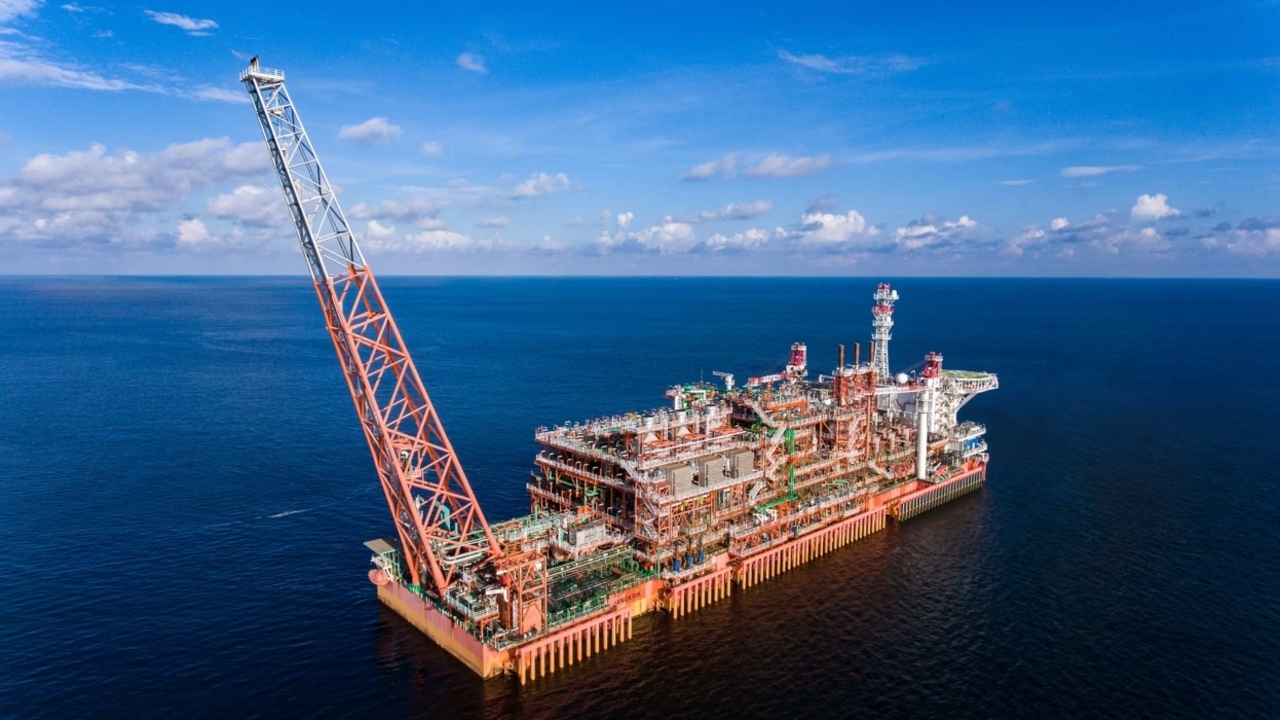
Italian energy giant Eni announced the discovery of a "large" natural gas field off the coast of East Kalimantan province in Indonesia. The Indonesian government forecasts that this discovery will increase the company's production capacity by up to three times by 2028.
Eni's statement said the gas field is located about 70 kilometers off the coast of East Kalimantan province. Preliminary estimates indicate a gas reserve of approximately 5.0 trillion cubic feet, or about 141,580 million cubic meters, along with around 300 million barrels of condensate, a liquid hydrocarbon compound. This discovery is expected to become a key energy source both domestically and for export markets worldwide.
Bahlil Lahadalia, Indonesia's Minister of Energy and Mineral Resources, described this as a "major discovery," projecting gas production capacity to rise from the current 600-700 million cubic feet per day to 2,000 million cubic feet per day by 2028, and reaching 3,000 million cubic feet by 2030. Condensate production is expected to increase to 150,000 barrels per day, significantly reducing the country's reliance on imported oil.
Indonesia is currently under heavy pressure from rising global energy prices caused by conflicts in the Middle East, driving crude oil prices on the world market up to about 100 dollars per barrel, well above the government's budget estimate of 70 dollars per barrel.
To support fuel subsidy budgets, the government under President Prabowo Subianto has accelerated efforts to secure new energy sources, including long-term oil purchase agreements with Russia and cooperation on clean energy with France.
Wahd Nabil Akmad Mulachela, spokesperson for Indonesia's Ministry of Foreign Affairs, said following a visit to Moscow, "We do not have exact figures, but this will be a long-term effort to ensure energy security."
Meanwhile, President Prabowo traveled to France to meet with President Emmanuel Macron, where both leaders agreed on cooperation regarding "energy transition and the development of new and renewable energy."
Previously, the Indonesian government implemented strict energy-saving measures, including limits on fuel refilling and requiring civil servants to work from home every Friday to conserve the country's energy reserves.
Minister Bahlil concluded that this discovery demonstrates Indonesia's vast remaining potential in oil and gas production, which will serve as a crucial pillar in driving the country toward the sustainable goal of "energy self-reliance."
,AFP