

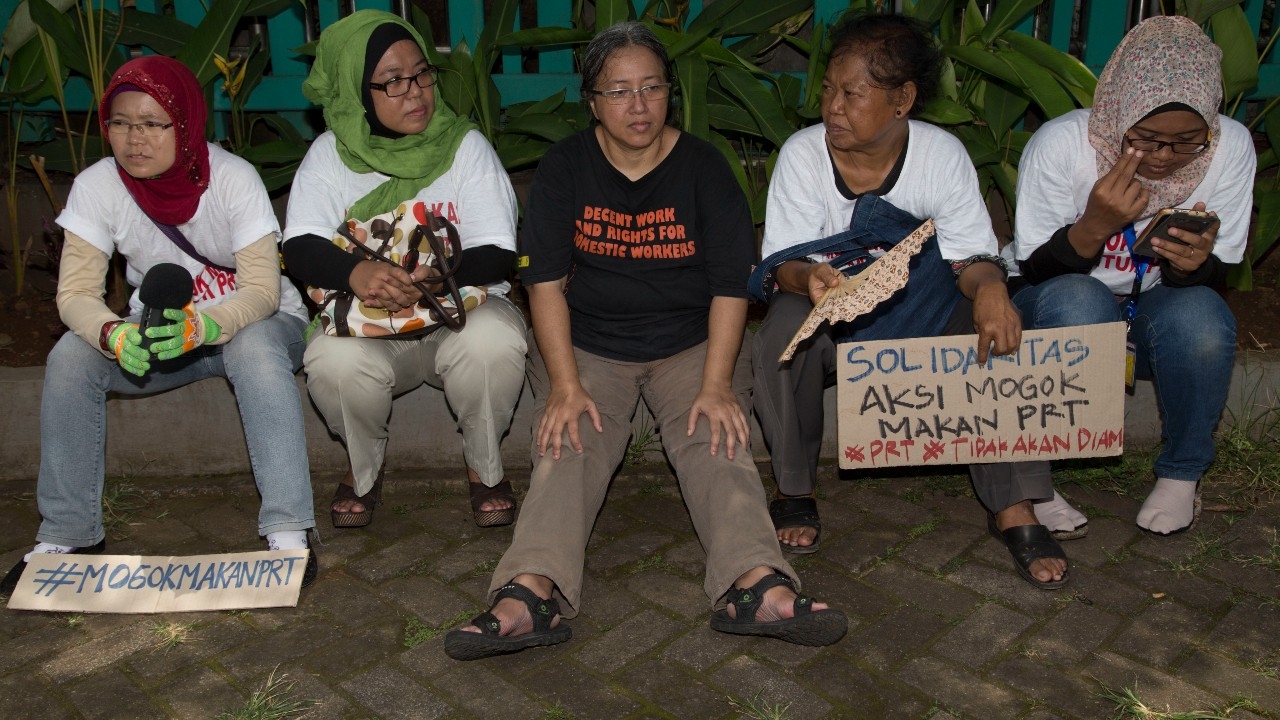
The Indonesian Parliament has ratified a law protecting "domestic workers" after more than 22 years of advocacy. Over 4 million workers are set to receive social security, paid leave, and fair wages, while the use of child labor under 18 years old is banned.
The Indonesian Parliament approved the draft law on protecting domestic workers (PPRT), ending a 22-year wait since its initial proposal in 2004. This law directly affects about 4.2 million domestic workers nationwide, nearly 90% of whom are women. Previously, they were not legally recognized as "workers," leaving them without protections and vulnerable to exploitation.
Arjen Astuti, a domestic worker, said, "It feels like a dream. This is the result of a 22-year struggle by neglected women to gain protection."
The law aims to establish new employment standards, granting workers rights to health insurance, paid vacation, and pensions. Employment agencies or recruiters can no longer deduct fees from workers’ wages. Additionally, employing children under 18 for domestic work is made illegal.
The law also requires clear employment contracts, covering both direct hires and those hired through companies. The government will support vocational training for those preparing to enter this profession.
Afriansyah Nur, Deputy Minister of Manpower, stated that this law lays a crucial foundation for justice and humanity in society. Supratman Andi Aktas, Minister of Law, said, "The law protecting domestic workers aims to provide legal security for both domestic workers and employers and to prevent discrimination, exploitation, and all forms of abuse against domestic workers." However, regulators have one year to draft detailed implementation policies.
Despite this milestone, human rights group Jala PRT warned that the real challenge is changing employers’ attitudes. They noted that between 2021 and 2024, over 3,300 cases of physical and psychological violence against domestic workers were reported. Therefore, public education campaigns about employers’ responsibilities are urgently needed going forward.
In 2023, nine suspects in Jakarta, including a 70-year-old woman, were sentenced to up to four years in prison for assaulting and torturing a domestic worker. The worker was beaten, burned with cigarettes, and chained to a dog cage.