

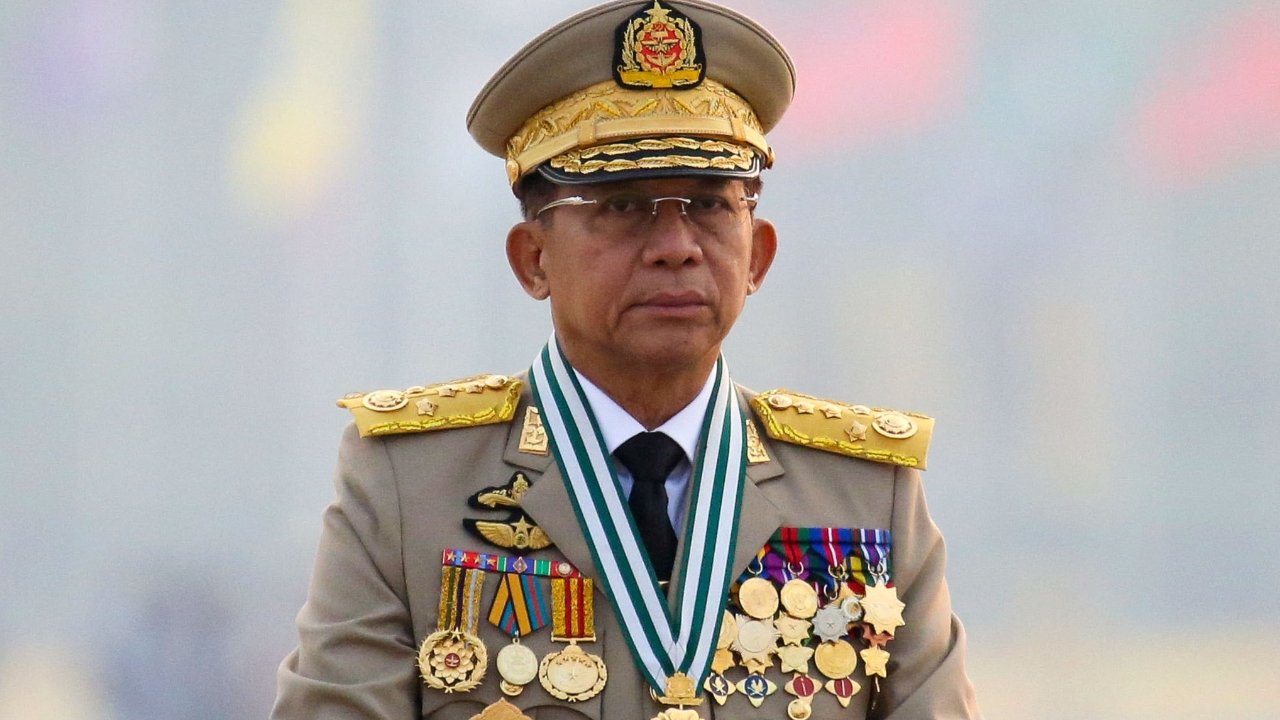
Senior General Min Aung Hlaing has declared martial law covering 60 districts across Myanmar to tighten control over conflict zones for 90 days, aiming to enhance security and stability in areas still facing heavy fighting. This follows his assumption of the presidency and the transfer of executive and judicial authority to the new Commander-in-Chief.
Senior General Min Aung Hlaing, Myanmar's military leader who recently became president, issued an emergency order today (24 Apr 2024 GMT+7) imposing martial law in 60 districts nationwide. The move aims to strengthen security in areas still experiencing intense combat, despite the military's claims of a transition to civilian government.
The declaration is effective for 90 days starting 23 April 2024 GMT+7, covering areas in Kachin, Kayah, Karen, Chin, Shan, and Rakhine states, as well as Sagaing, Magway, and Mandalay regions. These areas have previously been under curfew since the 2021 military coup.
According to reports from state-affiliated media, all executive and judicial powers in the martial law zones will be transferred to General Ye Win Oo, Myanmar's new Commander-in-Chief. The objective is to "end armed terrorism" and restore "the rule of law" to bring back order.
This move marks Min Aung Hlaing's first major action since becoming Myanmar's president in early April, following the military-backed party's contested election victories in December and January, which drew international criticism for lacking fairness and transparency.
Notably, the martial law declaration comes after several opposition groups—including ethnic armed organizations and People's Defense Forces (PDF)—rejected Min Aung Hlaing's peace proposal, citing distrust in the military leader.
The areas declared under martial law include strongholds of key groups such as the Karen National Union (KNU), the Arakan Army (AA), and the Kachin Independence Army (KIA).
The declaration also extends to some territories previously under ceasefire agreements with the military ethnic armed groups.
Analysts and former Myanmar military officers say the current junta strategy is dual: offering peace proposals while simultaneously applying heavy military pressure to force opposition groups to surrender or negotiate on the military's terms.
Myanmar remains trapped in a cycle of conflict since the 2021 coup that ousted Aung San Suu Kyi's government, turning peaceful protests into a nationwide armed conflict.