

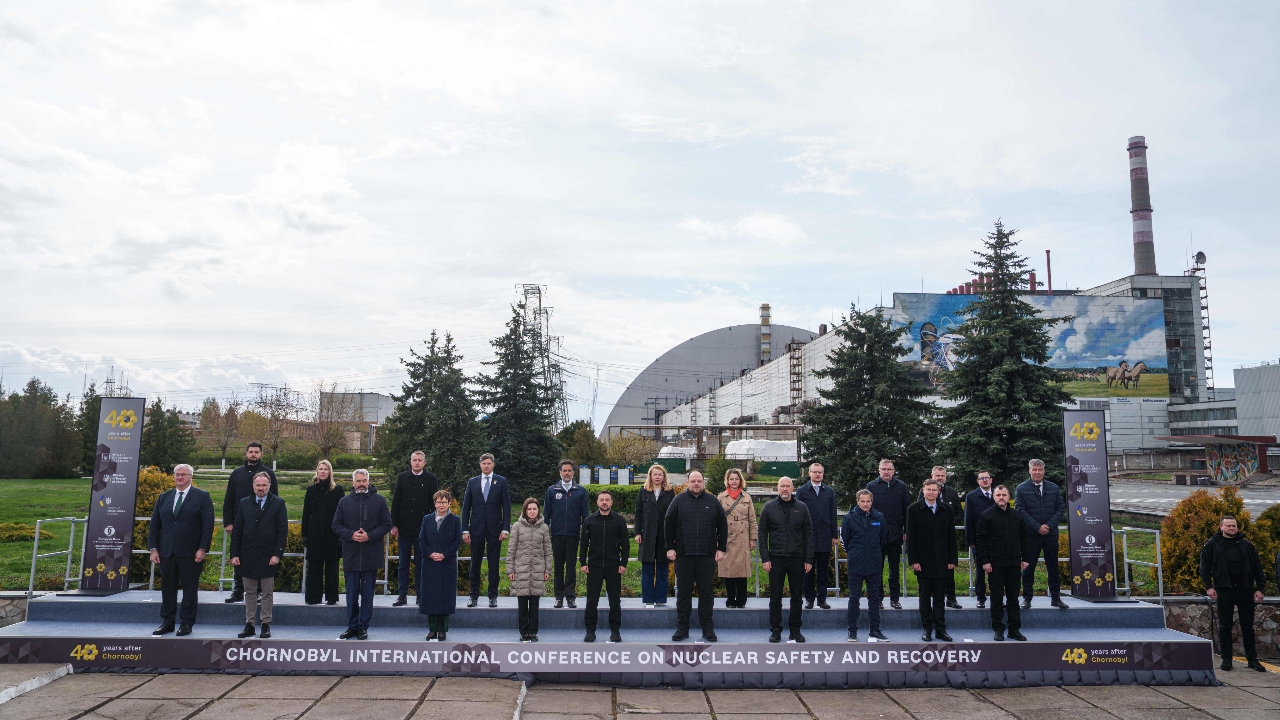
Ukraine held a ceremony to mark the 40th anniversary of the Chernobyl nuclear power plant crisis, the world's most severe nuclear accident. This year's commemoration was tense due to the ongoing fourth year of the Russia-Ukraine war, which poses new risks to nuclear safety in the region.
President Volodymyr Zelensky, along with leaders from Moldova and senior European Union officials, lit commemorative candles at the Chernobyl power plant site. Zelensky stated, "Currently, the risks have not diminished due to Russia's actions, both at the Zaporizhzhia plant and through attacks on energy infrastructure nationwide."
Reports indicate that in February 2025, Russian drones struck the "steel dome covering the reactor," creating holes. Although no radioactive leakage has been reported and initial repairs have been made, the European Bank for Reconstruction and Development (EBRD) estimates that up to 500 million euros (approximately 19 billion baht) will be needed to repair the main structure to prevent permanent damage.
Ukrainian data also states that since mid-2024, at least 92 Russian drones have flown within a 5-kilometer radius of the plant's protected area.
Besides Chernobyl, the situation at the Zaporizhzhia nuclear power plant—the largest in Europe and occupied by Russia since March 2022—is also critical. On 26 April, it experienced its 15th "temporary blackout," risking failure of the cooling system and potential meltdown of the reactor core.
The Chernobyl disaster occurred on 26 April 1986 at 01:23 when reactor number 4 exploded during a system test, releasing radioactive smoke across Europe. The Soviet government at the time attempted to conceal the incident for several weeks until Sweden detected abnormal radiation levels.
Estimates of deaths from cancer and long-term effects range from 4,000 to nearly 100,000. Over 600,000 "Liquidators" who participated in the cleanup were exposed to high radiation levels. A restricted zone covering over 4,800 square kilometers in Ukraine and Belarus was established, which experts say will remain unsafe for human habitation for another 24,000 years.
Currently, the plant is decommissioned and undergoing dismantling, with over 2,000 staff managing the site. The nearby city of Prypiat, once home to more than 48,000 people, has become a ghost town reclaimed by nature, inhabited by wildlife such as moose and rare wild horses in the decaying buildings. However, this calm was disrupted by the war when Russian forces briefly occupied the area in 2022 and some soldiers dug trenches in the "Red Forest," the zone with the highest radiation accumulation.
The director of the Chernobyl plant warned that if another airstrike hits the protective structure, it could collapse, unleashing the nightmare of the past to devastate the region once again.
. . .Reuters/ AFP