

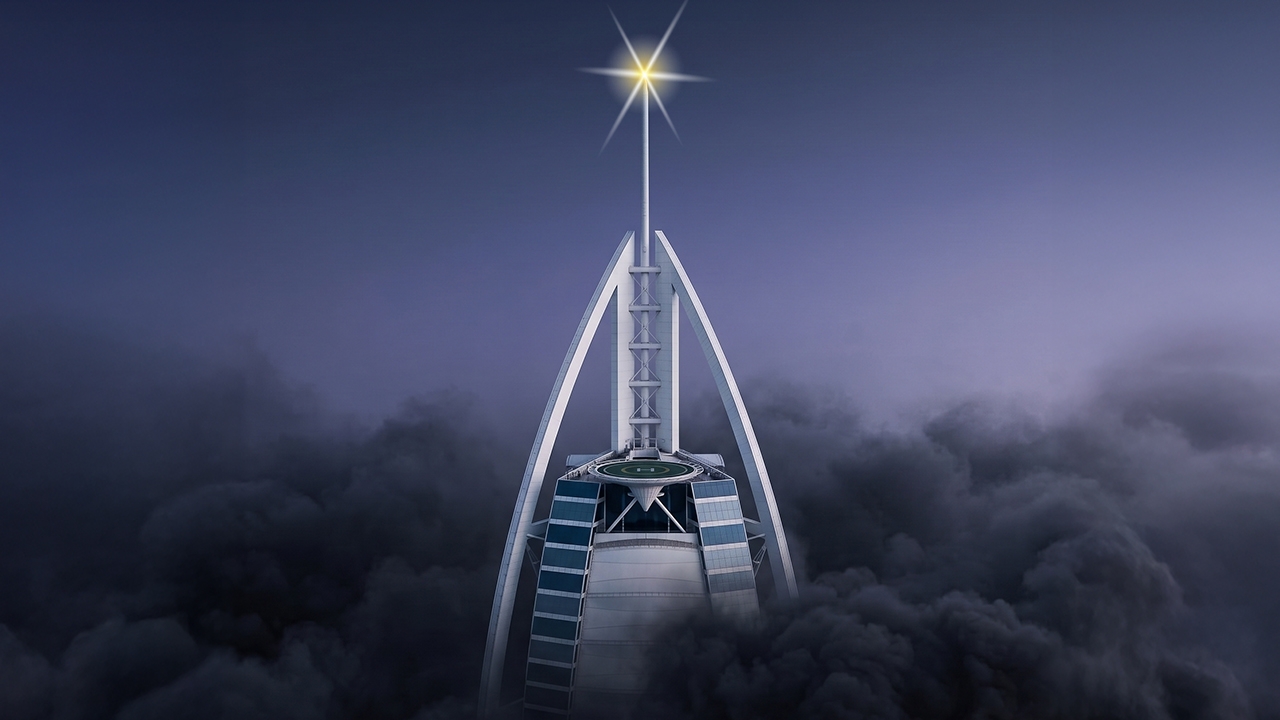
Dubai, a global metropolis once at the pinnacle of urban development success, became the world’s leading special economic zone and home to soaring skyscrapers and futuristic man-made structures designed to attract investors and tourists worldwide. Now, it faces a fragile situation that could become its worst in 2026, despite having set a record of 95.2 million tourists in 2025.
Everything changed rapidly, turning into a painful past. Geopolitical conflicts between the U.S. and Israel against Iran have made countries around the Persian Gulf, including Dubai, targets of attacks.
After Dubai Airport's Terminal 3 was heavily attacked twice, despite intercepting over 2,200 attacking drones, the city shifted into a state of insecurity.
Being targeted has caused hotel occupancy rates to fall below 10%, with a 40% drop in investors and tourists, and a 35% reduction in brand value.
Crucially, wealthy tourists have started moving their money to safer countries with robust financial systems such as Singapore and Switzerland.
Researchers from major financial institutions, using scenario analysis, suggest that if the Persian Gulf conflict continues, Dubai Mall—once bustling with visitors—could become as quiet as an air-conditioned warehouse, with shoppers dropping 45%, luxury sales down 60%, and 15% of stores closing.
Meanwhile, electricity costs have risen 25%, living expenses 30%, and problems stem from supply shortages due to disrupted logistics systems.
Significantly, people’s behavior is shifting from"buying luxury goods"towards"stockpiling essentials"instead.
Many questions confront Dubai’s leadership about how they can sustain an economy reliant on tourism, luxury spending, and 60% foreign investment if security continues to be undermined or collapses.
Dubai International Airport, the economic heart accommodating over 100 million travelers annually, saw confidence collapse immediately after the attacks.
Flights at this Middle East hub had to be reduced to just 12% of normal operations, with many rerouted elsewhere, causing a 70% drop in flight numbers while maintenance costs for the now underused airport remain at $15 million per day.
Insurance companies have raised risk premiums by 500%, effectively signaling to avoid using Dubai.
Looking at hotels and iconic luxury buildings like Burj Al Arab, lavishness has turned into a burden, with drone debris damage repairs exceeding $40 million since March. The towering symbol of prosperity, Burj Khalifa, has also become a target.
Despite two decades of leadership elevating Dubai’s economy to world-class sophistication and connectivity,
the world’s shift to permanent geopolitical volatility and self-reliance challenges Dubai’s leaders profoundly.
Surveys indicate top tourism attractions like“At the Top”may close indefinitely, as missile warnings leave only 3 to 5 minutes for evacuation, making safety management impossible.
Shutting down operations has become easier than ensuring public safety, with insurance costs soaring and risks borne individually.
As mentioned, once-proud skyscrapers have become liabilities, causing Dubai’s real estate value to drop 22% in just 60 days.
Palm Jumeirah,the “paradise in the sea,”faces a high risk of isolation due to emerging water and waste system problems, prompting urgent home sales at losses up to 300%, as the island’s roughly 80,000 residents rely on a single access road.
Dubai must still fund the Museum of the Future, which projects visions 50 years ahead, but declining visitors and the departure of international experts may force budget cuts.
The first sign of collapse could be Global Village, the tourist site likely to close due to prohibitive security costs—ten times higher than buildings because of its large 1.6 million square meters area and vulnerability to drone attacks.
Ski Dubai, the desert ski resort, faces crisis due to its energy consumption equal to a small city; power outages could melt its 22 tons of snow.
Dubai in 2026 may be likened to a cracked mirror reflecting a critical question for the modern world: Have we valued luxury and grandeur more than the true foundation of security? Especially if the Persian Gulf war drags on for years.
Ultimately, prosperity may not lie in towering skyscrapers or grand projects but in the stability of the ground beneath us and the peace that gives meaning to everything.
Perhaps the most important question is not how high we can build, but how securely we can maintain what we have if wealth lacks security.