

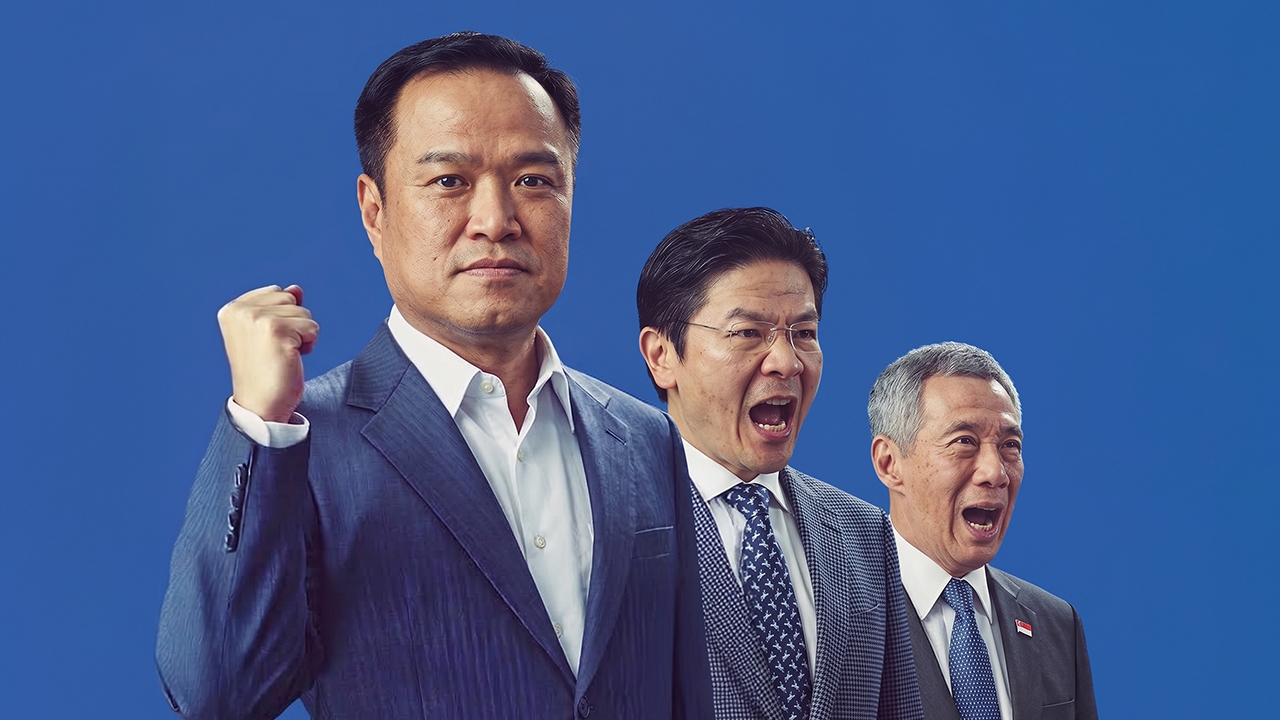
Former Prime Minister of Singapore Lee Hsien Loong As the country's president, he recently delivered a keynote speech to warn the public that the era of certainty is over, and the nation cannot survive if it clings to old ways of thinking and governance.
This message invites reflection on the Thai government and the majority of Thai citizens who still hesitate to break free from old mindsets or lack innovative thinking distinct from current practices.
Lee Hsien Loong noted that Singapore spent over 60 years experimenting and strengthening its systems. Thus, existing policies are valuable legacies that new civil servants must deeply learn and master the rules of governance. However, at the same time, old policies should not become untouchable dogma because in a rapidly changing world, sometimes we must "Break the mold" or dare to shatter old frameworks to start anew. This is the key to knowing when to follow rules and when to courageously break them to create something better.
Lee Hsien Loong also posed a powerful question to the nation: Will the government, civil servants, and citizens be brave enough to accept difficult measures or "swallow the bitter pill" to preserve what is called Singapore Exceptionalism —the ability of a small country to transcend limitations through discipline and trust, upheld by a virtuous cycle of Good politics -> Good policies -> Good outcomes -> Trust. This must be maintained amid a ruleless world filled with populism. The firm conclusion is that nothing in this world is free; everything has a price. The crucial question is not whether we must pay but whether we are willing to pay for the "future."
Meanwhile, Prime Minister Lawrence Wong delivered a speech on Labor Day (1 May 2026), an important and emotionally charged address. Notably, he broke down in tears on stage when recounting the mission to send aircraft to bring Singaporeans home during the US-Israel and Iran missile crisis. PM Wong emphasized that the world today is filled with great uncertainty that will persist for a long time. The Middle East crisis will trigger cascading effects—energy crises, inflation, AI disruptions, and great power conflicts—all directly impacting Singapore. He likened it to a new storm arriving, with stronger storms to follow, meaning the government must act decisively and stand with the people throughout the journey.
In this new world where work and life are fundamentally changing due to AI replacing many jobs, PM Wong affirmed that while many occupations will disappear, new jobs will emerge. The government's role is to ensure that "everyone is brought along," leaving no one behind.
This major adaptation is unavoidable. The shared message Lee Hsien Loong and Lawrence Wong are instilling is "Do not fear uncertainty, but do not underestimate it." The answer from both leaders is not to wait passively for improvement but for the state to be more proactive, people to relearn, systems to adapt quickly, and most importantly, to prepare for the pain that comes with change.
What the author wishes to see is Prime Minister Anutin Charnvirakul's government communicating such truths to the people, so that the majority of the country has a chance to "survive" in this new world for real.