

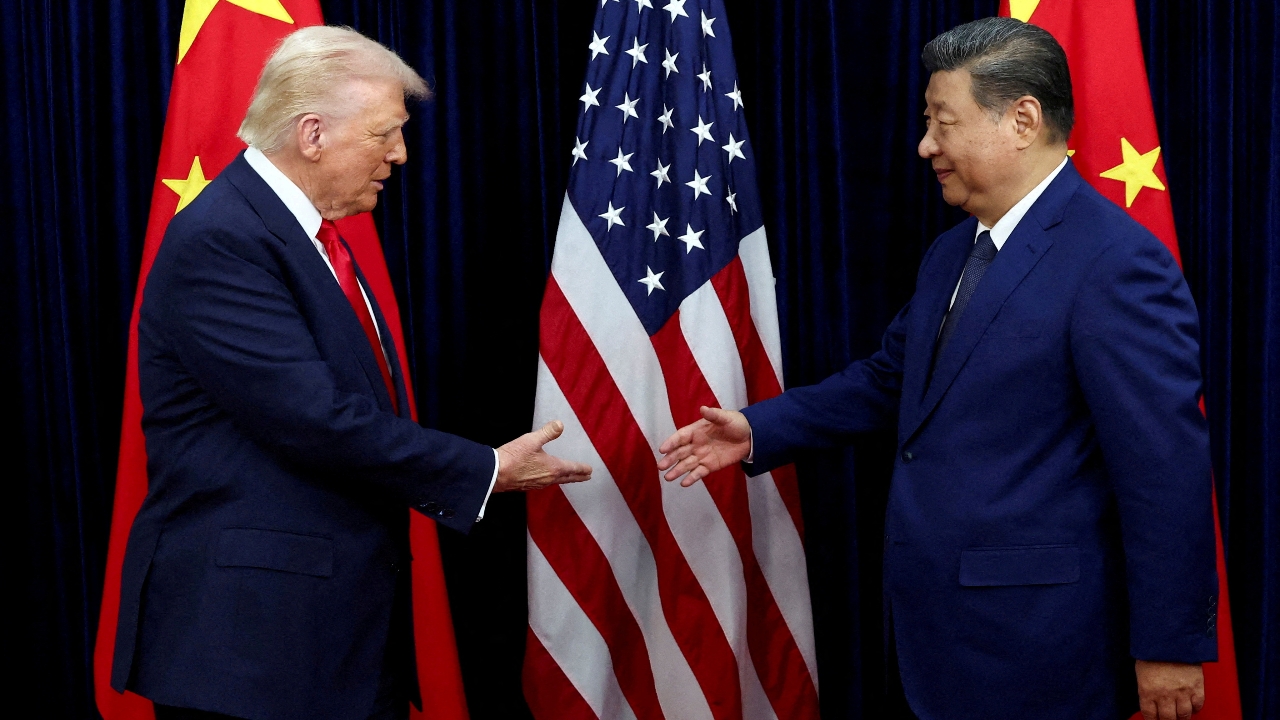
The U.S. and Chinese leaders are preparing for a significant discussion covering Iran, Taiwan, artificial intelligence, nuclear weapons, and the trade war during Trump's visit to China this week, aiming to restore their strained relationship.
President Donald Trump of the U.S. and President Xi Jinping of China are set to open major talks covering Iran, Taiwan, artificial intelligence (AI), nuclear weapons, and the trade war during Trump's visit to China this week, amid efforts by the two economic superpowers to stabilize their tense relationship over recent months.
This meeting marks the first face-to-face discussion between the two leaders in over six months, amid pressure from multiple factors including trade disputes, conflicts involving the U.S., Israel, and Iran, as well as security and technology issues.
Trump is scheduled to arrive in Beijing on Wednesday, 13 May, before participating in talks with Xi Jinping on Thursday and Friday. This will be his first visit to China since 2017.
U.S. officials revealed that both sides plan to announce further cooperation on economic and investment matters, including establishing trade and investment committees to facilitate commerce between the two countries, although these mechanisms may take time to become operational.
China is also expected to announce additional purchases from the U.S., including Boeing aircraft, agricultural products, and American energy, signaling positive news for the U.S. economy and export sector.
Meanwhile, the two nations are preparing to discuss extending the current trade truce, which allows continued Chinese exports of rare earth minerals to the U.S., though U.S. officials say it is unclear if this agreement will be extended during this week.
Beyond economic issues, the talks will also address sensitive topics that have long been sources of conflict between Washington and Beijing.
A key topic is Iran, where China maintains close ties with Tehran and is a major buyer of Iranian oil, while Trump seeks to pressure China to use its influence to bring Iran back to negotiations with the U.S. and end the conflict that escalated after U.S. and Israeli attacks on Iran in late February.
The Trump administration has also expressed concern about China-Russia relations, especially regarding dual-use goods—items usable for both civilian and military purposes—and the possibility of arms exports.
U.S. officials stated that Trump has held multiple discussions with Xi Jinping about Iran and Russia, including China’s role in supporting these two countries.
On China's side, Taiwan remains an extremely sensitive issue, with Beijing displeased that the U.S. continues to be a major supporter and arms supplier to Taiwan, which China considers part of its territory.
In recent years, China has increased military activities around Taiwan, but U.S. officials affirm that Washington’s policy toward Taiwan remains unchanged.
Another major issue is competition in artificial intelligence (AI), with the Trump administration concerned about China’s development of advanced AI models and viewing the need for communication channels between the two countries to prevent conflicts arising from this technology.
U.S. officials said the leaders’ meeting could initiate talks on establishing AI communication mechanisms between the nations, though no clear agreement has yet been reached.
Regarding nuclear weapons, the U.S. is pushing China to open talks on arms control, but U.S. officials disclosed that China has internally signaled a lack of interest in discussing nuclear arms control at this time.
The last meeting between Trump and Xi took place in October last year in South Korea, where both sides agreed to delay escalating the trade war after the U.S. had imposed triple-digit tariffs on Chinese imports, and China threatened to restrict rare earth exports vital to global technology industries.
Most recently, in February, the U.S. Supreme Court ruled that Trump lacked legal authority to impose several global import tariffs; nevertheless, Trump affirmed he would seek other legal avenues to reinstate these tax measures.
Source:channelnewsasia
Click to read news aboutInternational News