

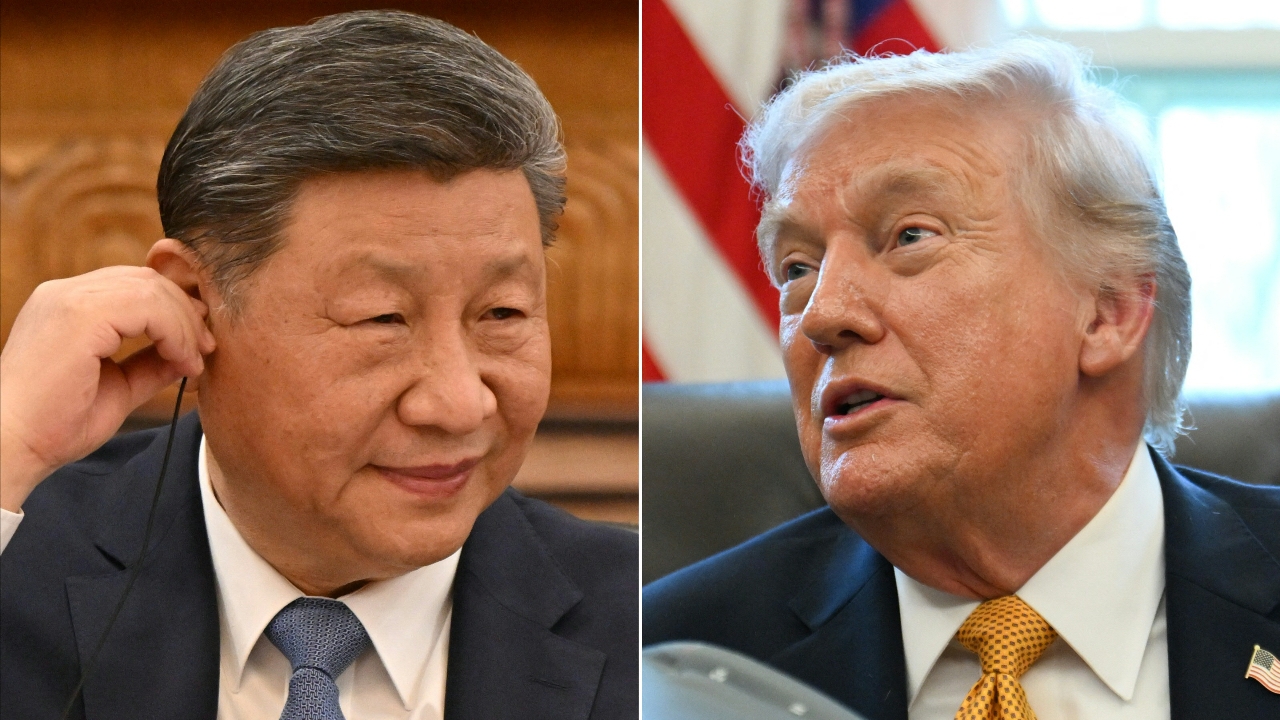
Attention focuses on the historic meeting between Donald Trump and Xi Jinping in Beijing, China, amid pressures from the Iran war, Taiwan crisis, and trade conflict between the two global powers.
On 14 May 2026, US President Donald Trump began his official first day in Beijing, China, after arriving the previous night. The US leader was scheduled to attend a summit with Chinese President Xi Jinping amid global uncertainty caused by the Iran war, rising energy prices, tensions in the Taiwan Strait, and economic competition between the two great powers.
This visit marks the first trip to Beijing by a US leader in nearly a decade and could become a turning point for China-US relations in an era where both sides remain economically interdependent but increasingly compete militarily, technologically, and geopolitically.
The talks focused on three major issues attracting the most attention: the trade and tariff war, the Iran conflict and Strait of Hormuz crisis, and the sensitive issue of Taiwan, which China has declared a “red line” that the US should not cross.
1. Trade and Tariffs: An unresolved competition
Although the China-US trade war eased temporarily after both sides agreed to a trade truce last year, the root problems remain, especially regarding tariffs and technology restrictions that both sides continue to use against each other.
The Trump administration wants China to increase imports of American products such as Boeing airplanes, soybeans, and beef to create an image of economic victory ahead of the midterm elections later this year. Simultaneously, the US is pushing to establish a bilateral trade committee to prevent the conflict from escalating into a new trade war.
China, on the other hand, seeks relaxation of US restrictions on semiconductors and advanced chip technologies, which the US uses to curb the growth of China’s AI and military industries. Beijing has responded by controlling exports of rare earth minerals, of which it produces over 90% of the world’s supply.
Analysts believe that while both sides might reach partial agreements, such as delaying tariff increases or purchasing more goods, a major deal remains unlikely because the strategic rivalry between the two powers remains unresolved, and both increasingly view economic dependence as a risk.
2. Iran War: A hot issue shaking the global economy
Another issue drawing global attention is the Iran war, which has pressured the global economy after the Strait of Hormuz crisis caused oil and gas prices to soar, impacting energy markets and inflation worldwide. The US wants China to use its influence to pressure Iran back to negotiations since China is the largest buyer of Iranian oil, importing over 80% of Tehran’s oil exports.
At the same time, the US hopes China will help reopen shipping lanes in the Strait of Hormuz, a critical global energy artery, after fighting caused many oil tankers to be stranded and increased risks to international transport.
However, although China and the US share an interest in energy stability, China does not want to appear too aligned with the US, especially as it maintains strategic ties with Iran. Many experts view this as one of the few issues where China and the US share goals but each seeks to leverage the situation to enhance its own political and economic influence.
3. Taiwan: China’s dangerous red line
Taiwan remains the most sensitive topic in this meeting after China continuously increased military pressure around the island, while the US continues to support Taipei with arms and security assistance. Prior to visiting China, Trump confirmed he would discuss with Xi Jinping an $11 billion arms sale package to Taiwan, which China views as interference in its internal affairs and a violation of the “One China” principle.
China’s Communist Party newspaper, the People’s Daily, published an editorial warning that Taiwan is the “first red line” and the “most sensitive point” in China-US relations. Analysts believe global attention will focus not only on the meeting’s outcomes but also on post-summit statements, gauging how clearly Trump signals support for Taiwan or softens his stance to maintain relations with China. In the great power game, a few words could impact Taiwan’s security and Asia’s power balance for years to come.
Sources: CNN, Aljazeera