

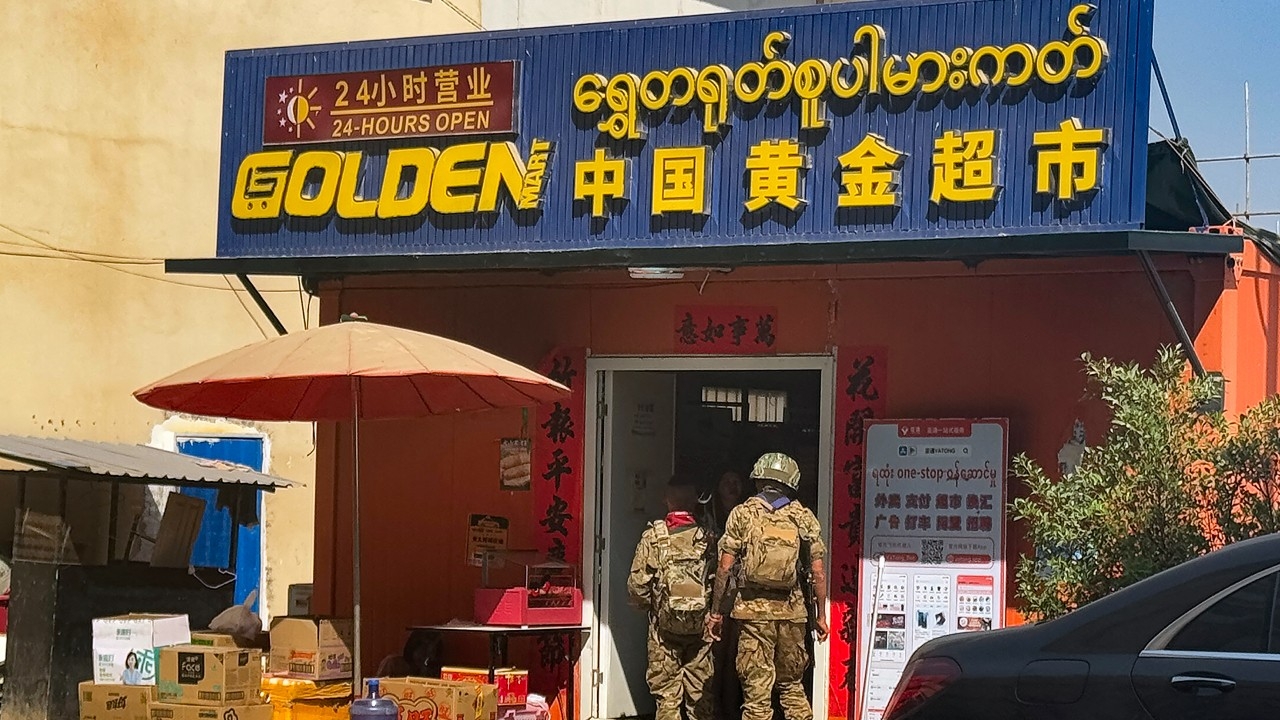
The Myanmar government has proposed a new anti-cybercrime law that imposes the maximum penalty of "death" on those who detain or use violence, imprisonment, or torture to force victims to work in call center scam gangs, aiming to erase its image as a haven for transnational crime.
The Myanmar government has published an Anti-Online Scam Bill proposing the death penalty for anyone who detains, uses violence, tortures, or cruelly mistreats individuals to coerce them into participating in online scam operations.
The bill also proposes life imprisonment for those who run online scam centers or are involved in fraudulent digital currency or cryptocurrency investment schemes.
In recent years, Myanmar has become a major center for the online scam industry in Southeast Asia, especially in areas affected by civil war after the 2021 coup, where transnational criminal groups have established bases in remote, heavily guarded locations.
These networks use tactics such as online relationship scams, fake investments, and cryptocurrency fraud, with victims worldwide. Several foreign nationals rescued and returned home have revealed they were deceived or trafficked to work in scam centers and were tortured if they resisted.
The U.S. Federal Bureau of Investigation (FBI) estimates that in the United States alone, over 20 billion U.S. dollars were lost to such schemes last year.
This issue has also caused tension between Myanmar and China, as some Chinese nationals have established scam centers within these networks and have also fallen victim to the fraud.
Analysts say that throughout Myanmar's more than five-year civil war, China has sought to maintain economic and security interests by supporting both the Myanmar military and certain ethnic armed groups at different times.
This bill is the first significant legislation proposed by the new government led by Senior General Min Aung Hlaing, the coup leader who recently assumed the civilian presidency last month.
However, democracy watchdogs view this transition as merely a rebranding effort by the military government to reduce international pressure after Myanmar became diplomatically isolated following the coup.
Previously, the Myanmar government announced the transfer of Aung San Suu Kyi from prison to house arrest, but critics see this as another image rehabilitation attempt by the government.
The anti-online scam bill also proposes establishing a joint committee with foreign countries to coordinate cybercrime suppression efforts, seen as an attempt by Myanmar’s government to reopen avenues for international cooperation.
Source: AFP