

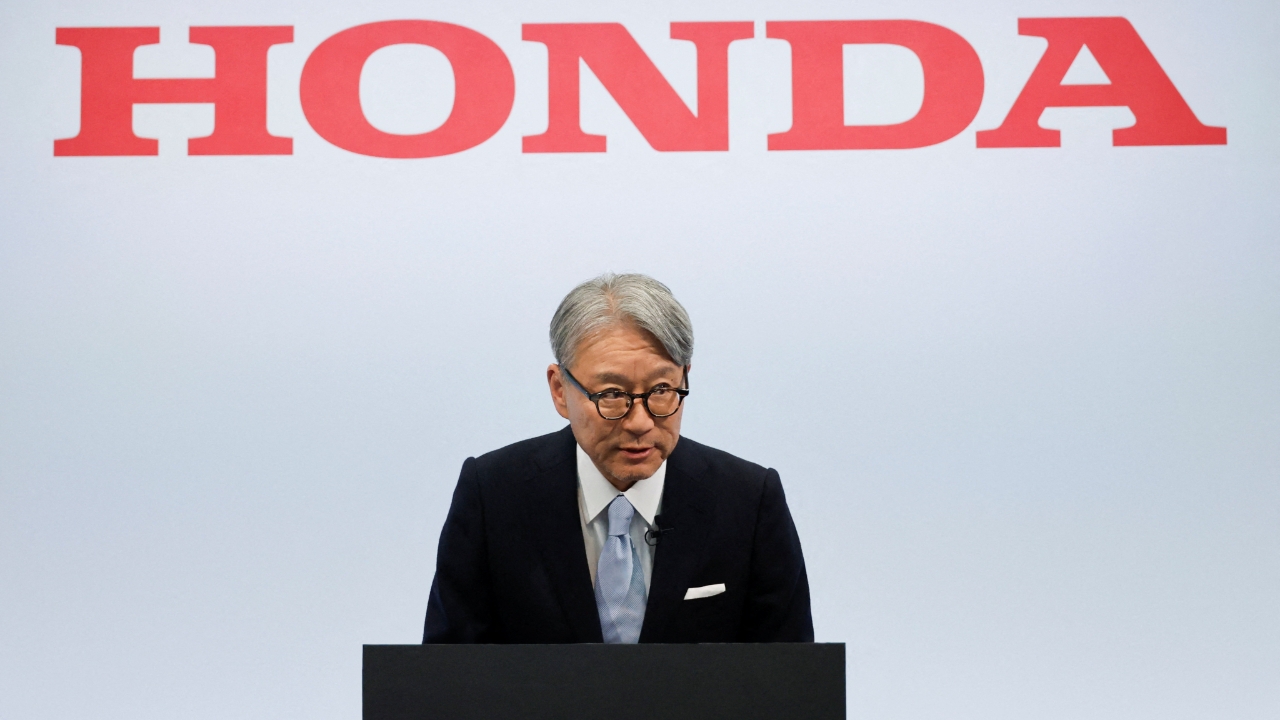
Honda, a major automobile manufacturer, reported an annual loss for the first time in over 70 years, resulting from changes in U.S. policies and tariff barriers.
BBC News reported on 14 May 2026 that Honda, the major Japanese automaker, announced financial results for the fiscal year ending March 2026, revealing a loss of 423 billion yen, or about 86.5 billion baht. This marks the first fiscal year loss in 70 years.
Honda stated it is canceling some of its electric vehicle production targets and plans to source cheaper parts from China to reduce costs.
According to Honda, changes in U.S. policy have contributed to the increased losses, including the cancellation of tax incentives for American consumers buying electric vehicles and the enforcement of tariff measures.
Previously, U.S. consumers could claim tax credits of up to $7,500 when purchasing a new electric vehicle, but this incentive was revoked by Donald Trump in September 2025.
Additionally, import tariffs on vehicles and automotive parts announced by Trump in 2025 have impacted profits for several major car manufacturers, despite the tariff rate being reduced from 25% to 15%.
Analysts believe that Honda's large scale and its traditional business model make it difficult for the company to quickly adapt to the rapid fluctuations in electric vehicle demand.
Honda indicated that moving forward, it will focus on its successful businesses such as motorcycles, financial services, and hybrid vehicle production, prioritizing growth in the North American, Japanese, and Indian markets.
Toshihiro Mibe, Honda's CEO, said the company will abandon its goal of having electric vehicles make up one-fifth of new car sales by 2030 and will also cancel plans to make all vehicles fully electric by 2040.
Honda expects additional losses related to electric vehicles amounting to 512 billion yen in the next fiscal year ending March 2027.
Danny Hewson, chief financial analyst at AJ Bell, described Honda's turning point as bleak but not surprising.
“Like many established car manufacturers, Honda bet on a rapid shift of consumers to electric vehicles, and they lost as global trends changed,” she said.
She noted that political factors, cost of living pressures, and competition from Chinese companies have forced Honda to retreat on its electric vehicle production plans and to "absorb the resulting losses."
Hewson added that although demand for electric vehicles has surged recently due to rising oil prices amid the U.S.-Israel and Iran conflict, “a large company like Honda must constantly adjust to immediate circumstances, which is very challenging.”
She also warned that the situation could worsen due to many unforeseen turning points expected in the market.
Follow international news:https://www.thairath.co.th/news/foreign
Source:bbc