

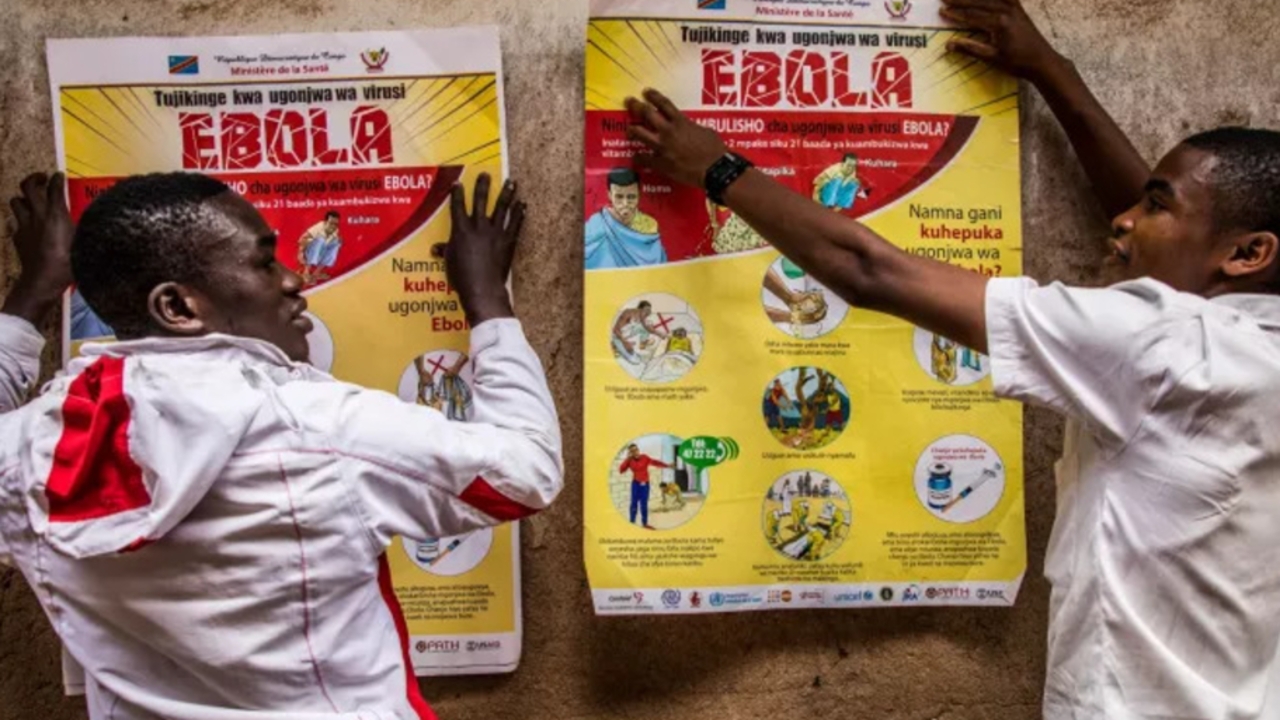
The Africa Centers for Disease Control and Prevention (Africa CDC) announced confirmation of a new Ebola virus outbreak in Ituri Province in eastern Democratic Republic of Congo, with nearly 250 suspected cases and 65 deaths.
Africa CDC officially confirmed today (15 May) a new Ebola virus disease outbreak in a remote area of Ituri Province, located in eastern Democratic Republic of Congo, also known as DR Congo.
The latest data shows 246 suspected cases and 65 deaths. The hardest-hit areas are the Mongwalu and Rwampara health zones. Laboratory analysis from the National Biomedical Research Institute in Kinshasa detected Ebola virus in 13 out of 20 samples. Among the deaths, four have been officially confirmed positive. Additionally, new suspected cases have appeared in the city of Bunia, awaiting confirmation.
Africa CDC stated that preliminary analysis suggests the virus may be a strain other than the 'Zaire' strain, and genetic sequencing is currently underway to identify the virus's specific characteristics.
Africa CDC expressed serious concern over the risk of widespread transmission, as the affected areas include urban centers like Bunia and Rwampara, with dense population movement, especially among mining workers in Mongwalu, which could accelerate the virus's spread.
Currently, Africa CDC has convened an urgent high-level meeting with officials from Congo, Uganda, and South Sudan, along with global partners, to enhance border surveillance and prepare joint emergency responses.
This outbreak occurs just five months after DR Congo declared the end of the previous outbreak that caused 43 deaths. Ituri Province remains hard to access due to poor road conditions and is located more than 1,000 kilometers from Kinshasa. Additionally, Congo faces dual challenges with intensified fighting against the M23 rebel group in the eastern part of the country since early this year.
Ebola virus disease is a severe illness with a high fatality rate. It transmits through direct contact with bodily fluids of infected individuals, such as blood, vomit, or secretions, as well as contact with contaminated materials or the bodies of those who have died from the disease.