

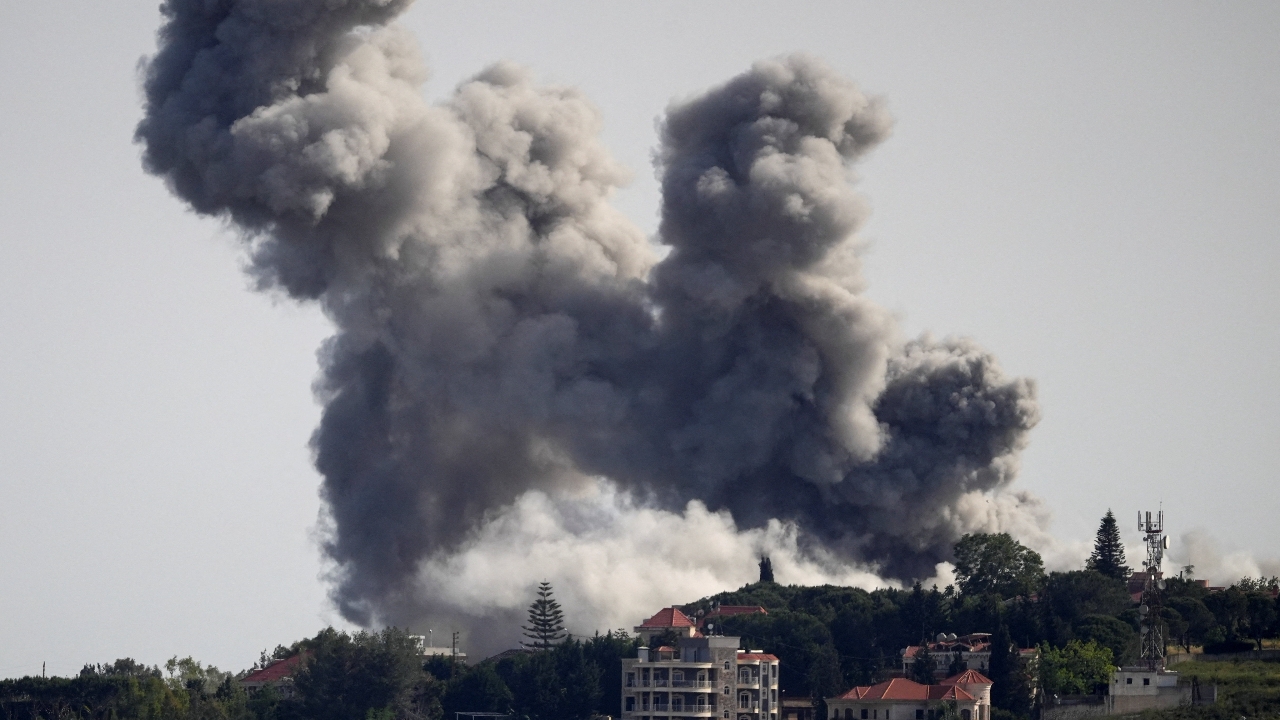
The fighting between Israel and Hezbollah continues to be severe, even though both sides agreed to extend the ceasefire by another 45 days. Lebanon's Ministry of Health revealed that the death toll from Israeli attacks has surged past 3,000, while both sides keep carrying out attacks.
Lebanon's Ministry of Health disclosed that the death toll in the country from Israeli military attacks, since the conflict between Israel and Hezbollah escalated in early March, has exceeded 3,000. The official figure as of Monday (18 May 2024 GMT+7) stands at 3,020 deaths, including 619 women, children, and medical personnel, indicating that the fighting shows no signs of abating despite the ceasefire agreement.
This war began on 2 March when Hezbollah, a Shia militant group backed by Iran, launched rocket attacks on Israel in response to Israel killing Iran's top leader amid tensions involving the U.S., Israel, and Iran.
The death toll continues to rise steadily, even though on Friday (15 May 2024 GMT+7) Lebanon and Israel agreed, with U.S. mediation, to extend the ceasefire for another 45 days, effective from midnight, with plans to resume talks in early June. However, since the initial ceasefire announced by U.S. President Donald Trump took effect on 17 April, over 400 deaths have occurred during this period due to repeated violations by both sides.
The ceasefire agreement allows Israel to conduct attacks if claimed to be against Hezbollah's military activities. The Lebanese government condemned these attacks, stating they undermine its efforts to maintain sole control over armed groups in the country. Meanwhile, Hezbollah has opposed Lebanon's participation in the negotiations.
Reports indicate that since the ceasefire extension was declared on 15 May, the Israeli military has continued airstrikes on towns and villages across southern Lebanon, including the Bekaa Valley. On Saturday, Israel attacked over 24 villages, but only 9 received prior evacuation warnings. In the 24 hours before Monday, Israel said it struck more than 30 Hezbollah locations and ordered residents in three southern villages to evacuate.
Additionally, Lebanese security sources report that Israeli airstrikes near Baalbek in eastern Lebanon killed Wael Mahmoud Abdul Halim, commander of the Palestinian Islamic Jihad allied with Hezbollah, along with his daughter. The Israeli military confirmed killing this leader, claiming measures were taken to minimize civilian casualties, but they did not mention his daughter.
Hezbollah announced retaliatory actions, stating its forces launched suicide drone attacks on the Yaar military camp and Israel's Iron Dome air defense system in the Galilee region in northern Israel, along with several attacks on Israeli forces in southern Lebanon. The Israeli military confirmed that explosive devices and drones crossed into its territory.
Currently, Israel's ground forces continue to occupy a border area about 10 kilometers into southern Lebanon, designated as a 'security zone.' Israel has demolished several villages there, citing the need to protect northern Israel from Hezbollah fighters concealed within local communities.
Since the conflict erupted in early March, Israel has lost 20 soldiers and 4 civilians. This crisis has become a significant regional issue, with Iran stating that ending Israel's war in Lebanon is a key demand in its negotiations to resolve broader conflicts with the U.S. and Israel.