

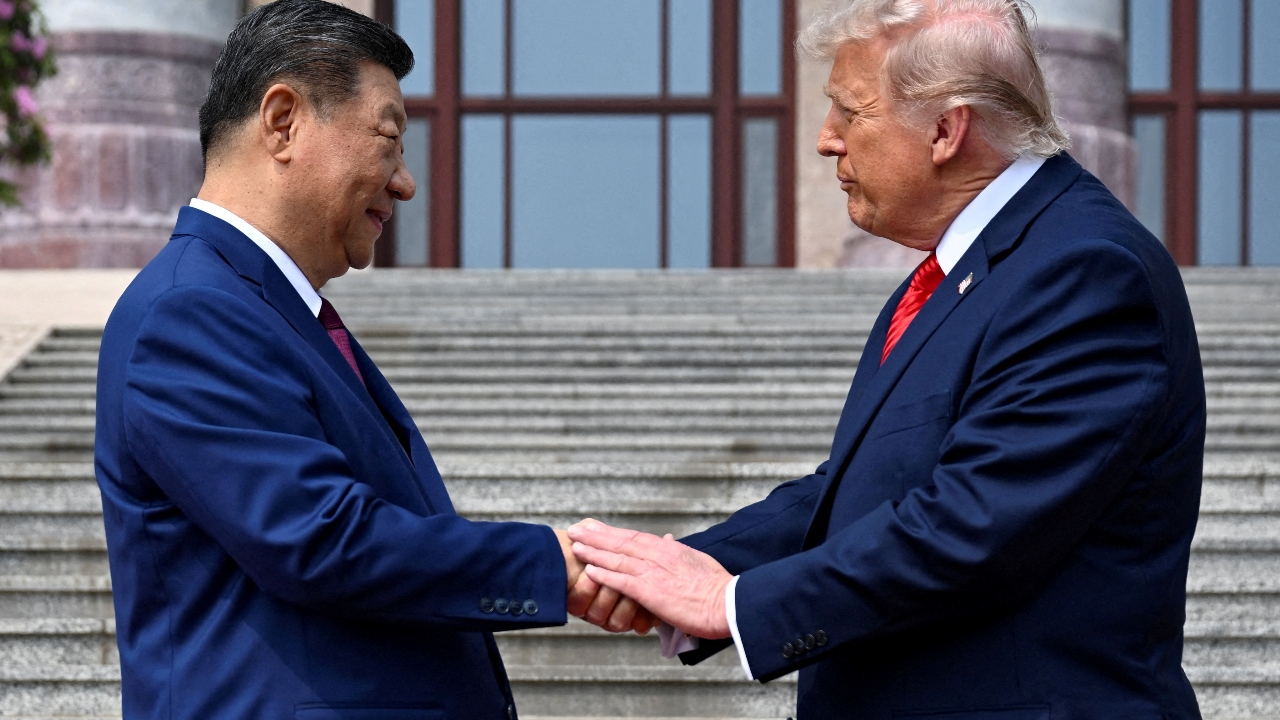
China's Ministry of Commerce confirmed plans to order 200 passenger planes from the U.S. company Boeing, marking the largest deal in nearly a decade after Boeing had long been excluded from the Chinese aviation market. This follows the successful talks between President Donald Trump and President Xi Jinping in Beijing last week.
China's Ministry of Commerce officially announced that China will order 200 passenger planes from the U.S. company Boeing. This represents the first official confirmation from the Chinese government, although the statement did not specify which aircraft models would be purchased.
This historic deal was announced just days after U.S. President Donald Trump visited Beijing to attend a summit with President Xi Jinping aimed at stabilizing bilateral relations. It is Boeing's largest plane purchase agreement in the Chinese aviation market in almost a decade, after the U.S. aircraft manufacturer was excluded for years due to trade tensions between China and the U.S.
After the Beijing summit, President Trump told reporters, “We have reached many major trade agreements, including an order for more than 200 Boeing planes, with commitments that could expand to as many as 750 planes. If that happens, it would be the largest aircraft order in history.”
Trump also noted that all planes will be equipped with engines from GE Aerospace. Reports indicate that Boeing CEO Kelly Ortberg traveled with the U.S. delegation on this trip, alongside prominent tech leaders such as Tesla founder Elon Musk and Nvidia CEO Jensen Huang, a major player in AI chip technology.
Boeing issued a statement congratulating the success, saying, “Our visit to China was highly successful, achieving our main goal of reopening the Chinese market for Boeing aircraft orders. This is an initial agreement for the first 200 planes, and we expect further deals to follow in the future.”
China's Ministry of Commerce stated that under the aircraft purchase agreement, the U.S. side will guarantee the continuous supply and delivery of aircraft engine parts and components to China.
Additionally, both parties will cooperate to extend the tariff suspension agreement previously established at the Kuala Lumpur meeting in Malaysia, before the leaders' meeting in South Korea last October. The original agreement, set to expire this November, involved the U.S. reducing tariffs on certain Chinese goods and China suspending export restrictions on rare earth minerals and magnets, vital materials for technology, electric vehicles, and military equipment.
The statement added that both countries will work to reduce reciprocal tariffs on product groups valued at over $30 billion, with U.S. tariffs on Chinese goods not exceeding levels set in last year's agreement. They will also collaborate to address concerns about export control measures. China confirmed it is reviewing licenses for exporting critical minerals, including rare earths used in the civilian sector.
Meanwhile, the White House revealed that China agreed to purchase at least $17 billion worth of U.S. agricultural products between 2026 and 2028, excluding existing soybean agreements. Although China's Ministry of Commerce did not specify this figure, it acknowledged positive outcomes in agriculture, including China restoring registration for qualified U.S. beef exporters and resuming imports of certain U.S. poultry products. The U.S. promised to remove or improve non-tariff trade barriers to facilitate imports of Chinese dairy products.