

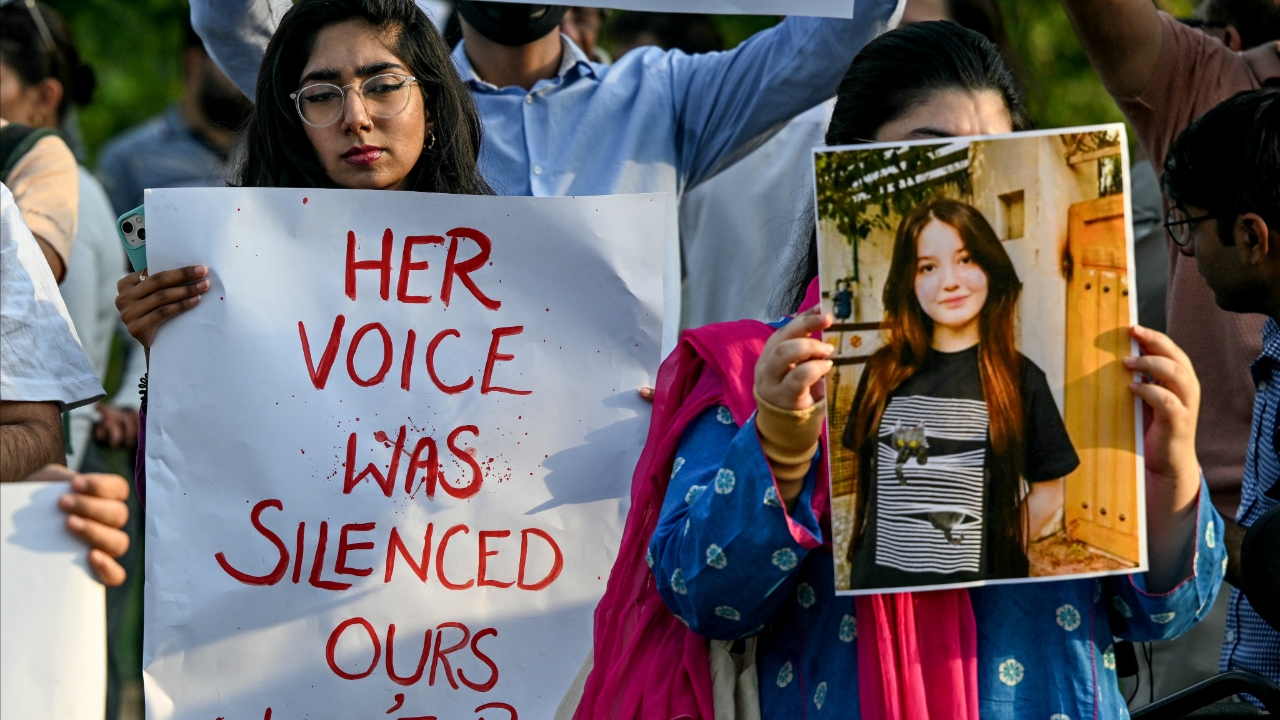
A Pakistani court sentenced a 23-year-old man to death for the murder of a teenage female TikTok star last year after he persistently pursued her and was rejected.
On 20 May 2026 GMT+7, a Pakistani court sentenced Umar Hayat to death for the murder of 17-year-old TikTok star Sana Yousaf, a case that sparked nationwide outrage last year.
Reports state that in June 2025 GMT+7, Hayat broke into Yousaf's home and shot her dead after she repeatedly rejected his persistent advances.
Hayat, now 23, confessed in court in July that he had become obsessed with Yousaf after interacting with her online.
Local media reported that Yousaf's father, Syed Yousaf Hassan, called the Islamabad court's verdict “a lesson for all criminals of this kind in society.”
Additionally, the court ordered Hayat to pay 2.5 million rupees (around 292,000 baht) in compensation to the victim's family.
According to Pakistani media, during the investigation, Hayat revealed he had traveled to Islamabad a few days before the incident to wish Yousaf a happy birthday. Although she refused to meet him, he insisted on going to her home, leading to a confrontation that escalated into murder.
Before her death, Yousaf had over one million followers on TikTok and more than 500,000 on Instagram. She was beloved by fans for her fun and lighthearted content, including fashion trends, lip-syncing songs, and spending time with friends.
Activists say Yousaf's murder is one example of the widespread violence against women in Pakistan.
However, while many expressed anger over Yousaf's death, some also criticized her role as an influencer.
Usama Kilji, director of Bolo Bhi, a digital rights advocacy group, told the BBC that such criticism mostly comes from a small group of internet users, mainly men, some of whom use religious reasons to justify their views.
“They question why she posted such content and even suggested her family delete her Instagram and TikTok accounts, believing these accounts would increase her ‘sins,’” Kilji said.
Human rights activist Farzana Bari argued that these reactions reflect misogyny and a patriarchal system.
She said Yousaf had “the right to have her own voice,” adding that the online conversation serves as a reminder that social media has become “a very dangerous and threatening space for female content creators” in Pakistan.
Follow international news:https://www.thairath.co.th/news/foreign
Source:bbc