

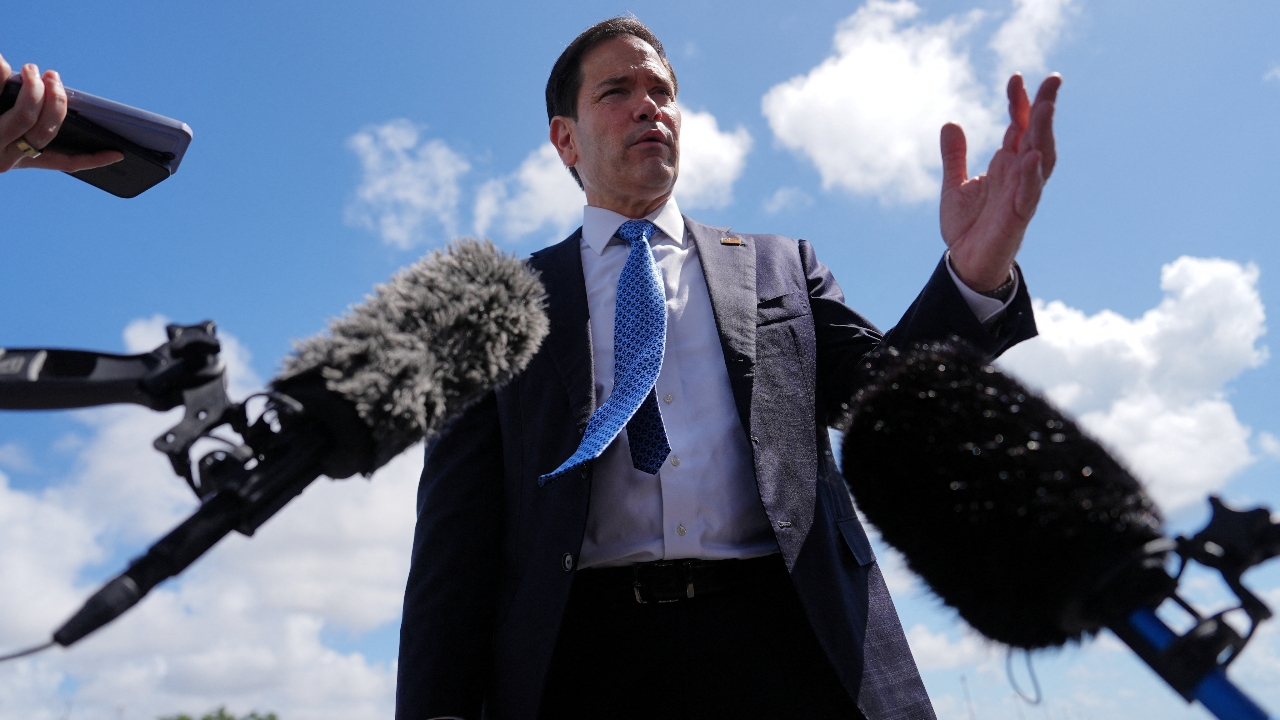
U.S. Secretary of State Marco Rubio has labeled Cuba a "security threat" and said diplomatic negotiations are nearly impossible after the U.S. recently indicted former Cuban President Raúl Castro on murder charges, while the Cuban government has responded by accusing the U.S. of distorting facts.
Marco Rubio, U.S. Secretary of State, issued a statement declaring Cuba a "threat to the national security" of the United States and candidly acknowledged that the chances of reaching a peaceful agreement through diplomatic channels are "not very high," given the current behavior of the Cuban government.
Rubio further accused Cuba of being "one of the primary supporters of terrorism in the region." However, he affirmed that the U.S. remains open to resolving issues through diplomatic means first, while warning that President Donald Trump has the legitimate right and duty to protect the country from all forms of threats.
Bruno Rodríguez, Cuba's Minister of Foreign Affairs, posted a fierce response on the platform X, condemning Rubio's accusations as "lies" and insisting that Cuba has never posed any threat to the United States.
Rodríguez criticized the U.S. Secretary of State for attempting to "provoke military aggression" and accused the U.S. government of conducting a harsh and systematic assault on Cuba. He noted that Cuba is currently experiencing a severe energy crisis due to strict U.S. sanctions on oil shipments, causing prolonged power outages and food shortages over recent months to pressure Cuba into making concessions. Nevertheless, Rubio stated that Cuba has accepted $100 million in humanitarian aid from the U.S.
Rubio's statement came just one day after the U.S. Department of Justice announced murder charges against Raúl Castro, former Cuban president and revolutionary leader, related to the 1996 incident where Cuban fighter jets shot down two civilian planes operated by Cuban-American exile groups, killing four U.S. citizens. Analysts view this as a strategy to dismantle communist regimes, similar to Trump's previous arrest warrant against Venezuelan President Nicolás Maduro.
When asked how the U.S. would bring Castro to trial, Rubio declined to disclose details, saying, "Why should I tell the media what our plans are?" Meanwhile, Todd Blanche, acting U.S. Attorney General, hinted, "We expect him to appear here, whether voluntarily or by other means."
Additionally, Rubio announced on X that the U.S. has arrested Edis Lastres Moreira, sister of a senior official in the Cuban military business network that controls the country's lucrative economic sectors. Moreira, residing in Florida, was secretly aiding Havana's communist regime and was detained by immigration authorities, pending deportation.
President Donald Trump spoke to the media in the Oval Office, calling Cuba a "failed state" and stating that his administration is working to assist the Cuban people on humanitarian grounds. He added that many Cuban-Americans want to return and help develop their homeland successfully.
"Other presidents have watched this for 50 or 60 years without doing anything, and it seems I am the one taking action, which I am very willing to do," Trump confidently concluded, emphasizing his determination to overthrow the deeply rooted Cuban communist regime.
/sourceBBC