

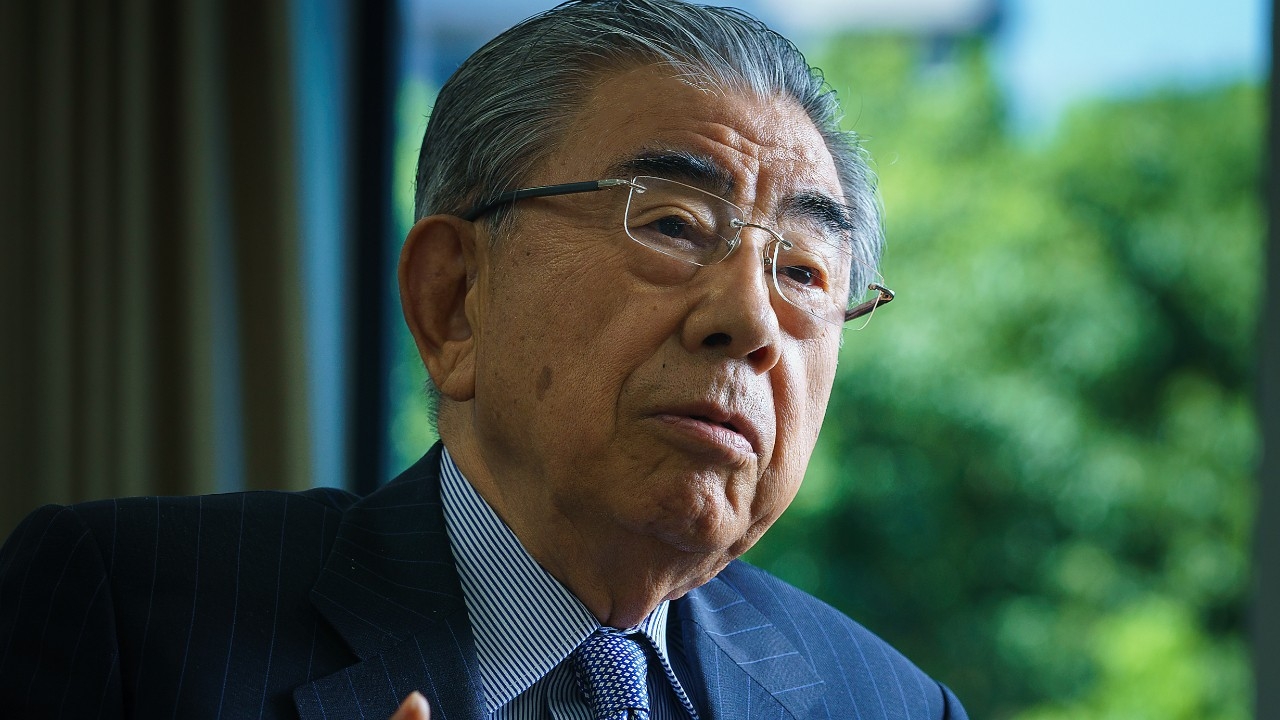
Toshifumi Suzuki, former chairman of Seven & i Holdings and acclaimed as the "father of Japanese convenience stores," died of heart failure at age 93 after building 7-Eleven into the world's largest convenience store chain.
Japan's retail giant Seven & i Holdings issued an official statement today (25 May) announcing that Toshifumi Suzuki, honorary advisor and former chairman, passed away from heart failure on 18 May at age 93. His funeral will be held privately with family and close relatives, with a public memorial planned later.
The company's statement read, "We express our deepest gratitude for the kindness and goodwill shown to him during his lifetime and respectfully announce his passing."
Born in Nagano Prefecture, Toshifumi Suzuki graduated from Chuo University's Faculty of Economics before joining Ito-Yokado in 1963. In the early 1970s, as head of new business development, he was struck by the rapid growth of convenience stores in the U.S. and saw an opportunity to revive small retail shops in Japan, despite strong opposition internally and externally, who said it was "too early" and that small stores "would never succeed."
However, with sharp vision, Suzuki negotiated a partnership with the U.S.-based Southland Corporation and established York-Seven (now Seven-Eleven Japan) in 1973, launching Japan's first 7-Eleven store in Tokyo's Toyosu district in May 1974, transforming the traditional liquor store format.
Suzuki did not merely copy the American model; he created the modern convenience store management system used worldwide today, including item-by-item management to precisely control sales and inventory, meeting customers' daily changing demands.
His strategy included opening many stores clustered in the same area to build brand recognition and improve logistics efficiency, and implementing point-of-sale data management to analyze consumer behavior. He also pioneered selling bento boxed meals and ready-made dishes, which remain key selling points for 7-Eleven today.
7-Eleven's success in Japan grew enormously, and when the U.S. parent company faced financial difficulties, Suzuki led the Japanese company to acquire and revive it, turning 7-Eleven into the world's largest convenience store chain. Today, there are over 22,000 stores in Japan alone.
During his tenure, Suzuki held many important positions including chairman and CEO of Seven & i Holdings, established in 2005. He often told those around him, "If you do what everyone opposes, you will surely succeed, because if everyone opposes it, it means only we have thought of that opportunity."
He was known as a decisive "one-man" leader who expanded the empire into banking and private brands, always focusing on consumer needs.
Suzuki stepped down as chairman of Seven & i Holdings in May 2016 at age 83, taking responsibility for board conflicts over appointing a new chairman. Later, he described it as a "good opportunity" to retire after dedicating decades to driving Japan's economy and lifestyle.
/sourceYahoo JAPAN/AFP