

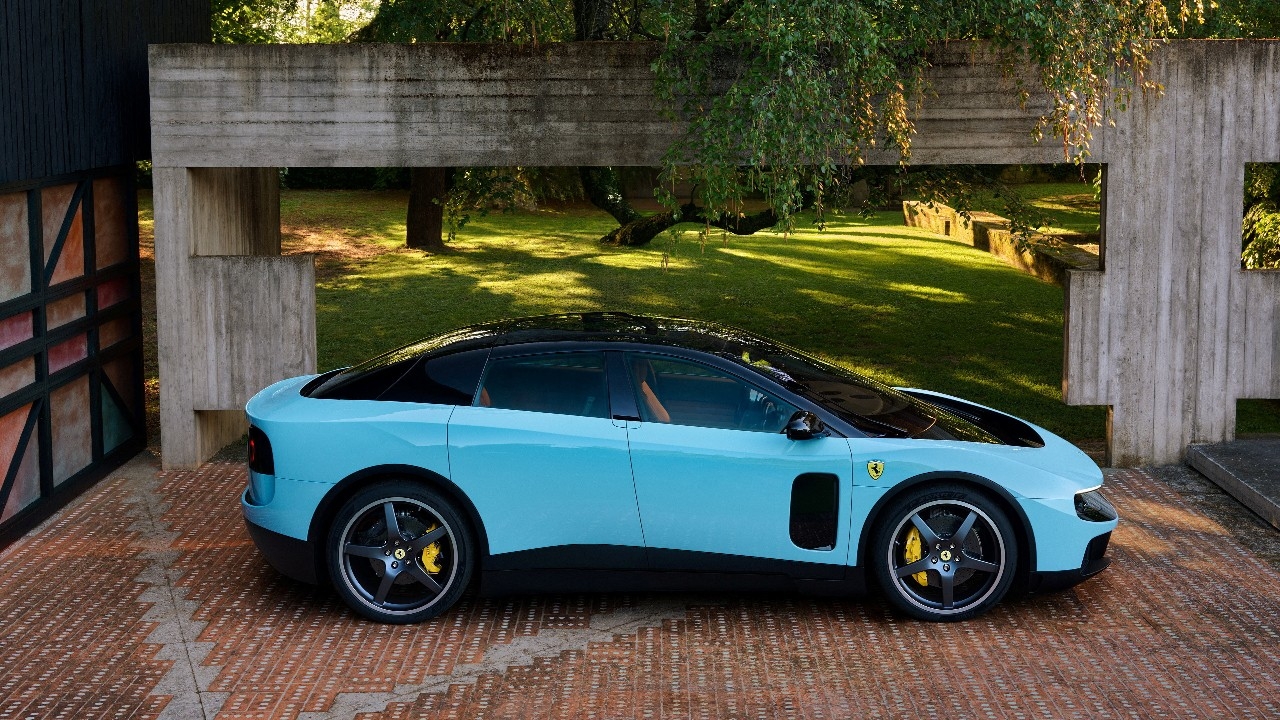
Ferrari officially introduced "Luce," its first fully electric vehicle, priced at over 640,000 US dollars (approximately 21 million baht). The company aims to target a new generation of ultra-wealthy buyers amid divided opinions online, with some praising it as a masterpiece and others criticizing it for potentially damaging the brand's identity.
Benedetto Vigna, Ferrari's CEO, revealed that the development of this model took half a decade. The name "Luce," meaning "light" in Italian, boasts a top speed of 310 kilometers per hour and can accelerate from 0 to 96 km/h in just 2.5 seconds. It features independently produced electric motors at each wheel, all components manufactured in-house to ensure long-term maintenance and preserve resale value.
Besides being Ferrari's first fully electric car, "Luce" breaks tradition by becoming the brand's first 5-seater. It was designed in collaboration with LoveFrom, the design studio of Jony Ive, Apple's former chief designer, giving it a striking appearance distinct from typical Ferrari sports cars. Deliveries to initial customers are planned for October.
Immediately after the launch, discussions on platform X and social media heated up, splitting opinions sharply. Critics compared the situation to the British luxury brand Jaguar, which recently faced backlash over brand identity changes. One account stated, "Ferrari just killed its own brand, just like Jaguar did. This is clearly junk destined for the car graveyard." Another questioned, "What’s happening to European luxury car brands? First Jaguar, now Ferrari."
Conversely, supporters praised the move as a major leap forward, saying, "This is a masterpiece of design. Ferrari just unveiled the stunning LUCE concept, and it will change the industry forever."
Flavio Manzoni, Ferrari's Chief Design Officer, told popular YouTuber Cleo Abram that the transition to electric vehicles and new design styles naturally brings "polarized opinions." However, he views criticism as part of the innovation process and believes people will begin to understand and fall in love with the car within a few months.
Ferrari's decision to launch Luce represents a significant gamble, contrasting with other European rivals who are delaying electric vehicle production amid declining global demand and fierce competition from faster, cheaper Chinese brands like BYD, which recently introduced the Yangwang U9 electric supercar capable of jumping and dancing.
Meanwhile, Lamborghini has officially scrapped its plan to launch a fully electric vehicle by 2030, opting instead to focus on hybrid cars, citing insufficient interest from high-end customers.
German giant Porsche has scaled back its electric vehicle plans due to sluggish sales in China and U.S. tariff measures.
Mainstream automakers like Ford and Volkswagen are returning to internal combustion engine vehicles, especially in the U.S., after President Donald Trump cut funding and incentives for electric vehicle buyers.
Car Industry Analysis analyst Felipe Muñoz believes Ferrari does not expect Luce to achieve blockbuster sales but sees it as a "statement of intent" and a new benchmark in the luxury electric car market before Chinese brands dominate.
Despite pressure that caused Ferrari's stock to drop over 25% in the past year due to global inflation affecting luxury goods demand, as Europe's most valuable carmaker, Ferrari continues heavy investment by building a specialized "e-building" factory at its Maranello headquarters in Italy.
Ferrari's biggest challenge is maintaining its unique appeal under electric technology, as electric cars lack the iconic powerful engine sound. To address this, Ferrari revealed a specially designed sound system that "amplifies vibrations" from the electric drivetrain to create a distinctive electric Ferrari roar, rather than using typical computer-generated sounds.
However, Ferrari has lowered its target for fully electric vehicles to 20% of production by 2030, down from the original 40%, and confirmed it will continue producing combustion engine and hybrid vehicles to offer choices for ultra-wealthy customers across generations.