

Starbucks South Korea is facing intense criticism and a sharp drop in sales after launching a tumbler promotion campaign named "Tank Day" on the anniversary of the 1980 Gwangju Massacre. During this event, the South Korean military deployed tanks and troops to suppress pro-democracy protesters, resulting in hundreds of deaths. The Shinsegae Group executives apologized publicly and dismissed the CEO of Starbucks South Korea.
Senior officials from Shinsegae Group, South Korea's major retail conglomerate managing Starbucks' operations in the country, acknowledged that Starbucks South Korea's sales have "plummeted significantly" following widespread public anger.
This crisis arose after Starbucks South Korea's e-commerce marketing team launched the 'Tank Day' tumbler promotion on May 18, coinciding with the anniversary of the 1980 Gwangju Uprising. The event marks a tragic historical episode when the military dictatorship under Chun Doo-hwan brutally suppressed pro-democracy protesters and students with troops and tanks, resulting in hundreds of officially reported deaths and disappearances.
As a result, Shinsegae immediately removed Son Jung-hyun, CEO of Starbucks South Korea, from his position last week and notified Starbucks' US headquarters, which is closely monitoring the situation.
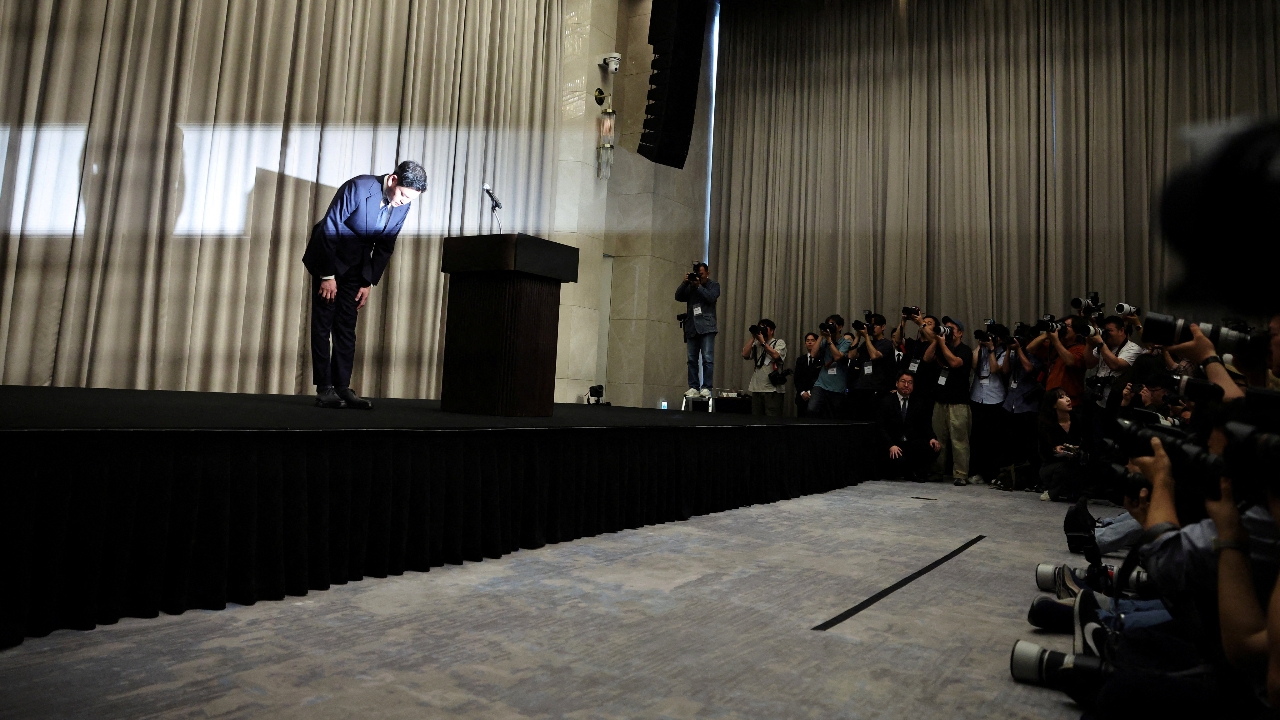
At a press conference in Seoul, Shinsegae Group Chairman Chung Yong-jin bowed deeply to the public to apologize to the families of the May 18 victims. He stated, "I have no excuses and take full responsibility for this incident. I deeply regret that Starbucks South Korea's inappropriate marketing caused pain and anger to many people. However, I kindly ask everyone not to direct this anger towards the operational and frontline Starbucks staff."
Following the update, Shinsegae's stock price dropped 2.8% in the morning session before recovering to a 1.7% gain, while E-Mart, a Shinsegae subsidiary holding a major stake in Starbucks South Korea, rose 2.3%.
Another Shinsegae executive, Jeon Sang-jin, revealed internal investigation results exposing alarming negligence and a "lack of historical and social awareness" by the team. They summarized the faults, including the marketing team admitting to using artificial intelligence (AI) technology to generate weekly promotional ideas, focusing solely on sales without recognizing the historical significance of May 18. However, it remains unclear whether the team intentionally ignored AI-generated instructions.
Additionally, the campaign was approved by seven team leaders and executives, but the investigation found that some executives signed off via email out of habit without even opening the attached tumbler design files.
Due to the team's focus on rapidly executing numerous weekly promotional events, the campaign "skipped" risk and legal reviews by the company's legal team.
However, the deep-dive investigation remains incomplete, as three out of five marketing team members refused to hand over their mobile phones for digital forensic examination, citing privacy rights.
Starbucks is South Korea's leading food and beverage brand with the largest customer base. This campaign, which touched a raw historical wound, sparked a nationwide boycott. Even South Korean President Lee Jae-myung strongly condemned the campaign as "inhumane and utterly shameful."
The South Korean National Police Agency has launched a special investigation into the case. Should the criminal probe find that any employee or executive deliberately mocked or disrespected the Gwangju tragedy, that person will not only be dismissed but also face the full extent of the law.
Meanwhile, a spokesperson for the ruling party told Yonhap News Agency that Shinsegae's chairman's apology seemed sincere, and the party will expedite measures to prevent any brand from exploiting the people's losses in tasteless marketing campaigns in the future.