

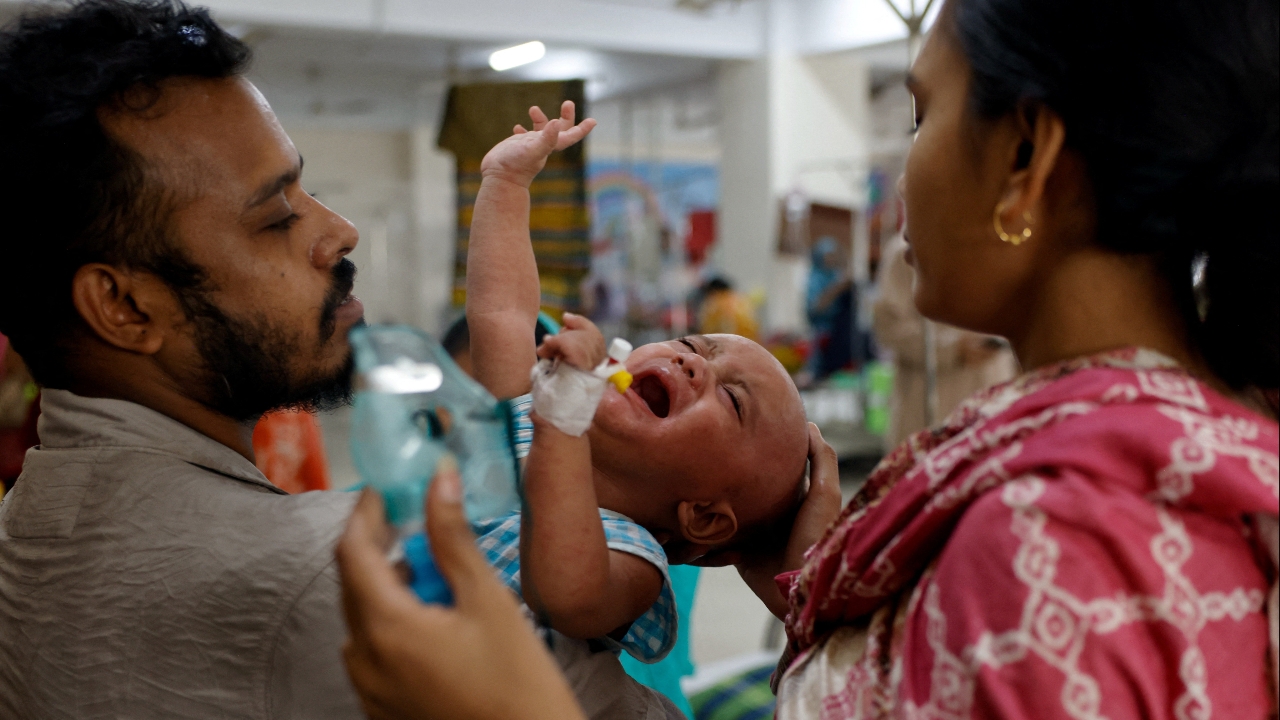
Bangladesh is facing its most severe measles outbreak in years, with infections surpassing 60,000 within just a few months and more than 500 children dying amid vaccine shortages.
The Bangladesh Ministry of Health revealed that since March, measles cases have rapidly increased, especially in Dhaka and densely populated areas, while many families have had to bring their children into the city seeking treatment because local health facilities are unable to accommodate patients.
UNICEF stated that many hospitals are overwhelmed and must urgently isolate child patients to control the spread, as measles is highly contagious through coughing and sneezing, particularly among unvaccinated children under five years old.
Experts believe the outbreak stems from multiple accumulated factors, including vaccination gaps during the COVID-19 pandemic, population density, and government delays in vaccine procurement.
UNICEF disclosed that following the political transition in 2024, the interim government changed its vaccine procurement policies, causing delays in ordering and increasing the risk of national vaccine shortages.
However, a former interim government official denied these allegations, assuring that the vaccine procurement process has continued as normal.
The Bangladesh government launched an emergency nationwide vaccination campaign in early April, supported by international organizations, to quickly control the outbreak and reduce fatalities.
Although some areas show signs of stabilized case numbers, experts remain concerned that the large population movements during the Eid al-Adha festival could accelerate measles spread to new regions.
The Bangladesh Ministry of Health confirmed that the country's healthcare system can still manage the situation and expects case numbers to start declining in the coming weeks as more people receive vaccinations.
:BBC
Click to read related newsInternational news