

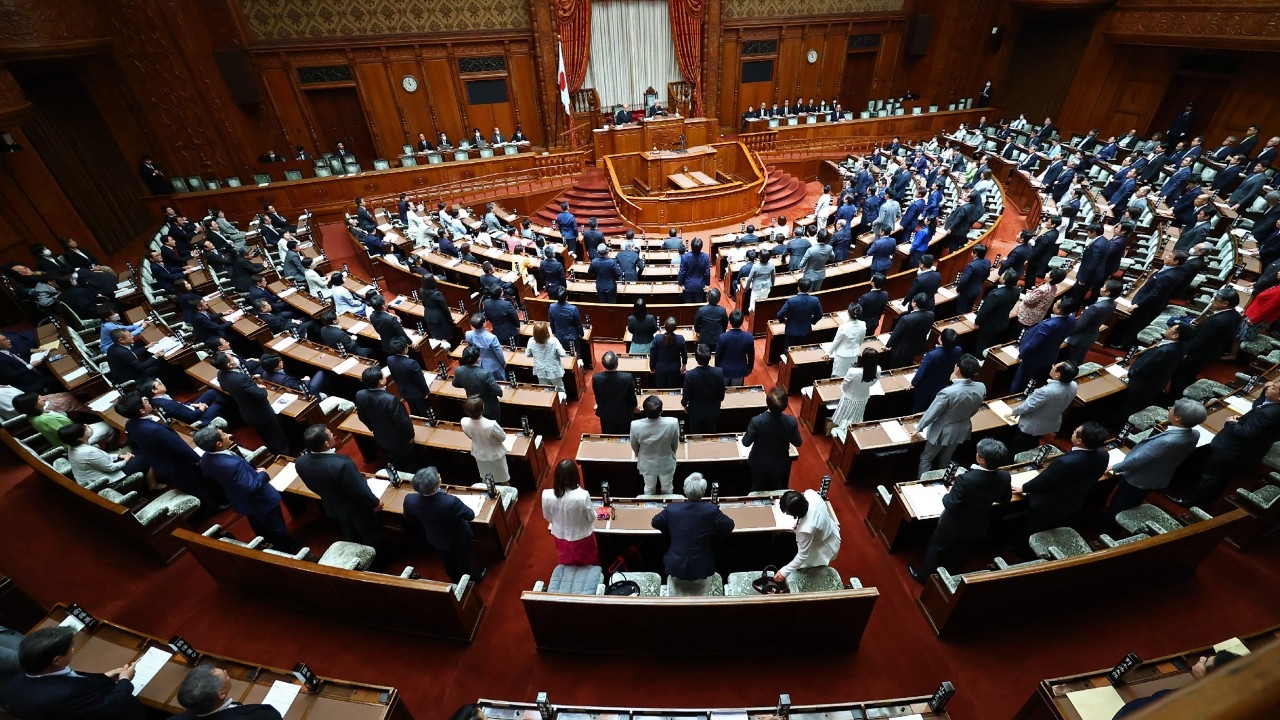
The Japanese parliament has passed a law establishing the "National Intelligence Council" to centralize security information and respond to foreign threats, in line with Prime Minister Sanae Takaichi’s security policy. However, opponents warn this could open the door to government overreach and affect citizens’ freedoms.
The Japanese parliament approved the law establishing the "National Intelligence Council" to serve as a central body for gathering and analyzing intelligence related to security and public safety. The council will be chaired by the prime minister and include nine other ministers, such as the Chief Cabinet Secretary and the Minister of Foreign Affairs.
This law represents a major initiative by Prime Minister Sanae Takaichi, who has announced an assertive policy to enhance intelligence capabilities and counter espionage. She noted that Japan currently faces the most complex security environment since the end of World War II.
Prime Minister Takaichi told parliament, "To preserve peace and prosperity and preempt severe crises, it is urgent to establish a system where the intelligence community can strongly support policymakers' correct decisions."
Previously, Japan’s intelligence system was fragmented across various agencies. The new law will create a "National Intelligence Secretariat" to act as the secretariat, fully integrating and coordinating information from the National Police Agency, Ministry of Foreign Affairs, Ministry of Defense, and other organizations.
Japan has often faced international criticism for its lax anti-espionage policies and enforcement, earning it the nickname "spy haven." This reform focuses on preventing foreign espionage, countering terrorism, protecting sensitive technology, and addressing modern threats such as cyberattacks and disinformation aimed at interfering in elections via social media.
The urgency of this issue increased after diplomatic tensions with China, following Prime Minister Takaichi’s signal in November last year that Japan might intervene militarily if China attempted to forcibly take Taiwan.
Although the law passed the upper house with some opposition party support, it has faced heavy criticism, especially from the Constitutional Democratic Party of Japan (CDPJ), the main opposition. They argue the law fails to clearly define parliamentary oversight of intelligence operations, risking a lack of transparency in democratic processes.
Opponents and citizens have protested nationwide, expressing concern over two main issues: potential violations of civil liberties due to expanded intelligence powers leading to excessive surveillance and privacy infringements; and the risk of war, as the government's push to enhance defense capabilities might draw Japan into international armed conflicts.
Passing this law is only the first step. The Japanese government plans to establish the council and secretariat as early as July, alongside forming an expert committee to discuss additional anti-espionage legislation.
Prime Minister Takaichi also mentioned future plans to consider a registration system for individuals engaged in lobbying activities on behalf of foreign governments, and ultimately aims to establish an "external intelligence agency" of its own. Policy proposals for this are expected to be submitted to parliament again during the 2027 session.
/sourceKyodo News/ AFP