

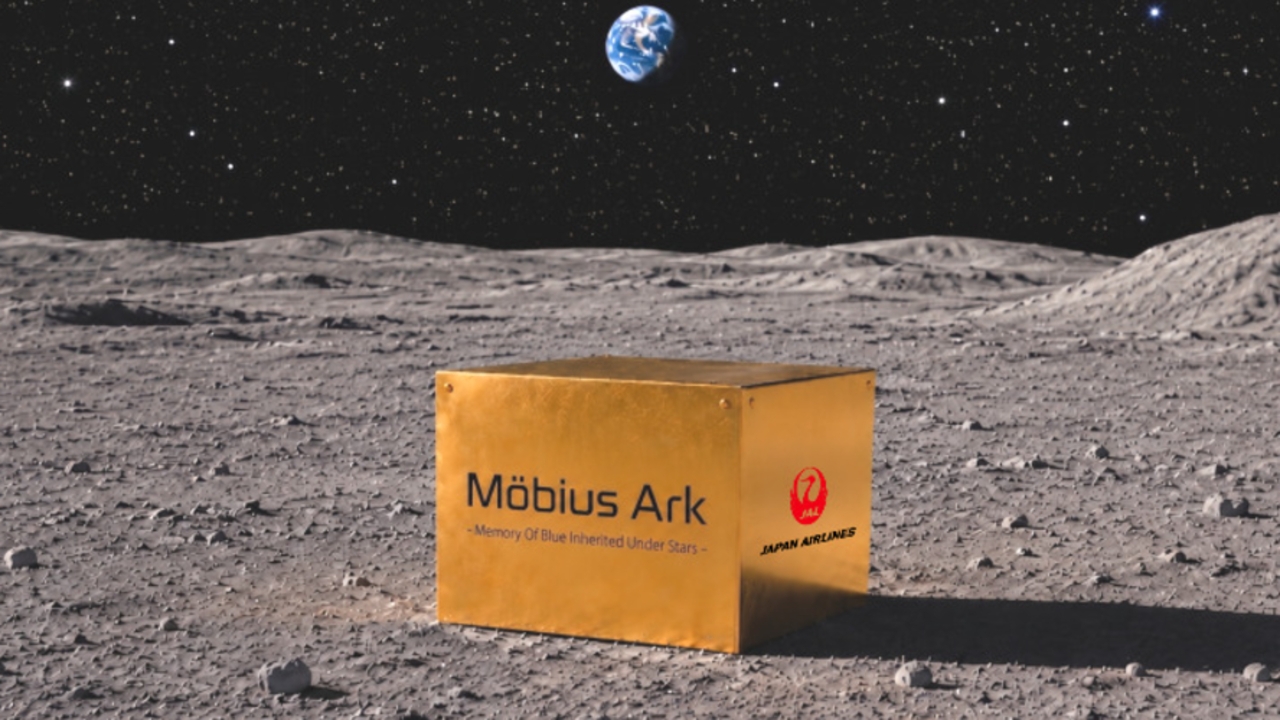
Japan Airlines (JAL) has launched a project to send cultural objects and iconic Japanese goods to be preserved on the Moon in partnership with lunar resource developer ispace. The initiative aims to protect humanity's heritage from war, natural disasters, and climate change, setting a goal to become the world's first airline to provide cargo transport services to the Moon.
Japan Airlines Co., Ltd. (JAL), together with JALUX, a trading company within the JAL Group, and ispace, a global lunar resource development company, announced a joint agreement to launch the "ARGO Trans-Lunar Heritage Project" or ARGO PROJECT.
The project draws inspiration from the Argo Navis constellation, symbolizing a large sailing ship, with the core idea of serving as a "vessel to pass cultural heritage from generation to generation." Given the rapid changes and high risks currently threatening valuable artifacts and ways of life—due to war, climate change, or natural disasters—local governments and private companies can use this service to send unique cultural objects or symbolic goods for storage in the Moon’s environment, awaiting discovery by future generations or lunar inhabitants.
If successful, JAL will become the first airline worldwide to offer cargo transport services to the Moon. The company began accepting applications and selling transport space to private companies and local government organizations starting 27 May.
The transport will use a lunar lander during ispace's "Mission 3," scheduled for launch in 2028. All items will be stored in a special space transport container named the "Möbius Ark," approximately 20 centimeters long, 20 centimeters wide, and 10 centimeters high, internally divided into compartments to hold the items.
This container is made of special materials designed to withstand the Moon's harsh surface environment to protect its contents over the long term. Once the lander arrives and places the Möbius Ark on the lunar surface, photos will be sent back to Earth as proof of successful delivery.
The project will proceed in four main phases. Phase 1, currently underway, focuses on developing the container and selecting cultural items to send to the Moon. Phase 2 involves launching a rocket to transport the container from Earth's orbit toward the Moon. Phase 3 includes landing the craft on the lunar surface and installing the container at the designated location. Phase 4 entails the long-term storage of the container, awaiting future delivery of cultural heritage to humanity on the Moon.
This project arises amid rapid growth in Japan's space industry, partly due to significantly reduced rocket launch costs.
Yosuke Enomoto, Senior Manager at PwC Consulting specializing in space business, commented, "Currently, companies without prior space business experience are seeking new opportunities by adapting their technologies and expertise."
However, he added that space travel remains too expensive for general consumers. For such transport or travel to become widespread in the future, it will require high safety certifications and technological advancements to further lower costs.
JAL Group's entry into the space business builds upon over 70 years of air transport experience, aiming to establish a new transport network to the Moon and create a society where space transport becomes more accessible to everyone in the future.