

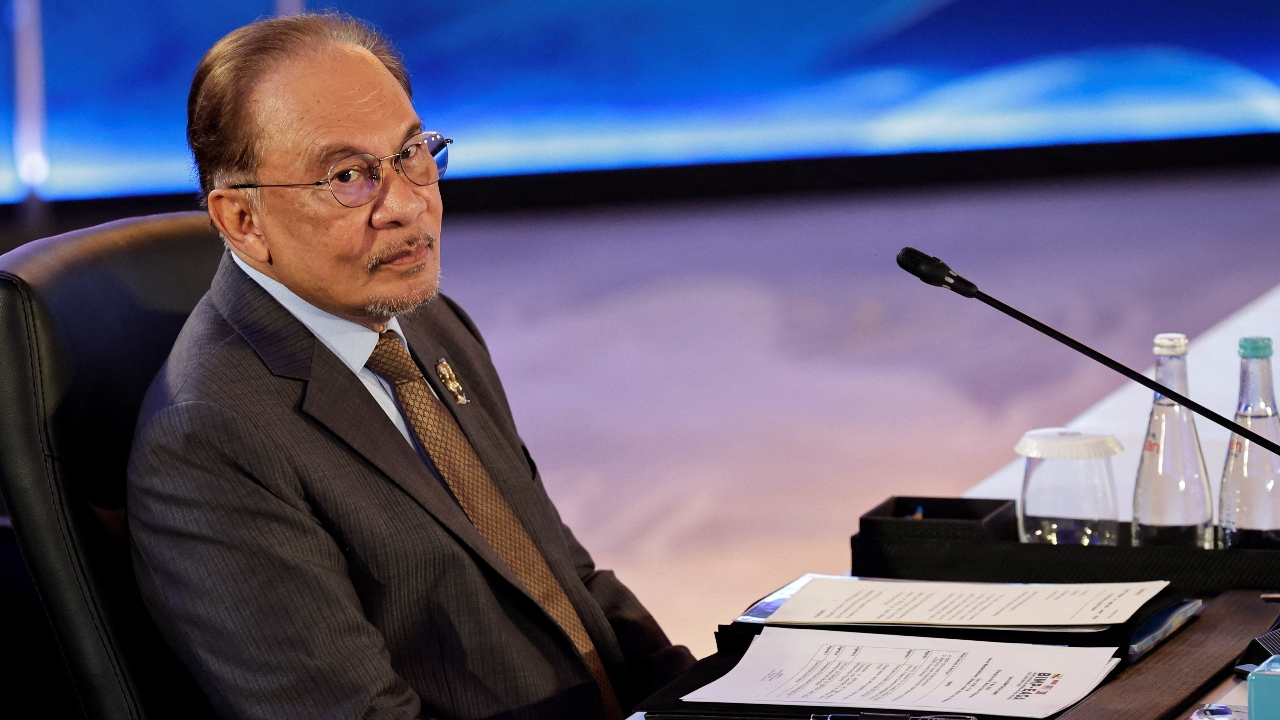
Malaysian Prime Minister Anwar Ibrahim is facing a major political storm after members of the People's Justice Party (PKR) have been resigning one after another to support a new political party founded by one of his key former protégés, amid speculation that Malaysia may hold an early election within this year.
Analysts and Malaysian parliamentarians have revealed that Prime Minister Anwar Ibrahim is under increasing pressure due to the wave of defections from members of the ruling party, led by a former key protégé who has established a new political party, amid rumors that Malaysia might hold a general election earlier than planned, possibly within this year.
Anwar rose to the prime ministership in November 2022 after over two decades as an opposition leader campaigning against corruption. While his administration has somewhat restored Malaysia's political stability, his government has faced close scrutiny over delays in political institutional reforms and doubts about its commitment to fighting corruption, leading to tensions and defections within the ruling coalition.
The critical trigger occurred earlier this month when Rafizi Ramli, former Minister of Economy and once seen as Anwar's political heir, announced his resignation from the People's Justice Party (PKR), the ruling coalition's main party, and gave up his parliamentary seat to lead a small political party called the Malaysian United Party, or "Bersama."
Bersama Party has revealed that it has received over 18,000 new membership applications, about one-third of whom are former PKR members. Although most defectors are ordinary members and local party officials—since Malaysian law prohibits sitting parliamentarians from switching parties—the high number of defections is raising concerns about Anwar's hold on power if the expanding conflict forces him to call a snap election.
Hassan Abdul Karim, a PKR MP and longtime supporter of Anwar, posted on social media that he has ceased efforts to stop members from defecting to other parties because party leaders refuse to listen to the concerns of grassroots workers. He added that although he still believes in the party's original ideals, PKR is now "wounded, scarred, and critically injured."
Additionally, Hassan told Reuters that Rafizi's Bersama Party may attract overwhelming support from undecided voters, young people, and those prioritizing economic issues. He warned, "If more PKR MPs who support Rafizi resign and leave the party, Prime Minister Anwar will immediately lose his legitimacy to govern."
Meanwhile, the Malaysian Prime Minister's Office has declined to comment on the matter, while PKR Secretary-General Fuziah Salleh disputed reports of mass resignations. Similarly, Fahmi Fadzil, government spokesperson and PKR communications chief, downplayed the rumors, noting that in the past two months, 5,000 new members have joined PKR, which now totals over one million members.
Bridget Welsh, an Asian political analyst from the University of Nottingham, believes that current member resignations may not directly threaten Anwar's prime ministership since he still holds a parliamentary majority. However, the internal divisions within PKR will severely damage his election prospects and dim his chances of a second term. "Equally important is Anwar's image of party management, as the issues within PKR reflect a leadership mismatch," she said.
Originally, Malaysia's general election was not scheduled until early 2028. But earlier this month, Anwar hinted he might consider dissolving parliament for a new election if coalition divisions continue to widen. The tensions stem from reformist allies' dissatisfaction with handling corruption agency scandals and disputes among coalition parties over ethnic and religious matters in the predominantly Muslim country. Two parliamentarians indicated that the national election could be moved up as early as July to coincide with upcoming state elections.
At the same time, 21 local PKR members who resigned together issued a joint statement saying, "We believe political parties must uphold the professional values of reform and democracy as promised to the people. Unfortunately, we no longer see these principles consistently practiced within PKR." This aligns with several regional party leaders who resigned similarly, stating that Rafizi's Bersama Party will continue the original true ideals that Anwar's party once held.
. Reuters