

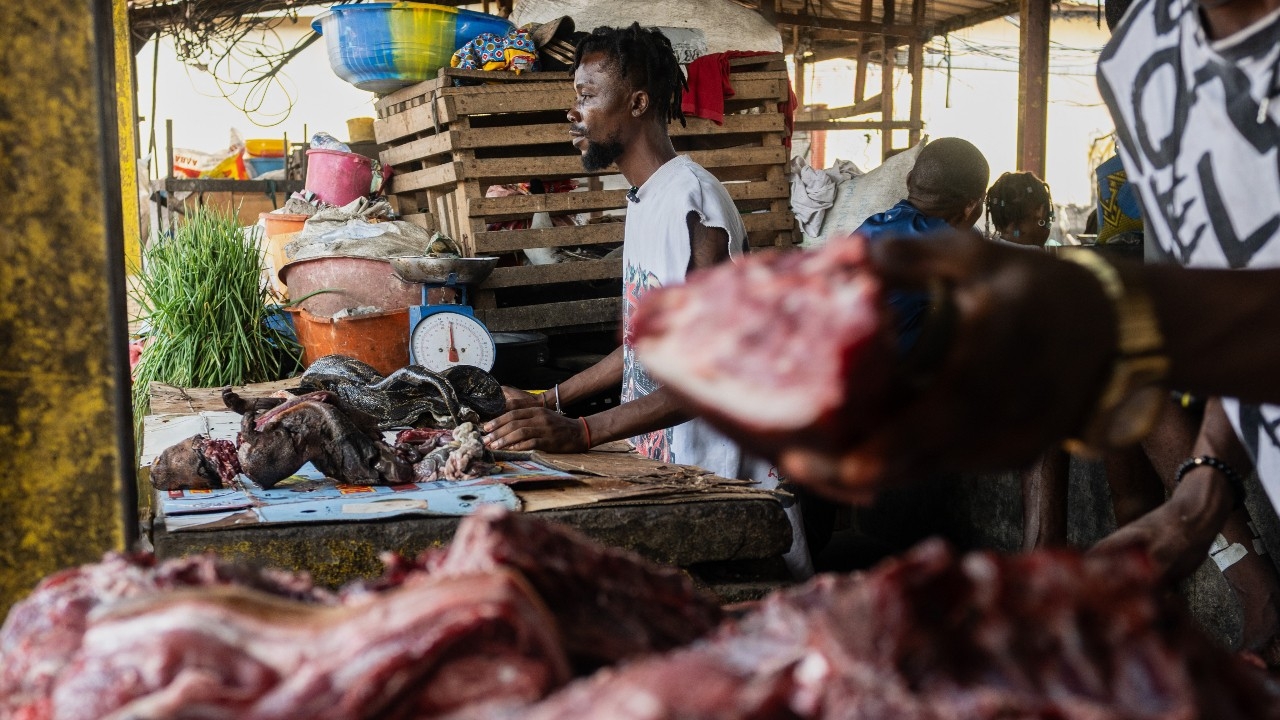
Experts point out that hunting and consuming wild animals is one of the factors that may cause Ebola virus transmission from animals to humans amid the latest outbreak in Congo, warning to avoid consuming animals of unknown origin.
Despite the severe resurgence of Ebola in the Democratic Republic of Congo, the popularity of eating wild meat—which is part of the food culture in many areas of Central and West Africa—remains unchanged amid public health experts' concerns about zoonotic disease risks.
At Masina Market in Kinshasa, the capital of Congo, vendors continue selling various wild meats ranging from large rodents, antelopes, pythons to caterpillars, which are considered popular local foods.
For many Congolese, wild meat is not only an important protein source but also a part of their lifestyle and culture passed down through generations, despite multiple Ebola outbreaks over the past decades.
The Congolese government revealed that since announcing the Ebola outbreak on 15 May, there have been over 1,000 suspected cases and at least 220 deaths.
The World Health Organization (WHO) believes the actual numbers may be higher than reported, as the virus has spread undetected for several weeks.
Ebola was first identified in 1976 near the Ebola River in Congo and is believed to originate from animal-to-human transmission, particularly fruit bats, which are considered the natural reservoir of the virus.
Experts state that hunting, butchering, and consuming infected wild animals are major routes through which the virus crosses species to humans.
Dr. Tolbert Gueyleh Nyenswah from the Africa Centers for Disease Control and Prevention said as long as humans continue close contact with wild animals and the environment, the risk of such epidemics remains.
Meanwhile, Dr. Misaki Wayengera, a microbiology expert from Uganda, noted that changing wild meat consumption habits is very difficult due to deep cultural roots. Public health experts therefore urge governments and international organizations to accelerate public education on Ebola risks, especially avoiding animals from unknown sources or those that have died naturally, to prevent future outbreaks.
The latest outbreak is caused by the Bundibugyo strain, a rare Ebola variant, for which there is currently no approved vaccine or specific treatment.
Congo has faced at least 17 Ebola outbreaks, while the largest outbreak in West Africa from 2014 to 2016 infected about 28,000 people and caused over 11,300 deaths.
The WHO states that some species of fruit bats may be natural carriers of the Ebola virus, but in many parts of Central and West Africa, bats are still widely used as food.
One popular dish is grilled bat soup, along with monkey meat, rodents, snakes, and various other wild animals.
:SourceAP
Click to read news aboutInternational News