

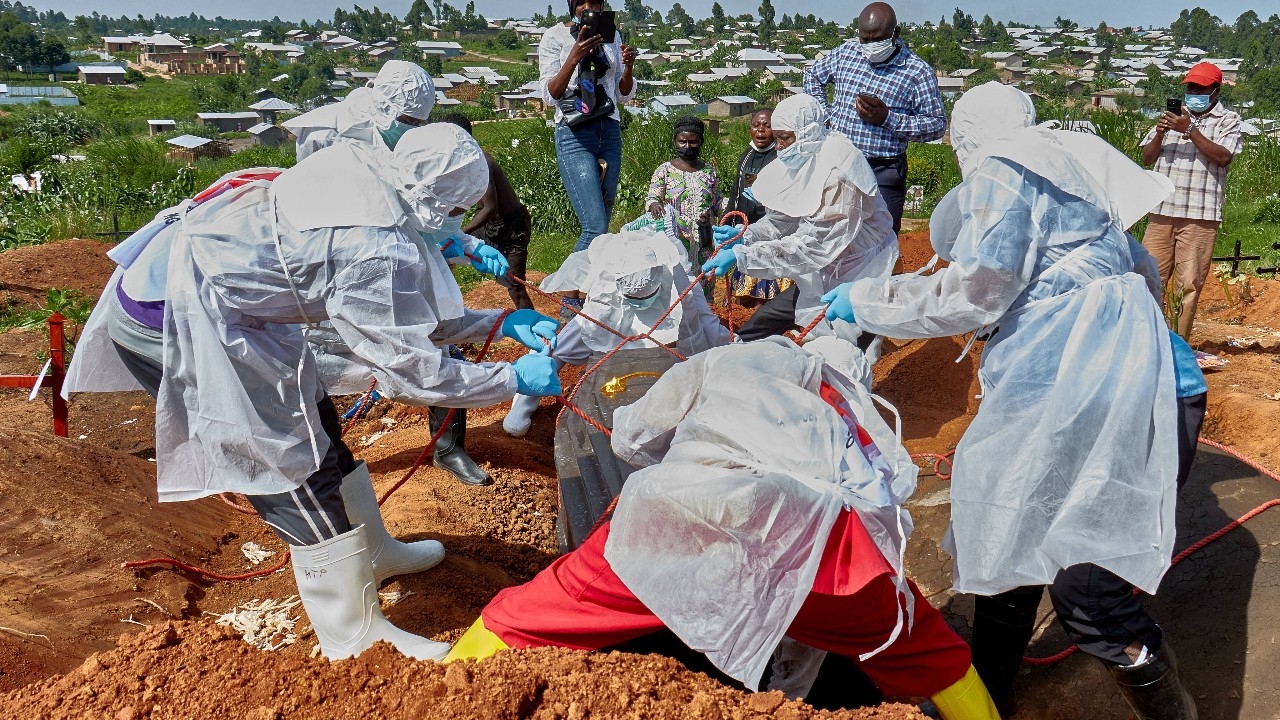
Doctors Without Borders has warned that the Ebola virus outbreak in the Democratic Republic of Congo is reaching a critical and highly concerning stage after the number of cases rose rapidly to more than 1,000 within just two weeks. Meanwhile, the WHO director has personally traveled to the area to coordinate response efforts.
Dr. Alan Gonzalez, Deputy Director of Doctors Without Borders (MSF), stated that after the DR Congo government officially declared an outbreak zone in Ituri Province in the east of the country just two weeks ago, the situation has escalated alarmingly. He noted, "Never before has an Ebola outbreak produced such a large and rapid surge in cases." He admitted that medical teams on the ground have been unable to keep pace with the virus's spread, and the true scale remains unknown, as new suspected cases continue to emerge daily and hundreds of samples are still awaiting testing.
Currently, DR Congo has over 1,000 suspected Ebola cases with at least 246 deaths. Neighboring Uganda has confirmed 9 cases and 1 death. Public health officials and humanitarian teams face major challenges due to border closures, airport shutdowns, and ongoing internal conflict and fighting within the country.
Dr. Tedros Adhanom Ghebreyesus, Director-General of the World Health Organization (WHO), has visited Bunia, the capital of Ituri Province, to assess the situation and support disease control efforts. He called on local communities to actively participate in fighting the disease, as they best understand the challenges, and issued warnings about the risks associated with traditional burial practices.
The WHO Director-General said, "We understand the importance of mourning and honoring the deceased through funeral rites. However, at this time, it is very dangerous. Contact with the bodies of those who died from Ebola can spread the virus. While we grieve, we must do everything possible to prevent further loss of life and break the cycle of death."
In Bunia, daily life and commerce continue as usual. However, the city’s airport has set up handwashing stations with soap and clean water for all passengers. Public health messages are being broadcast via radio and television in both French, the official language, and local languages.
Dr. Tedros also toured the National Biomedical Research Institute laboratory in Bunia, which can now test and deliver results within 24 hours. This capability allows doctors to isolate and treat patients promptly, avoiding previous delays caused by sending samples over 1,500 kilometers to Kinshasa, which increased the risk of virus spread.
Brazilian health authorities have revealed they are urgently investigating a suspected Ebola case in São Paulo state. Local media report the patient is a 37-year-old man recently returned from DR Congo and is currently quarantined in an infectious disease hospital for safety.
This outbreak is caused by the rare Ebola virus strain called "Bundibugyo," for which no approved vaccine currently exists. The strain has a high fatality rate, killing about one-third of those infected.
Ebola virus normally spreads in animals, with fruit bats as the main carriers. Humans can become infected by consuming or contacting infected animals, and the disease spreads between people through direct contact with infected bodily fluids such as blood, vomit, feces, saliva, urine, semen, and sweat, as well as contact with contaminated objects like needles, bedding, or clothing.
/source/ - no translation required here, as it is a heading or placeholder; returning empty string as per instruction: ""BBC