

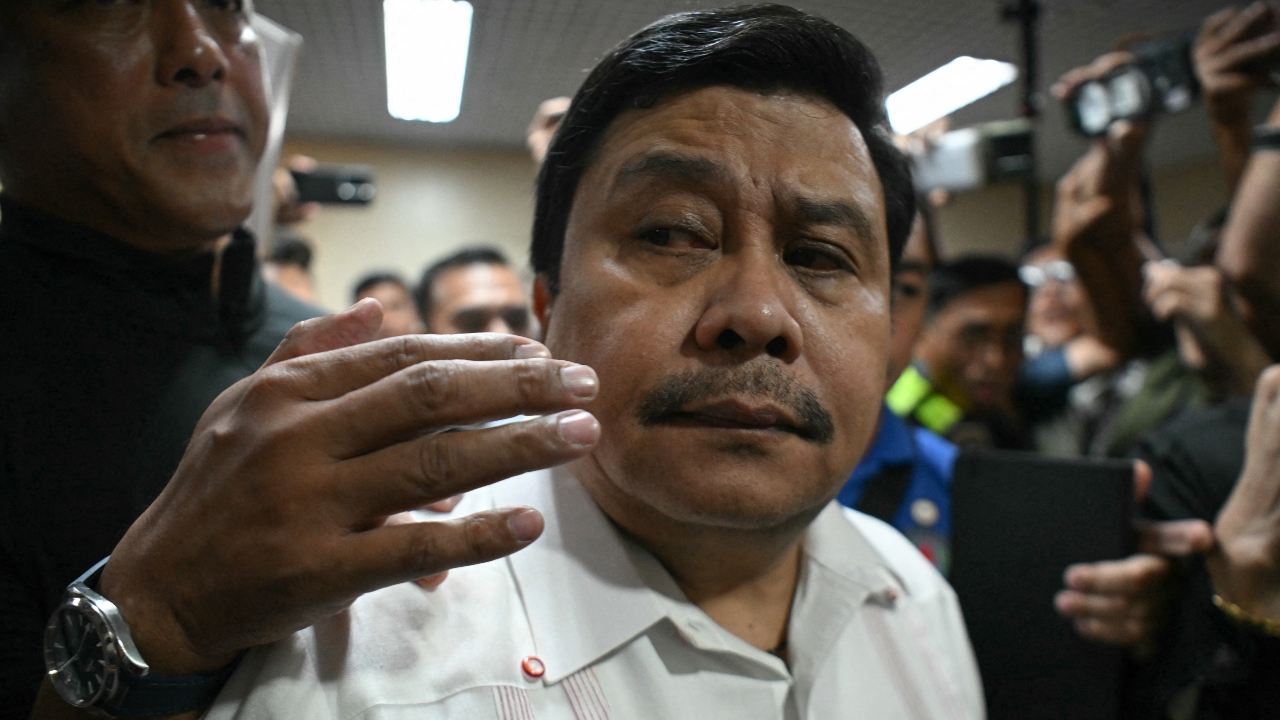
Philippine police arrested Senator Jose "Jinggoy" Estrada, son of a former president, after a court ordered his indictment in a massive budget corruption case involving a flood control project. Evidence showed he accepted bribes exceeding 300 million baht. Estrada maintains his innocence, claiming political persecution.
Philippine authorities have taken into custody Senator Jose "Jinggoy" Estrada following a special anti-corruption court's arrest warrant for "graft," a national-level corruption case that sparked widespread public outrage and major protests across the country last year.
The arrest came after nearly a year-long investigation into corruption in a flood control project—an especially sensitive issue in the Philippines, which faces severe typhoons annually. Prosecutors stated that Estrada inserted flood control project funds into the 2025 annual budget to benefit himself, receiving bribes totaling 573 million pesos (approximately 302 million baht).
Several accomplices are involved in this case, including Manuel Bonoan, former Secretary of the Department of Public Works and Highways, as well as local engineering officials and owners of multiple construction firms.
Before surrendering at the parliament building, Estrada gave a brief statement to the media, affirming his innocence and describing the charges as "absurd," alleging they are a political scheme to pressure him into changing his vote on a key Senate decision.
Estrada said, "Many deals were offered to help me escape this case, but I refused because what is at stake is the independence of the Senate." He emphasized his readiness to prove himself in court and stated he would not use senatorial immunity to evade justice.
Estrada's detention occurs amid heightened political tensions in the Philippines, as he is among 13 influential senators set to serve as judges in the upcoming impeachment trial of Vice President Sara Duterte next month. She faces allegations of corruption and involvement in a plot to assassinate President Ferdinand Marcos Jr.
Additionally, another senator in the same group, Ronald dela Rosa, former police chief during the drug war, fled last month after the International Criminal Court issued an arrest warrant. Former President Rodrigo Duterte was also transferred to the court in the Netherlands earlier. The absences of Estrada and dela Rosa may directly affect the Senate's vote deciding Vice President Duterte's fate.
Under Philippine law, the charge of "graft" carries a maximum penalty of life imprisonment, with no option for bail. This major corruption case not only damages political reputation but also undermines economic confidence and the country's growth in the recent quarter.