

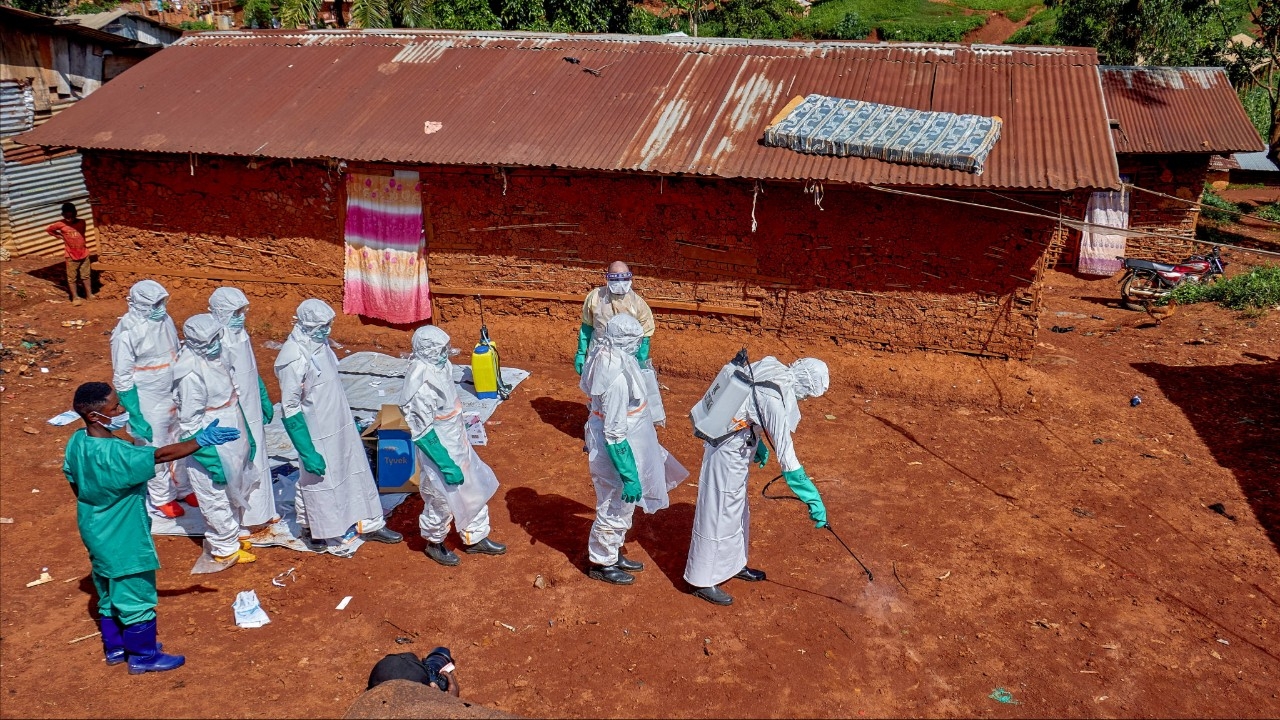
Brazilian authorities revealed that two patients suspected of having Ebola after traveling from high-risk African countries tested negative in laboratory tests.
On 1 Jun 2026 GMT+7, the São Paulo health agency in Brazil announced that two patients suspected of Ebola virus infection, who showed symptoms after traveling from African countries currently experiencing outbreaks, tested negative in laboratory analyses, confirming they were not infected.
The São Paulo health agency stated that a 37-year-old man who traveled from the Democratic Republic of the Congo (DR Congo), which is facing a severe outbreak, had previously been diagnosed with meningitis.
Meanwhile, another patient in Rio de Janeiro, who had recently traveled to Uganda, also tested negative for Ebola after previously being diagnosed with malaria.
Local authorities noted that the man in São Paulo "had a fever," while the man in Rio de Janeiro, a Belgian national, exhibited "virus-like symptoms such as cough, chills, and diarrhea."
Had these patients tested positive, it would have marked the first Ebola infections outside Africa since the new outbreak began in DR Congo in late April. However, test results confirmed this was not the case.
Currently, DR Congo has over 1,000 suspected Ebola cases and 246 suspected deaths, with most cases concentrated in the Ituri, North Kivu, and South Kivu provinces.
In Uganda, there have been nine confirmed cases and one death reported.
This outbreak involves a rare strain called Bundibugyo, for which there is no specific vaccine, and it has a fatality rate of about one in three infected individuals.
Currently, three new vaccines are being developed to combat the Bundibugyo strain, including efforts by the International AIDS Vaccine Initiative (IAVI), the University of Oxford, and pharmaceutical company Moderna.
Ebola virus typically infects animals, especially fruit bats, but human outbreaks usually begin when people consume or come into contact with infected animals. It then spreads through direct contact with bodily fluids such as sweat, saliva, blood, semen, feces, urine, or vomit from infected individuals.
:bbc