

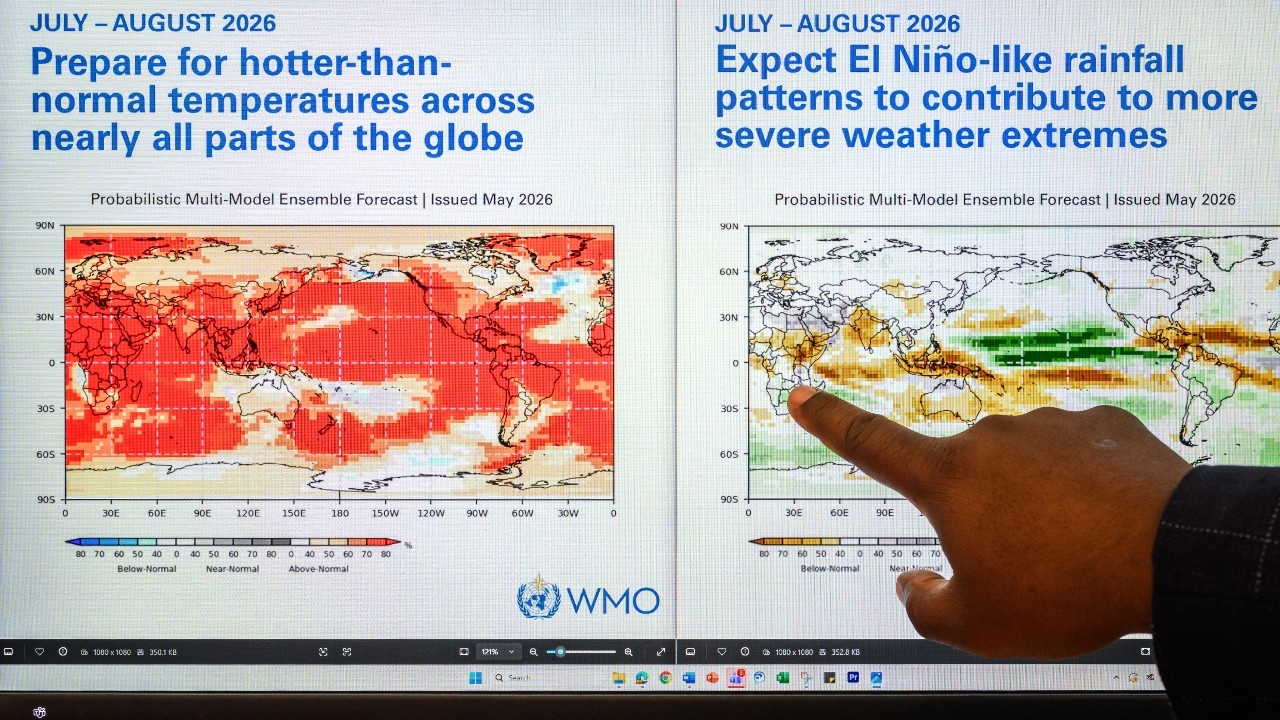
The World Meteorological Organization warns there is up to an 80% chance that El Niño will develop between June and August this year and may intensify into a "Super El Niño," potentially becoming one of the most severe events ever recorded. This would cause heatwaves, droughts, heavy rains, and more extreme weather conditions globally.
The World Meteorological Organization (WMO), the United Nations' agency for weather and climate, issued an urgent statement warning that the world is entering a new phase of the natural phenomenon "El Niño" within the next few weeks. It predicts the phenomenon will continue to intensify throughout the rest of 2026, causing extreme weather across many regions worldwide.
Data from WMO's global weather forecasting network indicates an 80% chance of El Niño occurring between June and August, with the likelihood rising to nearly or above 90% by November. Meteorological agencies worldwide agree that this El Niño may escalate into a "Super El Niño," ranking among the strongest ever recorded in history.
El Niño is a natural climate phenomenon characterized by unusually warm sea surface temperatures in the central and eastern equatorial Pacific Ocean. It affects wind patterns, air pressure, and rainfall globally. Typically, it occurs every 2 to 7 years and lasts about 9 to 12 months.
WMO reports that monitoring from late April to mid-May shows sea surface temperatures in the equatorial Pacific nearing levels indicative of El Niño formation, with subsurface temperatures exceeding the average by more than 6 degrees Celsius. The Southern Hemisphere atmospheric variability index also aligns with El Niño development.
The statement notes there is no definitive evidence that climate change directly causes more frequent or intense El Niño events. However, global warming acts as an "accelerator," amplifying El Niño's impacts and expanding their reach, as warmer oceans and atmosphere increase energy and moisture, leading to more severe disasters.
United Nations Secretary-General António Guterres, in a video message, warned the global population that "El Niño is now at our doorstep. The world must treat this as an urgent climate warning. El Niño is like pouring fuel on the world's already blazing fire. Its impacts will be harsher, more widespread, and cross borders rapidly, causing devastating damage." He emphasized that the only solution is to end reliance on fossil fuels, accelerate the shift to renewable energy, and establish early warning systems accessible to everyone worldwide.
WMO Director Celeste Saulo stated the world must prepare for heatwaves on land and in oceans. Forecast models for June to August predict "above-normal" temperatures across nearly all global areas, affecting various regions. Eastern Africa is expected to face "below-normal" rainfall during the critical June-September rainy season, worsening food security issues.
In South Asia, monsoon rainfall is projected to be below average, potentially impacting agriculture and crop production. Meanwhile, Central America is expected to experience drier and hotter summer conditions compared to previous years.
In the Pacific and Atlantic Oceans, warmer sea temperatures will likely fuel hurricane formation in the central and eastern Pacific but will inhibit storm development in the Atlantic.
WMO concluded that past El Niño events contributed to making 2023 the second hottest year on record and 2024 the hottest year ever globally, with temperatures 1.55 degrees Celsius above pre-industrial levels. This early warning is crucial for vulnerable sectors such as agriculture, water management, energy, and public health worldwide to prepare in advance and minimize losses.
/AFP