

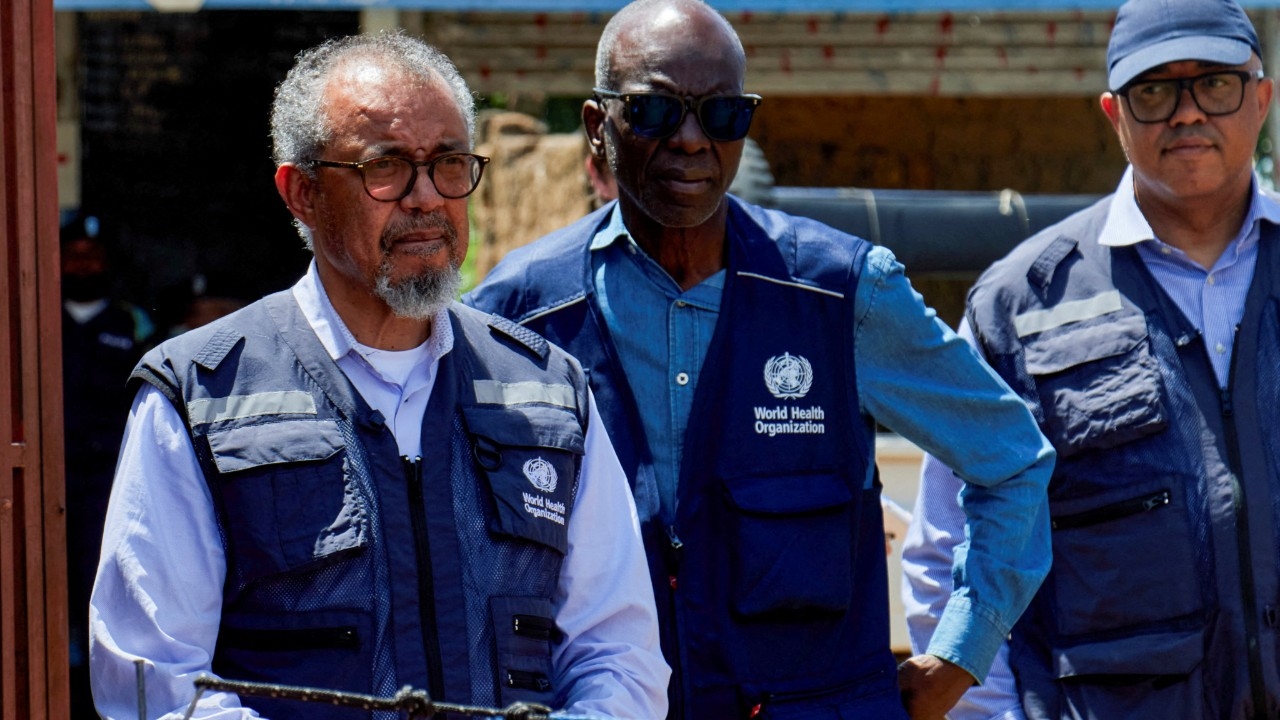
The World Health Organization revealed that the number of suspected Ebola cases in the Democratic Republic of Congo has decreased from over 900 to 116 after most test results came back negative.
On 2 Jun 2026, the World Health Organization (WHO) significantly lowered the number of suspected Ebola virus cases in Central Africa to just 116, down from more than 900 previously reported, while the confirmed cases currently stand at 330.
WHO disclosed that as of 31 May, 116 suspected cases of the deadly virus have been registered in the Democratic Republic of Congo (DR Congo), a sharp decline from 906 cases reported at the end of the previous week.
Currently, there are about 321 confirmed Ebola cases in DR Congo, including 48 deaths. Meanwhile, in neighboring Uganda, there are 9 confirmed cases, including 1 death.
Christian Lindmeier, WHO spokesperson, stated that although some patients have confirmed infections, many others have been "excluded from the data system" after tests showed they suffered from other illnesses with similar initial symptoms or fevers caused by unrelated factors.
WHO emphasized that “anyone identified by the surveillance system or who seeks medical care with symptoms potentially resembling Ebola” is initially counted as a suspected case pending official laboratory test results.
The current outbreak center is Ituri province in northeastern DR Congo, where the outbreak was declared on 15 May but is believed to have quietly started spreading in late April.
One reason for delayed detection is that the infected strain, Bundibugyo—a variant behind this outbreak—initially shows symptoms similar to influenza, malaria, or typhoid fever, complicating early diagnosis.
Currently, there is no approved vaccine or treatment for the Bundibugyo strain of Ebola, so containment efforts rely mainly on preventive measures and symptomatic treatment.
Follow international news:https://www.thairath.co.th/news/foreign
Source:cna