

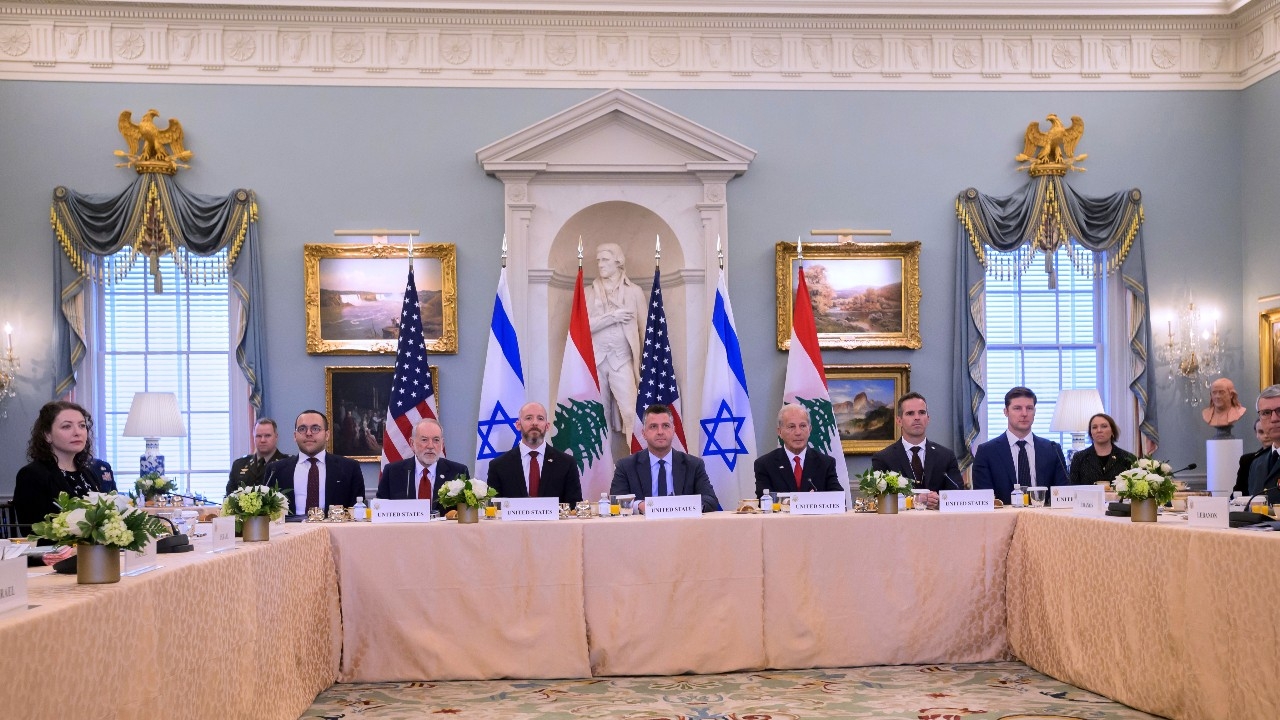
The U.S. Department of State announced progress after Israel and Lebanon agreed to implement a new ceasefire agreement. The U.S. emphasized a key condition that Hezbollah must cease all attacks and withdraw its personnel from the controlled areas in southern Lebanon.
A statement from the U.S. Department of State said the ceasefire depends on a "complete cessation of attacks" by Hezbollah, an Iranian-backed armed group. Another crucial condition is that Hezbollah must "evacuate all forces" from the areas under Israeli control in southern Lebanon, from the Litani River to the border line.
U.S. officials will assist in establishing a "pilot zone" where the Lebanese government military will have sole authority and control, excluding any non-state armed groups from operating in the area.
The U.S. statement said, "All countries affirm together that the future of relations between Israel and Lebanon must be determined solely by the sovereign governments of both countries, and reject any attempts by illegal states or influence groups to hold Lebanon's future hostage."
Earlier, U.S. Secretary of State Marco Rubio told reporters he expects the talks to lead to "an action plan for security in Lebanon that is independent and free from Hezbollah interference."
This new agreement follows a "partial ceasefire" reached on Monday, 1 June, requiring Israel to halt airstrikes on Beirut in exchange for Hezbollah not initiating attacks against Israel. However, this agreement still faces significant challenges as clashes have continued throughout the week.
Hezbollah has yet to issue an official public statement on the latest ceasefire agreement. However, Mahmoud Qomati, a member of Hezbollah's political council, told the BBC that "there is no ceasefire agreement; only the defense of the Dahieh district (Hezbollah’s stronghold south of Beirut)." He confirmed that Hezbollah will not comply with any commitments arising from Lebanon-Israel negotiations in Washington, as the group rejects these talks from the start.
U.S. President Donald Trump revealed behind-the-scenes efforts to push the partial ceasefire during a New York Post podcast, admitting he was frustrated with Israeli Prime Minister Benjamin Netanyahu’s continued attacks on Lebanon’s capital. This led to a direct, stern phone call warning Netanyahu, "Bibi (Netanyahu’s nickname), we need to stop this now." Netanyahu later agreed to suspend airstrikes on Beirut but emphasized that Israeli military operations would continue in southern Lebanon.
Reports say Trump was concerned that escalating violence in Lebanon could undermine the broader ceasefire agreement involving the U.S., Israel, and Iran. Meanwhile, Iranian Foreign Minister Abbas Araghchi warned that if Israel continues attacks on Beirut, Iran’s military is fully prepared to re-enter the war. Trump stated he wants to separate U.S.-Iran negotiations from the Israel-Hezbollah conflict in Lebanon.
Despite the hopeful news on the agreement, the situation on the ground remains tense. On Wednesday, Lebanon’s Ministry of Health reported at least nine deaths from Israeli attacks in southern Lebanon, including two paramedics killed when an ambulance was directly hit in the Chehour area. The death toll among medical and health personnel over the past three months has reached 128. Additionally, the Lebanese army condemned Israel after one soldier was killed by a drone strike and two others wounded in an attack on a military vehicle.
The Israeli military stated it successfully intercepted drones and explosive devices launched across the border from Lebanon, which Hezbollah claimed targeted a gathering of Israeli soldiers.
This latest round of conflict began on 2 March when Hezbollah fired rockets at Israel in response to an Israeli strike killing a senior Iranian leader. Israel then launched a major air campaign and deployed ground forces into southern Lebanon. According to Lebanon’s Ministry of Health, at least 3,516 people have died in Lebanon, with over one million displaced. On the Israeli side, 26 soldiers and four civilians have been reported killed.
. BBC