

"Dawa Sherpa" Dawa Sherpa, a famous Nepali mountain guide who had been missing on Mount Everest for six days without food or oxygen amid freezing weather and was presumed dead, was found alive but weakened, crawling down near the base camp, bringing joy to his family who had just begun a funeral prayer ceremony days earlier.
Nepali officials revealed that a team from the Sagarmatha Pollution Control Committee (SPCC), responsible for managing the Everest route and waste, found Dawa Sherpa, a climber in his 50s nicknamed "Hillary" after the world-renowned climber Edmund Hillary due to his extensive experience. He was discovered crawling near base camp early this morning (4 June), after being missing in Everest's high-altitude area since 30 May.
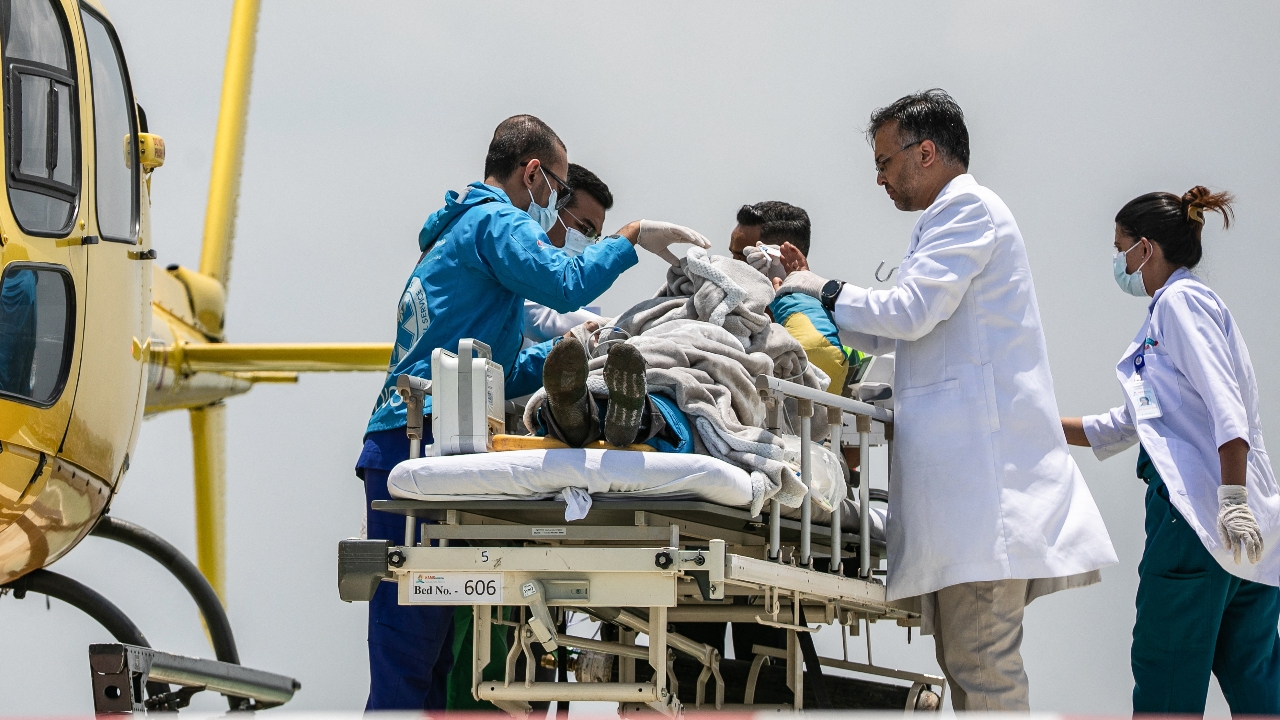
Officials urgently dispatched a helicopter to airlift him to a hospital in Kathmandu. Dawa Sherpa remained conscious and had some frostbite injuries, but overall his condition was stable.
Damu Sherpa, his wife, emotionally told reporters at the hospital, "We are very happy and relieved. At first, we had lost hope, and just yesterday, we had begun performing a prayer ceremony for the deceased, to let him go."
Chris Thrall, a former British Royal Marine and climber who accompanied Dawa Sherpa, recounted that they successfully summited Everest at about 17:00 on 29 May. The following day, while descending from Camp 4, located below the "death zone" where oxygen levels are extremely low, Dawa stopped to rest due to carrying heavy gear.
"I asked him, 'Hillary, brother, are you okay?' He replied, 'Okay, okay Chris, you go ahead!' It's normal for us to take turns leading," Thrall said.
However, on the descent, Thrall encountered a Polish climber in critical condition, having run out of supplemental oxygen and suffering frostbite on his fingers amid harsh weather. Thrall had to decide between returning to help Dawa, whom he believed could manage on his own, or assisting the dying Polish climber. Ultimately, Thrall split his oxygen supply to aid the Polish climber and helped him descend, taking 11 hours to reach Camp 3 instead of the usual 2 hours.
Rescue teams subsequently searched for Dawa Sherpa without success until he managed to crawl down on his own six days later.
This climb took place toward the end of the climbing season, resulting in relatively few climbers remaining on the summit. Preliminary data from Nepali officials indicate that more than 1,000 climbers reached Everest's summit this season, setting a record as the busiest and most crowded season ever.
Nevertheless, Everest's dangers remain formidable. This season has seen at least five confirmed deaths—two Indian climbers and three Nepali Sherpas preparing the route—making Dawa Sherpa's survival story hailed as a true miracle of the "Tiger of the Mountains" strength.
/sourceAFP