

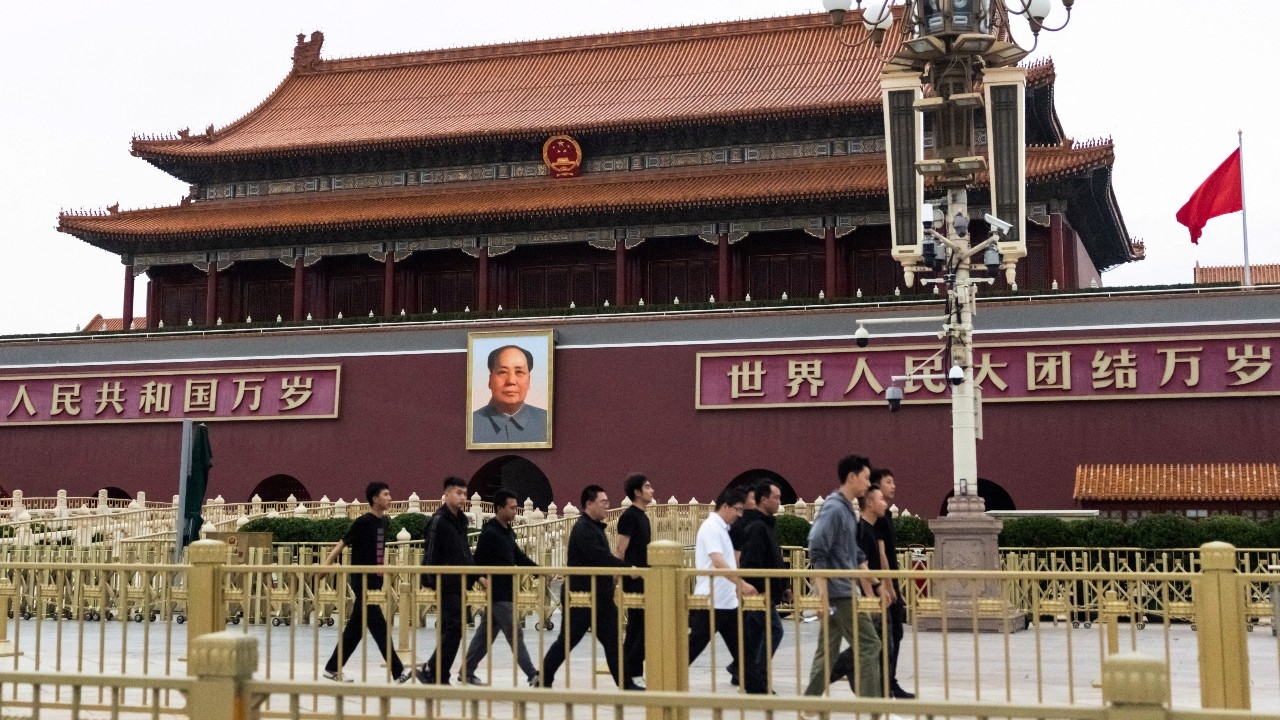
The United States and China exchanged sharp words on the 37th anniversary of the Tiananmen Square crackdown, with the U.S. Secretary of State asserting, "Censorship cannot erase memory." China immediately retaliated, accusing the U.S. of distorting facts and interfering in its internal affairs. Meanwhile, Taiwan's leader called on China to face historical truths.
Tensions flared when U.S. Secretary of State Antony Blinken issued a statement commemorating the anniversary of the Tiananmen Square crackdown on 4 June 1989, saying, "No censorship can erase the past, and those who sacrificed to protect the rights to freedom of expression and peaceful assembly will one day be vindicated."
Subsequently, Mao Ning, spokesperson for the Chinese Ministry of Foreign Affairs, issued a strong rebuttal, stating that the Chinese government has long had a clear conclusion regarding the "political turmoil in the late 1980s" and expressed severe dissatisfaction with the U.S. stance.
The Chinese Foreign Ministry spokesperson said, "China firmly opposes the U.S. distorting historical facts, smearing China's political system and development path, and interfering in China's internal affairs under the pretext of democracy and human rights."
At the same time, Taiwan's President Tsai Ing-wen posted on her personal Facebook, emphasizing that a truly great nation should not blindly rely on military power.
"I sincerely hope that China can face the events of 4 June 37 years ago, accept the truth, ease the pain, and open the door to reconciliation and joint dialogue," the Taiwanese leader stated. The Taiwan Affairs Office of China did not respond directly to this message but has often labeled Tsai Ing-wen a "separatist" and has consistently rejected her proposals for dialogue.
The bloody incident on 4 June 1989 occurred when the Chinese government deployed troops and tanks to suppress student and worker protesters calling for political reform and democracy peacefully at Tiananmen Square. Although China has never revealed the true death toll, human rights groups and eyewitnesses estimate the number could be in the thousands. At the time, the Chinese government described the protests as an anti-revolutionary attempt to overthrow the Communist Party.
Today, the topic remains taboo and is rigorously censored in mainland China. Amnesty International reported that this year, Chinese authorities even forbade families of the 1989 victims from visiting graves at the Wan’an Cemetery in Beijing, a move human rights groups condemned as "heartless."
In Hong Kong, which previously held large annual candlelight vigils at Victoria Park attracting tens to hundreds of thousands, such activities have ceased entirely since the Chinese government imposed the National Security Law in 2020.
AFP reporters noted a heavy police presence around Victoria Park, with only activist Tang Ngok-kwan quietly reading the names of hundreds of victims alone amid plainclothes officers. A former local council member who had handed out free candles in his shop since 2022 remarked, "The space for free expression in Hong Kong is shrinking day by day."
However, memorial events for Tiananmen continue to take place in major cities worldwide outside China, including in Taipei, cities across Australia, and four major cities in Germany.
/sourceReuters/ AFP