

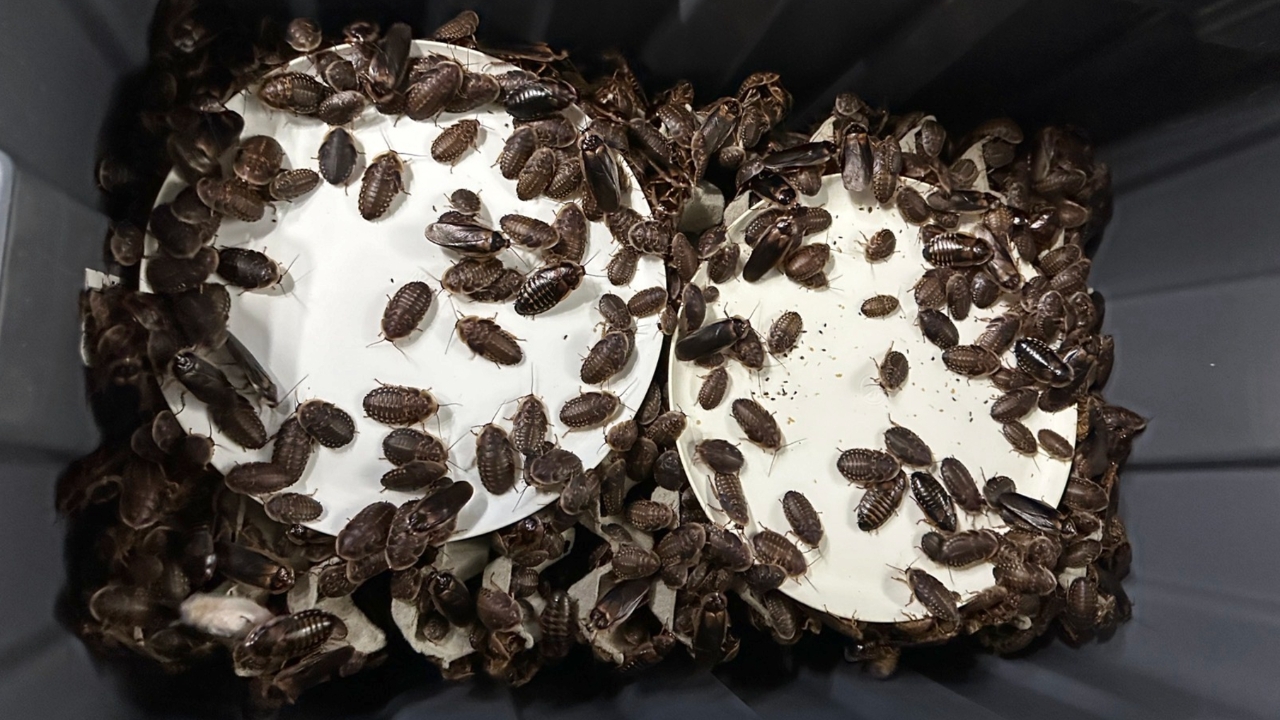
Australian wildlife and environmental protection officers have raided the largest illegal exotic cockroach breeding operation in history, seizing over 100,000 Madagascar hissing and Dubia cockroaches valued at AUD 200,000, equivalent to about 4.65 million baht.
The Australian Department of Climate Change, Energy, the Environment and Water (DCCEEW) revealed that officers conducted a joint raid on a commercial breeding facility in Bathurst, west of Sydney, New South Wales. They seized more than 100,000 live exotic cockroaches, marking the largest illegal exotic invertebrate seizure ever recorded in Australia, with a black market value of AUD 200,000 or roughly 4.65 million baht.
The confiscated specimens included the "Madagascar Hissing Cockroach," known for its hissing sound when disturbed. Official photos showed some individuals nearly filling an adult human palm. Also seized were "Dubia Cockroaches," an invasive species often bred as reptile feed.
A DCCEEW spokesperson stated the agency is serious about protecting Australia's unique biodiversity and that violators of national environmental laws will face prosecution. "We are closely monitoring the illegal breeding and trade of exotic cockroaches and warn pet stores and owners that possession, breeding, or trading of these cockroaches will result in seizure and severe penalties under federal law."
Stephanie Lesser, a local snake catcher in Bathurst, said she has frequently seen these exotic cockroaches sold illegally online as reptile food, noting their large size makes them more cost-effective than buying many smaller native crickets or cockroaches for a single feeding.
Carol Booth, Policy Director of the Invasive Species Council, noted that exotic invertebrates are increasingly popular as pets due to ease of care, low cost, and no need for expensive veterinary visits. However, she expressed concern that these insects are easily bought, sold, and shipped worldwide via mail, making the true size of this black market difficult to assess.
Experts warn that if these exotic cockroaches escape into the wild, they could introduce new microbes and pathogens that might devastate native insects like Australian crickets, leading to a domino effect impacting birds, lizards, and other insect-eating wildlife, as well as causing significant damage to agriculture.
Consequently, the New South Wales Office of Indigenous Industry and Regional Development has been tasked with destroying all 100,000 cockroaches to prevent biosecurity risks. This is despite cockroaches' notorious resilience, with urban legends claiming they can survive nuclear blasts.