

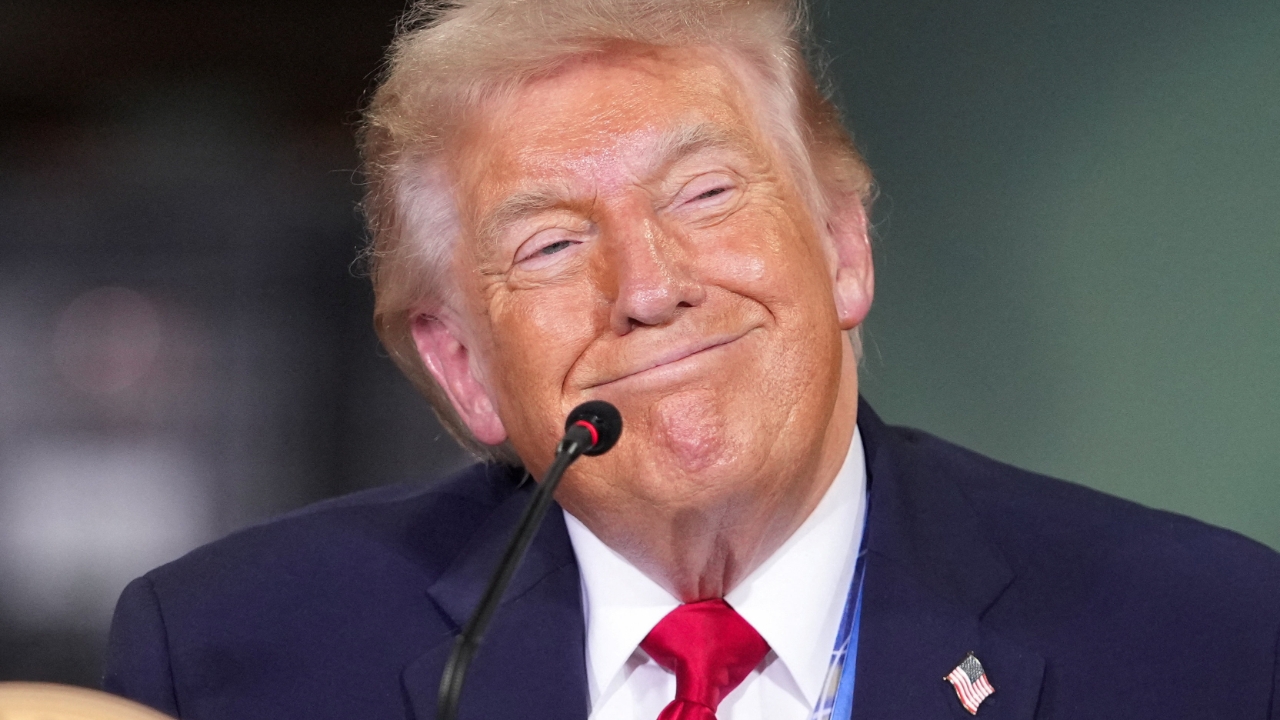
The Iran war has reached its 100th day, with Donald Trump affirming that he has no plans to withdraw troops involved in the conflict, as they may still be needed despite the current ceasefire.
Foreign news agencies reported on Sunday, 7 Jun 2026 GMT+7, that U.S. President Donald Trump confirmed he has no plans to withdraw approximately 50,000 troops engaged in the Iran war until "our mission in that country is complete," as the war reached its 100-day mark.
"I don't think our military forces are in danger," Trump told Kristen Welker, host of Meet the Press, in an interview recorded on Friday and aired on Sunday. "We have the best defense systems ever, and we also have the best offensive systems ever, so I don't see that as danger."
"I would say it would be foolish to do that (withdraw troops) because we might need them," Trump added.
During the interview, Trump compared the death toll in the Iran conflict to that of the U.S. Vietnam War, during which the U.S. lost more than 58,000 soldiers.
"We've lost 13 people here, which is a lot—13 is too many," Trump said. "But if you look at Vietnam, where hundreds of thousands died, or any of the last seven or eight wars with heavy casualties, losing 13 is much less than anyone expected. I repeat, 13 is too many; I don't want to lose anyone, but 13 is still fewer than expected."
"I think we're doing a great job," he added.
The war between the U.S. and Iran, which began on 28 Feb 2026 GMT+7, has now reached 100 days. They are currently under a fragile ceasefire agreement with sporadic clashes, while negotiations to end the war have stalled for several weeks due to disagreements between the two sides.
Esmaeil Bagaei, spokesperson for Iran's Ministry of Foreign Affairs, stated that the main issue in negotiations with the U.S. is the inconsistent and conflicting stance of the Washington government.
"The main problem in negotiating with this administration is dealing with shifting positions, moving negotiation targets (shifting goalposts), differing statements, and contradictory remarks from various officials, all of which complicate the entire process greatly," Bagaei told CNN.
He added that despite several obstacles, "the most important point is that the American side must understand they need to recognize Iran's rights," including the right to peaceful nuclear reform under the international Nuclear Non-Proliferation Treaty.
"At the same time, when they talk about our frozen assets, they have not shown any flexibility," Bagaei said, referring to Iran's longstanding demands for the U.S. to release billions of dollars in assets frozen in foreign banks as a condition for any agreement.
Follow international news:https://www.thairath.co.th/news/foreign
Source:cnn