

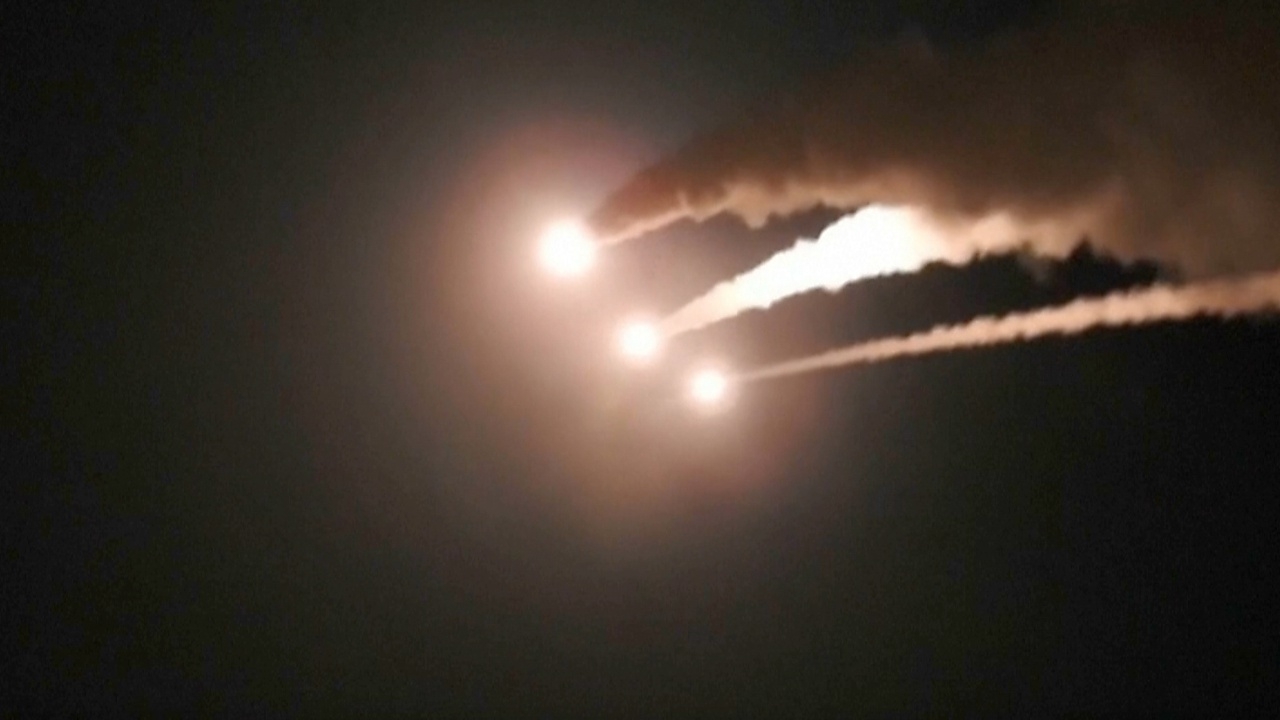
Israel launched attacks on multiple targets in Iran, disregarding U.S. President Donald Trump's direct phone call urging restraint. Iran warned that further actions would trigger widespread retaliation against U.S. bases across the region, while global oil prices immediately surged by 3%.
The Israeli military disclosed that it deployed fighter jets to strike military targets in western and central Iran, with loud explosions reported in three major cities, including Tehran.
This attack ignored U.S. President Donald Trump's efforts to pressure Israeli Prime Minister Benjamin Netanyahu to exercise restraint and avoid retaliation, aiming to preserve the fragile ceasefire agreement that began on 8 April and to prevent disruption of peace talks between the U.S. and Iran.
Reports indicate that before Israel launched its strikes, Trump spoke directly with Netanyahu for over half an hour. According to foreign media, Trump said, "I will call Bibi (Netanyahu's nickname) now to tell him not to retaliate. Israel has already attacked, Iran has attacked, we don’t need another attack."
Additionally, Trump told the Financial Times that he was confident the incident would not affect the ceasefire agreement, asserting forcefully, "It will have no impact on the agreement because I’m controlling the whole game; Netanyahu is not the one controlling it."
However, Trump continued to refuse to unlock $24 billion in frozen Iranian assets until Iran improves its behavior and reaches a preliminary agreement, contrary to Iran's demands.
Israel’s strikes on 8 June were a tit-for-tat response following Iran’s missile barrage on Sunday, which involved 11 missiles including air-launched ones targeting the Ramat David Airbase near Nazareth in Israel. The Israeli military confirmed it intercepted all missiles with no casualties.
Meanwhile, Iran’s Islamic Revolutionary Guard Corps (IRGC) stated that its earlier missile attack on Israel was a "reminder" after Israel violated the ceasefire by sending warplanes to strike the Dahieh district in southern Beirut, Lebanon, a Hezbollah stronghold, causing 2 deaths and 20 injuries. Iran accused the U.S. of giving the "green light" for the Lebanon attack.
Iran warned that if Israel continues its repeated provocations, the next retaliation would be broader, targeting both U.S. and Zionist (Israeli) assets throughout the Middle East. Furthermore, tensions rose as Iran deployed drones and missiles against Kurdish armed groups in Iraq, while Israel reported intercepting missiles fired by Yemeni rebels.
The escalating conflict led Iran to close its western airspace and suspend all incoming flights at its international airports. Neighboring countries Iraq and Syria also announced similar airspace closures.
The renewed conflict directly impacted the global economy, with Brent crude oil prices soaring over 3% to exceed $96 per barrel. Markets fear that the Strait of Hormuz, a key shipping route for about one-fifth of the world’s oil and natural gas currently blocked by Iran, will remain closed for the foreseeable future.
Diplomatically, although Pakistan’s Interior Minister visited Tehran carrying a secret letter from Pakistan’s military chief and prime minister aiming to mediate between the U.S. and Iran, a military adviser to Iran’s Supreme Leader acknowledged that talks with the U.S. are currently "at a standstill."
/Reuters/ AFP