

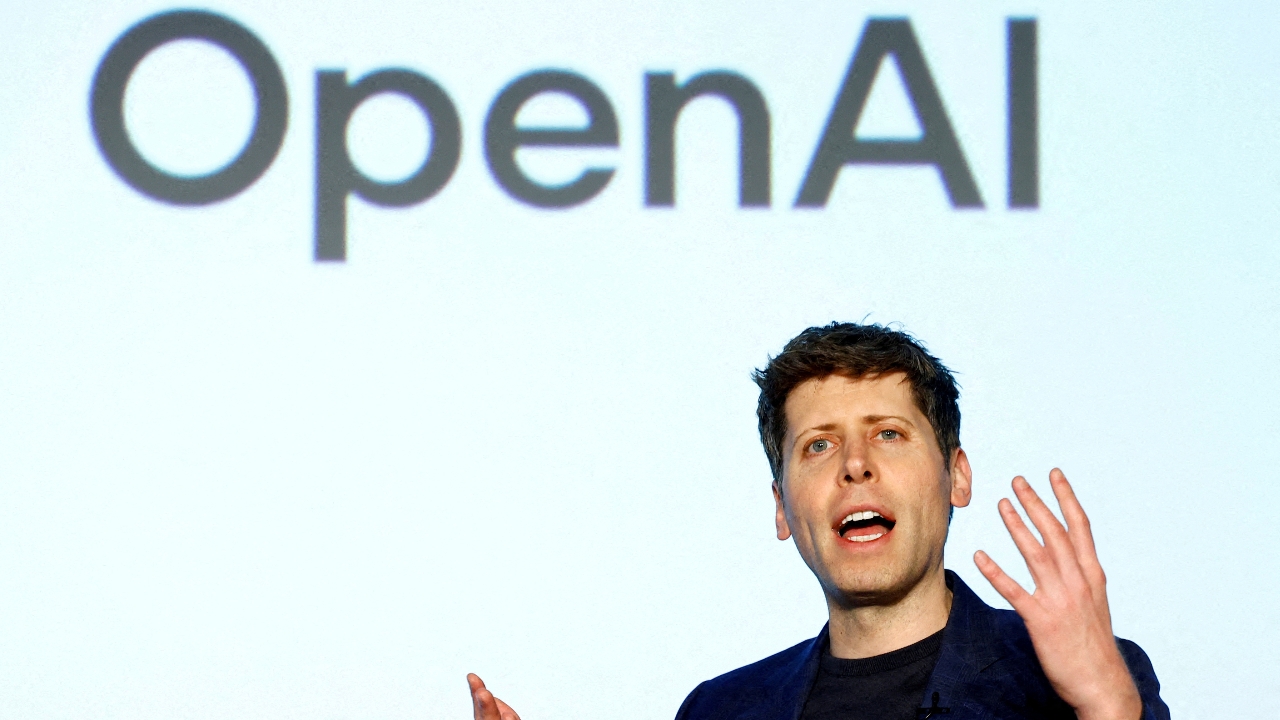
OpenAI, the major artificial intelligence technology company behind ChatGPT, has confirmed that it has submitted confidential intent documents to the U.S. Securities and Exchange Commission to prepare for its initial public offering (IPO), following key competitor Anthropic.
OpenAI’s move comes just one week after Anthropic, the developer of the chatbot "Claude" and code-writing tool "Claude Code," announced its confidential filing to prepare for going public. It also coincides with SpaceX, owned by Elon Musk and creator of the AI chatbot "Grok," preparing to launch on the Nasdaq stock exchange with an estimated company valuation of up to $1.75 trillion.
However, OpenAI stated in a release that it has not set a definite timeline or size for the stock offering, explaining, "We have not decided on timing and it may take some time, as there are many things we want to do which may be easier while remaining a private company. We chose to disclose this plan early due to the possibility of information leaks."
Insiders told Reuters that OpenAI aims to reach a company valuation of $1 trillion (approximately 33 trillion baht) upon its public debut, potentially as early as September. Previously, OpenAI’s most recent private funding round valued it at $852 billion, while Anthropic’s valuation slightly leads at $965 billion.
The main reason driving AI giants to accelerate their public listings is the huge funding needs for "processing systems and infrastructure" used to build, train, and test large AI models. It is estimated that OpenAI spends over $100 billion annually on these costs, while its revenues are still far from covering them. Although OpenAI generated monthly revenues as high as $2 billion in March, growing four times faster than Alphabet and Meta in their early stages, the company has informed investors it does not expect to be profitable before 2030.
Conversely, competitor Anthropic, founded by Dario Amodei, a former OpenAI executive who split due to disagreements with OpenAI CEO Sam Altman, has told investors it expects to become profitable in the first half of this year, as sales of its top-tier product and model, Mythos, have surged among software developers.
Gil Luria, managing director of financial institution D.A. Davidson, warned that the simultaneous market entries of these major companies might strain capital markets. "What OpenAI does not want is for public market investors’ funds to dry up first, as SpaceX and Anthropic are next in line, and current market competitor Google just raised tens of billions in a recent second funding round last week," he said.
OpenAI’s path to IPO has faced organizational upheaval since its 2015 founding as a nonprofit. It established a for-profit subsidiary in 2019, leading to a 2023 board crisis that briefly ousted Sam Altman and triggered another restructuring to become a "public benefit corporation" to facilitate fundraising.
This complex structure prompted Elon Musk, a co-founder and early backer, to sue OpenAI, accusing Sam Altman and other executives of abandoning the original mission to benefit humanity and exploiting the organization for personal wealth. However, in May, a U.S. jury unanimously dismissed Musk’s claims, a decision analysts see as removing major legal barriers and alleviating investor concerns ahead of OpenAI’s filing.