

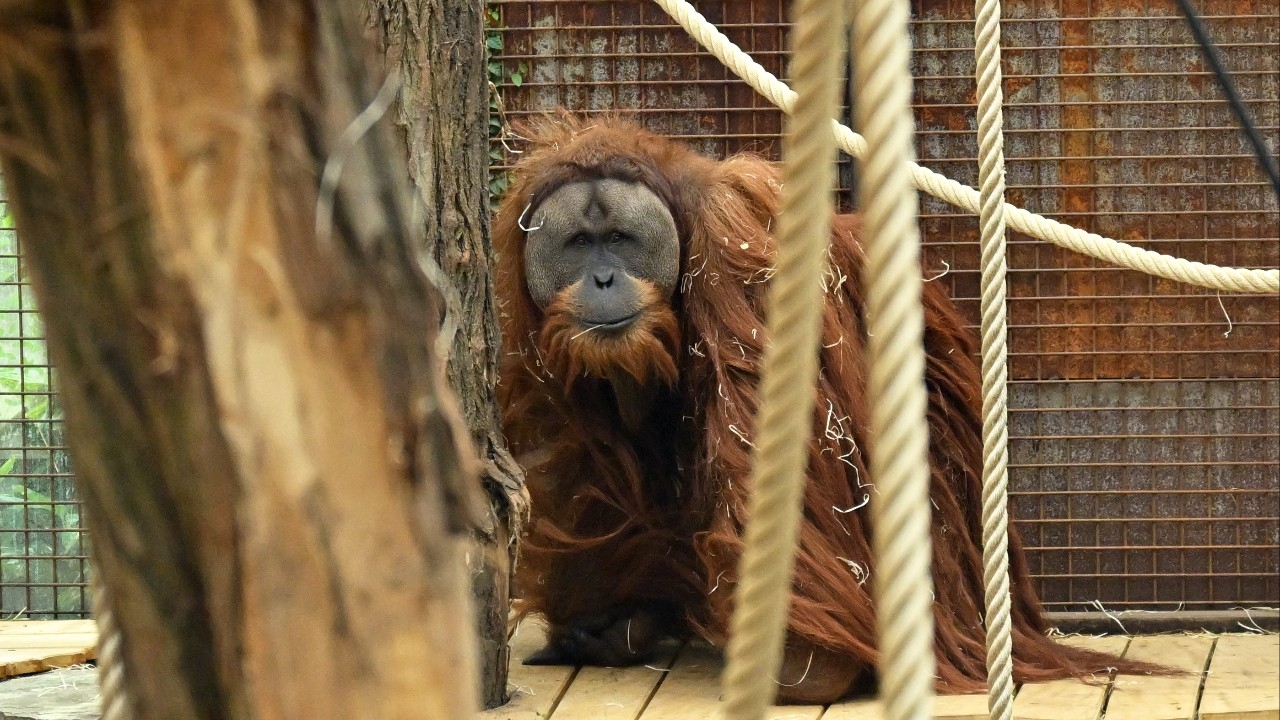
A new study reveals that just four days of heavy rain and landslides caused by Cyclone Senyar on Sumatra Island, Indonesia, at the end of 2025, resulted in the death of at least 58 Tapanuli orangutans, the world's most critically endangered great ape, representing about 7% of the fewer than 800 individuals remaining worldwide.
The study published today (11 June) states that four continuous days of heavy rain and landslides on Sumatra Island, Indonesia, caused severe damage to the Tapanuli orangutan population, a rare and critically endangered great ape species.
Researchers estimate that at least 58 Tapanuli orangutans from the remaining population of fewer than 800 died due to the extreme weather conditions in November, accounting for approximately 7% of the entire species population.
However, the researchers note that this figure is a limited estimate and does not include indirect impacts such as damage to forest canopies or reductions in natural food availability following the disaster.
The event was caused by Cyclone Senyar, which struck Sumatra Island in late November, resulting in over 1,000 human fatalities and marking the deadliest natural disaster in Southeast Asia in 2025.
Researchers state that this study clearly demonstrates how severe heavy rainfall events can directly threaten the survival of great ape populations, while the impacts on other local wildlife remain difficult to quantify.
Previously, conservationists and wildlife experts observed an unusual decline in sightings of Tapanuli orangutans after the cyclone, leading to speculation that many animals may have been swept away by floodwaters or landslides.
Professor Erik Meijaard, Executive Director of Borneo Futures in Brunei and one of the study's authors, revealed that the death toll of 58 orangutans is a shocking increase from the initial December estimate of 35.
Weeks after the cyclone, humanitarian workers reported finding the carcass of a Tapanuli orangutan buried beneath mud and debris in the village of Pulopakkat in Central Tapanuli.
Field officer Dekki Chandra, who worked in the area, said that while orangutans typically forage for fruit in that location, after the disaster the area became like a graveyard for them.
Professor Meijaard stated that images of the animal remains he received illustrate the severity of the landslides, noting that if several hectares of forest collapse simultaneously, even the powerful orangutans cannot survive.
The report also indicates that although Cyclone Senyar is a relatively rare event, human-driven climate change is significantly increasing the intensity of weather extremes, making such heavy rainfall events more frequent and severe in the future.
Researchers warn that the Tapanuli orangutan, newly classified as a distinct species in 2017, could face extinction if its population declines by more than 1% annually on a sustained basis.
Currently, the Indonesian government has suspended several large development projects in the Batang Toru protected forest, the main habitat of the Tapanuli orangutan, including mining, palm oil plantation expansion, and hydroelectric power projects, to allow researchers to conduct more detailed ecosystem risk assessments.
The research team states that the crisis facing the Tapanuli orangutan reflects the convergence of climate insecurity, biodiversity loss, and ecosystem vulnerability, which urgently requires an international response.
Researchers emphasize that protecting the remaining Tapanuli orangutans requires international cooperation, including domestic protection measures, climate change adaptation planning, and global support for funding and technology, to prevent the extinction of this great ape species in the modern era.
. BBC