

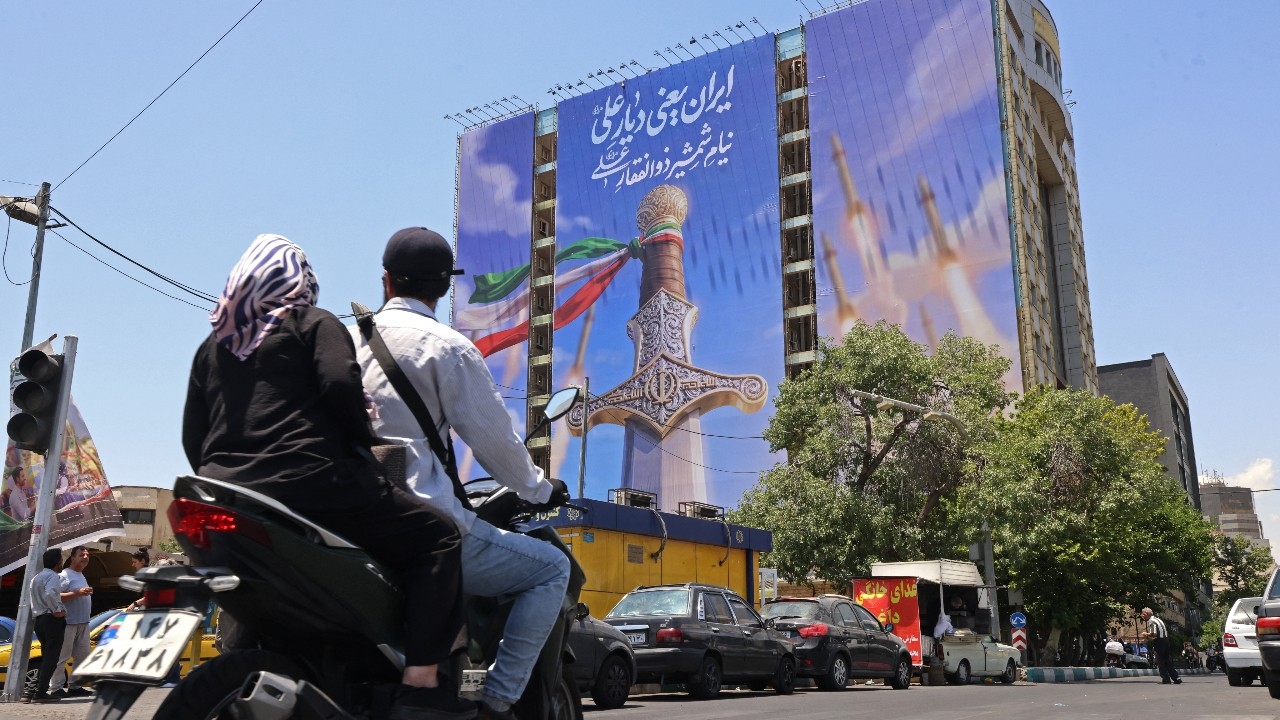
The situation in the Middle East risks escalating into a full-scale war after the U.S. and Iran engaged in fierce retaliatory missile strikes for the second consecutive night, causing the temporary ceasefire agreement from April to collapse. Meanwhile, President Donald Trump issued an ultimatum, warning of further strikes if Iran refuses to sign a peace deal.
The conflict between the U.S. and Iran intensified again as both sides launched military retaliations for the second straight day, undermining the ceasefire agreement reached in April and increasing the risk of a broader war in the Middle East.
The U.S. Central Command announced that the U.S. military completed self-defense strikes targeting Iran’s military surveillance systems, communication networks, radar installations, and several air defense bases, describing the action as a response to what it called Iran's "continued and unprovoked aggression."
Shortly before the attacks, President Donald Trump declared he would launch a heavy assault on Iran if its government did not immediately sign a peace agreement with the U.S., accusing Iran of delaying negotiations to permanently end the war.
U.S. Secretary of Defense Pete Hegseth stated that Iran was given an opportunity to negotiate but declined, affirming that the recent strikes aimed to pressure Iran back to the negotiating table.
Following the U.S. strikes, Iran’s Islamic Revolutionary Guard Corps (IRGC) launched immediate retaliatory operations, claiming to have fired missiles and drones at 18 U.S. military targets in Kuwait and Bahrain, including the U.S. Navy's Fifth Fleet stationed in Bahrain. The IRGC also claimed to have launched 12 long-range missiles at the Al Azraq base in Jordan, a U.S. command center, marking the second consecutive night of attacks.
Kuwaiti authorities reported their air defense systems intercepted threatening aerial targets, while Bahrain confirmed that its air defense successfully intercepted and destroyed Iranian attacks, with nationwide air raid sirens sounding around midnight. Kuwait also temporarily closed its airspace for safety amid the ongoing situation.
At the same time, tensions spread to the Strait of Hormuz, a vital global oil shipping route. Iranian state media reported a complete closure of the strait to all maritime traffic and the IRGC claimed to have attacked two oil tankers passing through the area. However, U.S. Central Command denied these reports, confirming the Strait of Hormuz remains open and commercial vessels continue to transit normally.
Concerns over disruptions to energy transportation caused global crude oil prices to rise immediately, with Brent crude, a key international benchmark, surging nearly 2% to around 95 U.S. dollars per barrel.
Reports from Iran indicated explosions in multiple cities nationwide, including Sirik, Kargan, Bandar Abbas, Minab, and Karaj near the Strait of Hormuz, reflecting the expanding scope of the attacks.
The latest developments represent the greatest challenge yet to the ceasefire agreement reached in April, originally intended to last two weeks. Although sporadic retaliations occurred afterward, full-scale war had not resumed until now.
The recent violence was triggered after a U.S. Apache attack helicopter was shot down near the Strait of Hormuz earlier this week, with the U.S. accusing Iran of responsibility. Iran responded with attacks on U.S. bases across the region.
Iranian President Masoud Pesechkian affirmed Iran’s resolve to resist all forms of pressure and threats, while Iran’s Ministry of Foreign Affairs accused the U.S. of undermining diplomatic efforts by sending conflicting signals.
In addition to the U.S.-Iran conflict, fighting continues in Lebanon between Israel and the Iran-backed Hezbollah group, with reports of at least 13 deaths from Israeli airstrikes in southern Lebanon.
United Nations Secretary-General Antonio Guterres warned that the Middle East is being drawn into a deeper crisis, describing the current ceasefire as more of a "de-escalation" than a true ceasefire. He called for all parties to return to diplomatic efforts promptly, emphasizing, "There must be no further attacks and no excuses for violence anymore."
The war, ongoing since late February, has claimed thousands of lives and disrupted about 20% of global crude oil and liquefied natural gas shipments, keeping energy markets and the world economy closely watching the Middle East situation.