

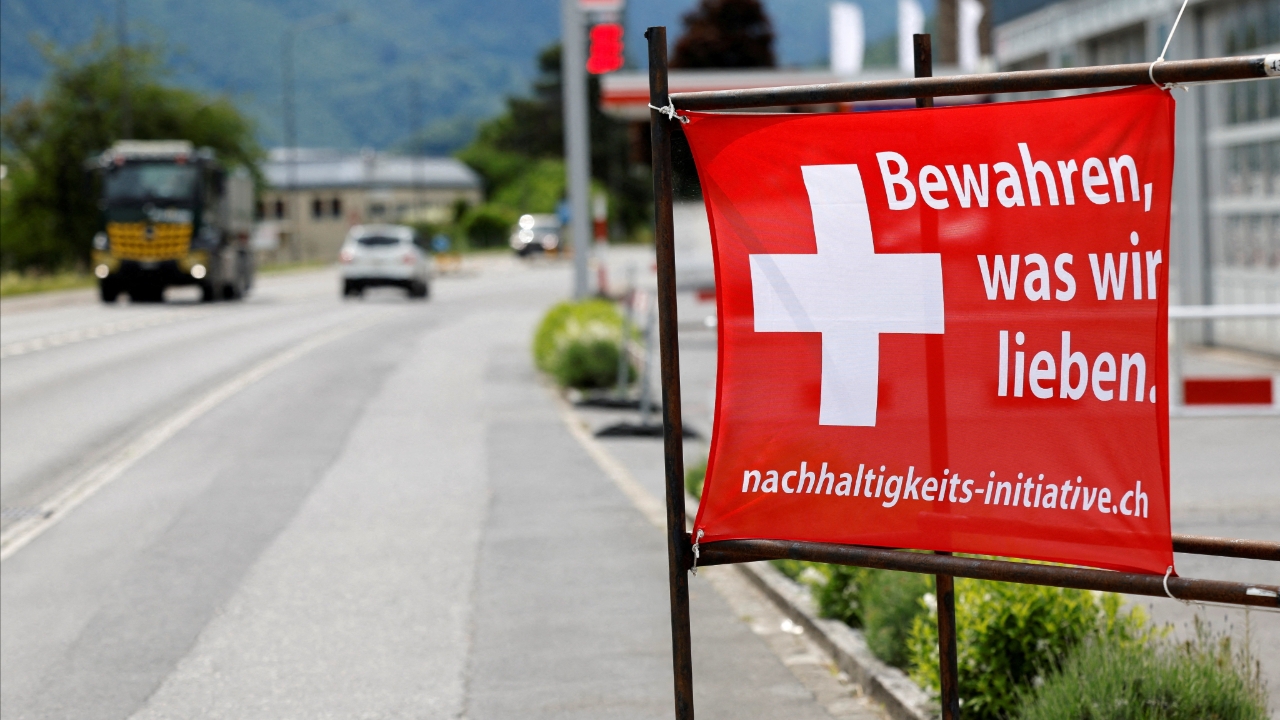
Swiss citizens are preparing to vote in a referendum on whether to approve a plan to limit the country's population to no more than 10 million amid conflicts over immigration.
Foreign news agencies report that Swiss voters will head to the polls on Sunday, 14 Jun 2026 GMT+7, to decide whether they agree with a proposal to cap the country's population at 10 million as tensions over immigration intensify.
The proposal is backed by the Swiss People's Party, a right-wing party, which describes it as a “sustainability initiative” aimed at reducing pressure on real estate, public services, and the environment.
Conversely, the government, other political parties, business leaders, and trade unions have labeled the proposal a “chaos-inducing initiative,” arguing it would cause critical staff shortages in hospitals and hotels and damage hard-won relations with the European Union (EU), potentially isolating Switzerland, which is not an EU member, in an increasingly risky world.
Switzerland's population has grown rapidly since 2002, when it stood at 7.3 million. Today, the figure has risen to 9.1 million, with 27% of this number being Swiss residents born abroad.
Switzerland’s direct democracy system means all major decisions are made through referendums. Campaigners who collect at least 100,000 signatures can trigger a nationwide vote.
Many Swiss people are concerned about overcrowded trains, sharply rising apartment prices, and increasing healthcare costs.
The latest Swiss opinion polls suggest the referendum could be very close, with 52% leaning towards “disagree,” 45% in favor, and a significant portion of eligible voters still undecided.
For undecided voters, a key question is how the proposed population cap would function in practice.
Setting a strict population ceiling is unprecedented; no other country has tried this, although China once attempted to slow population growth through a one-child policy, which has since been abolished.
Under the new proposal, Switzerland's population must not exceed 10 million before 2050, and the government would be required to implement measures once the population reaches 9.5 million.
These measures could include limiting the number of asylum seekers allowed in Switzerland and revoking the right of foreign workers to bring their families.
If the population hits the 10 million cap, Switzerland would have to cancel international agreements it has signed, including the EU's free movement of workers agreement.
This possibility has alarmed Economiesuisse, Switzerland’s business association. Rudolf Münch, the association’s chief economist, said that if the proposal passes, Switzerland “may face challenges in its relationship with the European Union.”
This is because the EU has consistently warned non-member countries that they cannot selectively take benefits from the EU’s single market while avoiding obligations such as free movement of people.
“So far, the EU remains Switzerland’s largest trading partner,” Münch explained, adding, “It is in our interest to maintain a stable and clear relationship with our main partner.”
Swiss employers are also worried about labor shortages and losing access to skilled workers from across Europe. Currently, half of all employees in Switzerland’s hotel industry are immigrants, and hospitals and elder care facilities also rely heavily on foreign workers.
Supporters from the Swiss People's Party argue that immigration has driven endless increases in demand for hospital beds and school places, and limiting immigration would ease these pressures.
Opponents say this view is unrealistic, pointing out that 20% of Swiss citizens are over 65 and the country needs younger workers and taxpayers to support its aging population, which cannot be sufficiently replaced domestically.
Follow international news:https://www.thairath.co.th/news/foreign
Source:bbc